House Insurance in Ocala, FL: How Costs Differ by Home Type
.avif)
House insurance in Ocala, FL isn't one number, but rather a range that shifts more than almost anywhere else in Florida once you factor in home type. Ocala's inland location keeps it out of the state's highest-risk wind and storm-surge zones, and that's genuinely one of the reasons it ranks among Florida's more affordable insurance markets overall.
However, “affordable” hides a wide spread: an older ranch home, a horse farm on acreage, and a new build in a 55+ community can carry very different premiums even in the same ZIP code. That’s why this guide breaks down the costs by home type and what you can do about it.
Key Takeaways
- Ocala's inland position means less hurricane wind and storm-surge exposure than coastal Florida, which helps keep citywide averages down.
- Home type matters more than location within Ocala; older construction, horse farms, and 55+ new builds price very differently from each other.
- Horse farms and rural properties often need endorsements a standard homeowners policy doesn't include, like outbuilding and equine liability coverage.
- Comparing quotes across multiple carriers, not just chasing the lowest price, is the most reliable way to find good value.
Why House Insurance in Ocala Is Cheaper Than Most of Florida
The reason why house insurance in Ocala is cheaper than most of Florida comes down to geography as much as anything else. Marion County sits roughly 40 miles from the Gulf Coast and even farther from the Atlantic, so homes here avoid the storm-surge exposure and highest wind-speed zones that push up premiums along the coast.
Insurers weigh wind risk heavily when pricing Florida homeowners policies, and inland counties consistently rate lower than coastal ones on that factor alone, separate from the standard hurricane deductible that still applies statewide.
A newer housing stock adds to the effect. Ocala has seen steady new construction over the past two decades, and homes built to more recent Florida Building Code standards typically qualify for stronger wind mitigation discounts than older coastal homes can claim as easily.
Flood exposure follows the same pattern. Ocala properties fall into a mix of FEMA flood zones, including A, AE, AH, and X, and most homes sit in the lower-risk zones rather than the high-risk coastal designations. Properties in flood-prone areas may still need a separate flood insurance policy, and mortgage lenders often require one for homes mapped into A or AE zones.
Also, Ocala benefits from the Class 3 rating under FEMA's Community Rating System, which qualifies residents for flood insurance discounts ranging from 10% to 35%, on top of whatever savings come from being outside the highest-risk zones altogether.
Risks That Still Affect Ocala House Insurance Rates
Inland location doesn't mean zero risk. Ocala still sees tornado activity and the secondary effects of tropical storms moving inland after landfall, and insurers factor both into their rating models. Even though the exposure is different from a direct hurricane landfall, it isn't nothing.
Also, the region's limestone geology makes it more prone to sinkholes than much of coastal Florida. Standard homeowners policies typically don't cover the land itself in a sinkhole event, so it's worth asking a carrier whether sinkhole coverage is bundled into a quote or needs to be added as a separate endorsement.
Ocala vs. Jacksonville: Two Different Kinds of "Affordable"
Jacksonville home insurance often gets mentioned in the same breath as an “affordable for Florida” market, but the comparison isn't apples to apples. Jacksonville's savings come mainly from sitting just outside the most severe coastal wind zones while still touching the Atlantic.
On the other hand, Ocala's savings come from being genuinely inland, with no direct coastal exposure at all. It’s a structurally different reason for a similar-looking number.
Different Home Types and Ocala House Insurance
Florida's average homeowners insurance runs close to $3,400 a year, and Ocala routinely comes in below that mark. For context, a $150,000 home in the city runs close to $2,466 a year on average, a $300,000 home closer to $4,464, and a $450,000 home around $6,405.
Ocala's typical starter and mid-size homes tend to fall at or below that mark, though pricing scales with home value like anywhere else.
A larger or higher-value home in Ocala can still cost more than the statewide average in dollar terms, even while it would cost more still in a coastal market. For context, a $150,000 home in the city runs close to $2,466 a year on average, a $300,000 home closer to $4,464, and a $450,000 home around $6,405.
However, these figures reflect dwelling value, not home type; the citywide advantage shows up most clearly when comparing Ocala to coastal markets at the same home value, not as a flat ceiling that applies regardless of size.
With that said, we come to actual home types and costs. An older concrete-block house, a working horse farm, and a new build in an active-adult community draw different underwriting questions, different premiums, and different coverage gaps. Square footage and dwelling coverage limits still move the number within each category, but the type of property sets the range you start from.
The table below compares the three scenarios agents see most often across Marion County:
Manufactured and mobile home insurance in Ocala, FL follows a separate set of underwriting rules tied to tie-down standards and the home's age, so those premiums don't map cleanly onto the ranges above. Vacation home insurance in Ocala, FL carries its own considerations too, since a property that sits empty part of the year can change how a carrier underwrites and handles claims.
Insuring an Older Ocala Home (Pre-1990s Construction)
Homes built before the mid-1990s often predate Florida's modern wind mitigation building codes, so insurers ask more questions about roof age, roof shape, and how the roof is attached to the walls. Expect premiums in this segment to run above the citywide average, generally in the $1,800 to $3,800 range depending on the home's size and condition.
A wind mitigation inspection is the most direct lever an owner has here. Documenting features like a hip roof, reinforced roof-to-wall connections, or impact-rated windows can move an older Ocala home from the high end of that range toward the low end. A partial roof replacement, even without a full re-roof, sometimes accomplishes the same thing if it addresses the specific weak point an inspector flags.
Also, some carriers request a four-point inspection on homes past a certain age, covering the roof, electrical, plumbing, and HVAC systems, separate from the wind mitigation report. Ask your agent which upgrade would actually change your rating before spending on either one. Not every improvement moves the needle, and a licensed inspector's report is what carriers actually underwrite from, not a homeowner's own estimate of a feature's condition.
Insuring an Ocala Horse Farm or Rural Property
Insuring an Ocala horse farm or rural property starts with a gap most owners don't expect. A standard homeowners policy covers the dwelling itself, not barns, run-in sheds, fencing, or farm equipment sitting on the same acreage. Those need to be scheduled separately or added through a farm and ranch endorsement, or they simply aren't protected after a loss.
Liability is the other half of the picture. Boarding horses, hosting lessons or trail rides, or even just owning large animals on the property creates liability exposure that a standard homeowners policy may not fully cover. An umbrella policy or a dedicated farm liability policy extends protection well beyond a typical homeowners limit, which matters if a visitor or client is injured on the property.
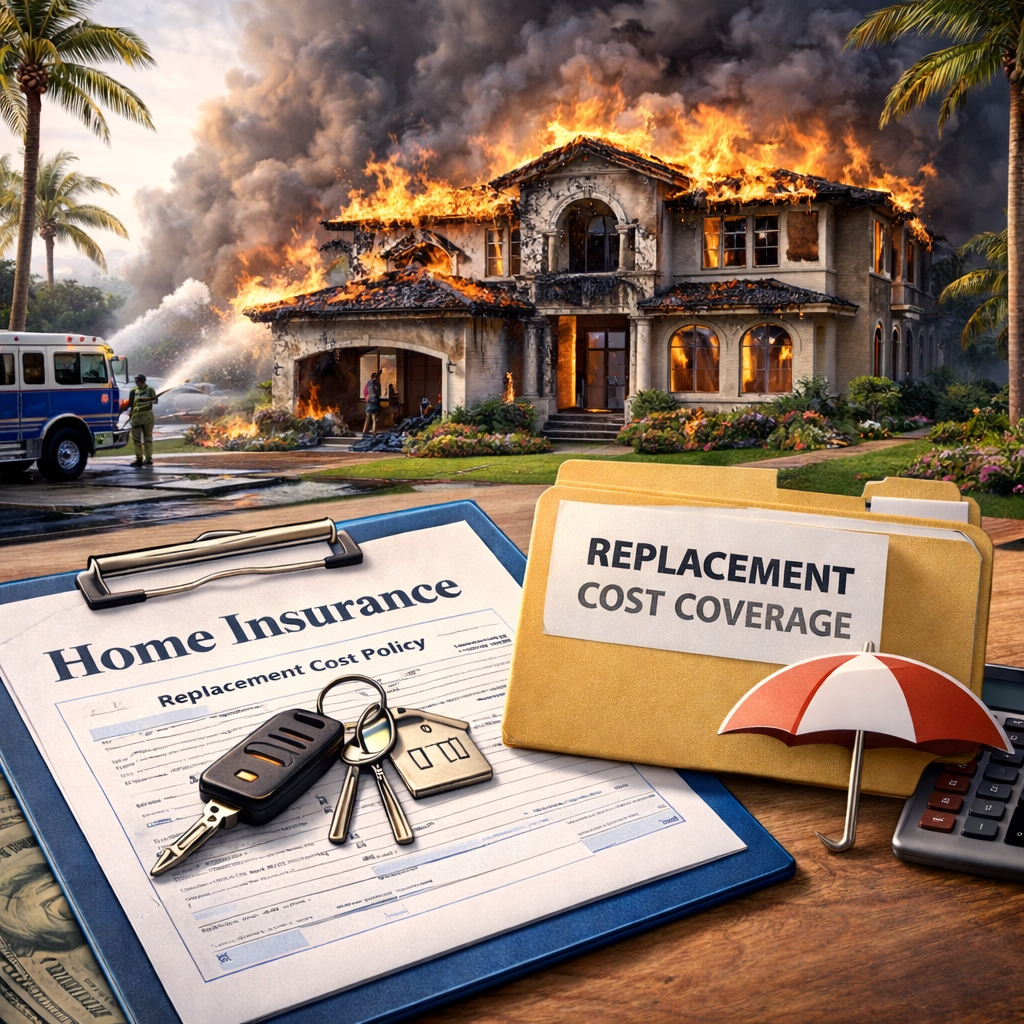
Replacement costs are different here too. Acreage, outbuildings, and specialized farm structures mean a rural Ocala property's dwelling coverage estimate can't be built the same way a standard suburban home's can. A private client agent typically walks the property rather than relying on a desktop estimate. Fencing, wells, irrigation systems, and equipment barns each need their own line item, since a single “other structures” allowance sized for a suburban shed rarely covers a working farm's outbuildings after a total loss.
Business use adds another layer worth flagging early. If boarding, lessons, or trail rides bring in income, insurers may classify part of the operation as a business exposure rather than personal use, which changes which policy type actually applies. It's worth disclosing this upfront rather than after a claim, since an undisclosed business use can complicate how a loss gets paid.
Insuring a Home in an Ocala 55+ Community
Insuring a home in an Ocala 55+ community almost always means an HOA master policy is alongside your individual one, and the overlap between the two is where owners either save money or accidentally pay twice. The HOA's master policy typically covers shared structures and common areas; your individual policy covers the interior, personal property, and liability inside your own unit or home.
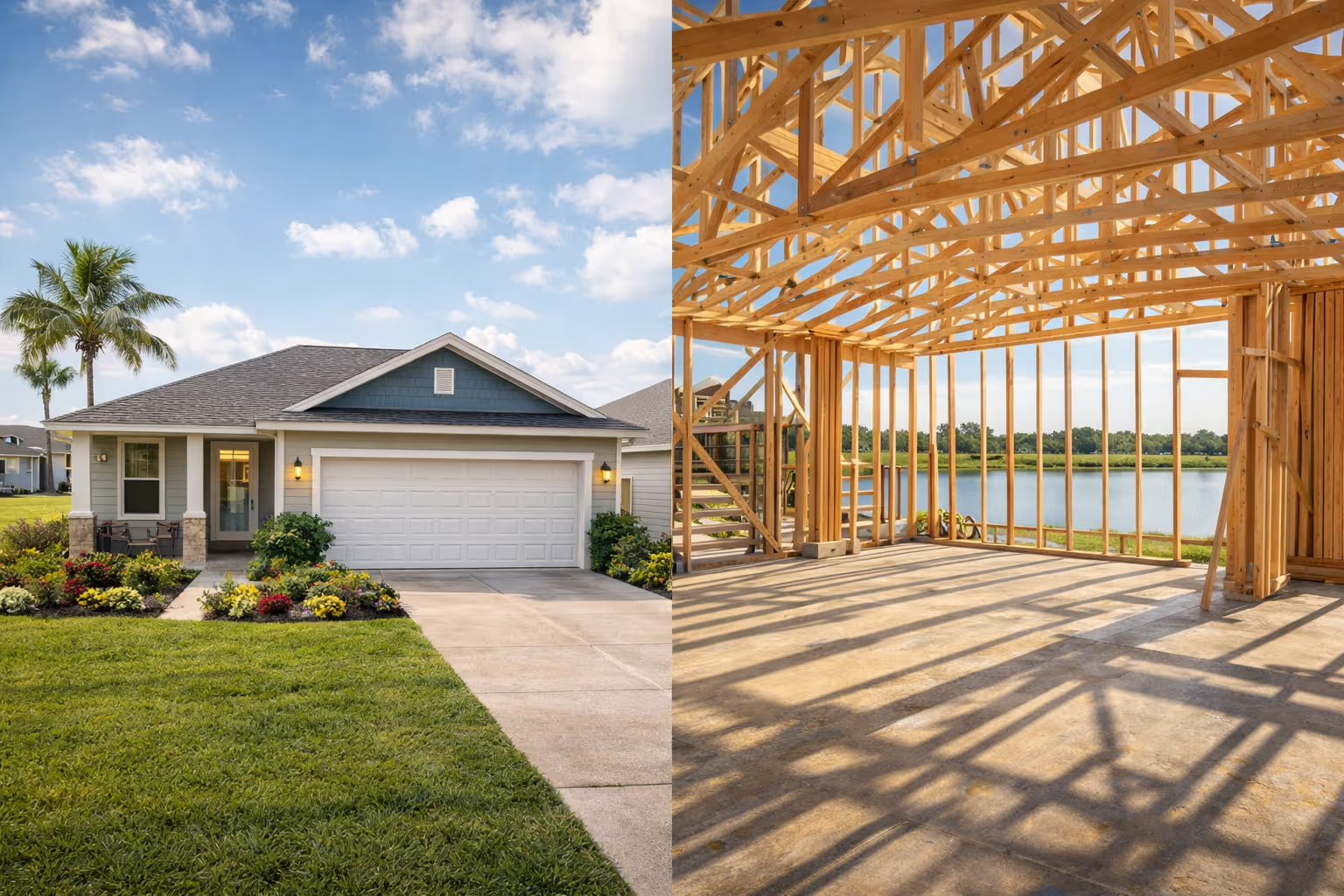
New construction in these communities works in your favor. Homes built recently in Ocala's active-adult developments are often built to current wind-mitigation and insulated concrete form (ICF) standards, which tends to price them at the lower end of Ocala's range. Amenity centers, gates, and clubhouses typically fall under the HOA's master policy rather than an individual homeowner's, which is part of why coverage often overlaps more than owners expect.
Before buying an individual policy, ask the HOA for the master policy's coverage summary so you're not paying for coverage you already have through the association, and confirm whether your HOA dues already build in any portion of that master premium.
How to Get House Insurance Quotes in Ocala, FL
Getting house insurance quotes in Ocala, FL is a short process once you have a few basics ready. That said, keep in mind the following:
- Gather your home's details, such as year built, roof age and type, square footage, and any wind mitigation features.
- Note your priorities, including lowest premium, highest coverage limits, or a specific carrier you've used before.
- Have your current declarations page handy if you're switching, so an agent can match or improve on your existing limits.
- Compare quotes from multiple carriers rather than accepting the first number you see.
- Ask about bundling home and auto, or adding umbrella coverage, if you need broader liability protection.
How to Shop for the Best Ocala House Insurance Rate
Shopping for the best Ocala house insurance rate starts with knowing which home insurance companies in Ocala, Florida, are actually active in the market. Citizens Property Insurance Corporation, Florida's insurer of last resort, writes a meaningful share of Marion County policies, alongside private carriers such as Southern Oak Insurance, Tower Hill Insurance, and Universal Property & Casualty, with Progressive and Chubb serving parts of the market too.
Keep in mind that cheap home insurance in Ocala isn't always the best home insurance in Ocala. A policy with a low premium but a high hurricane deductible, thin personal property limits, or exclusions tied to an older roof can cost more at claim time than it saved upfront. Compare home insurance quotes in Ocala on coverage limits and deductibles side by side, not just the bottom-line number, and check each carrier before committing to a policy.
Read the declarations page closely, not just the premium total. Two quotes with nearly identical monthly costs can carry very different dwelling limits, personal property caps, or loss-of-use allowances, and those gaps only show up when you actually file a claim.
Worth Insurance agents can walk you through those differences line by line, which is harder to do comparing quotes on your own from separate carrier websites. Start a free quote to see what's available for your property today.
Final Thoughts
Ocala, Florida home insurance rates reward homeowners who understand their own property, not just the citywide average. An older home benefits most from a wind mitigation inspection, a horse farm needs coverage built around its outbuildings and liability exposure, and a 55+ new build often starts at an advantage thanks to modern construction standards.
Whichever category fits your home, the fastest way to find a fair rate is comparing quotes across carriers rather than assuming one number applies to your address. Coverage and pricing vary by carrier, property, and eligibility, so a personalized quote is the only way to know your actual cost.
House Insurance Ocala, FL FAQs
#1. What is the average cost of home insurance in Ocala, FL?
The average cost of home insurance in Ocala, FL typically falls below Florida's statewide average, which is around $3,400, thanks to the area's inland location and newer housing stock. Actual premiums vary widely by home age, construction, and coverage limits, so a personalized quote is the most reliable way to know your own cost.
#2. Is home insurance in Ocala cheaper than in coastal Florida cities?
Yes, home insurance in Ocala is generally cheaper than in coastal Florida cities. Marion County's inland location means less hurricane wind and storm-surge exposure, two of the biggest factors carriers weigh when pricing Florida homeowners premiums.
#3. Do I need extra coverage for a horse farm or rural Ocala property?
Yes, most horse farms and rural Ocala properties need extra coverage. A standard homeowners policy typically doesn't cover barns, fencing, or farm equipment, and boarding or lessons can create liability exposure that requires a separate endorsement or umbrella policy.
If you’re a homeowner in Florida, having the right insurance coverage is essential to protect your investment from hurricanes, floods, and other unexpected events. Learn more about the different coverage options, policy requirements, and ways to save by visiting our detailed guide to Florida homeowners insurance.

Get a
Florida Home Insurance
Quote




.avif)


















To see how Worth can reduce your risk.
Get a Free Quote


