Florida Ordinance or Law Coverage: Protection When Regulations Affect Your Rebuild
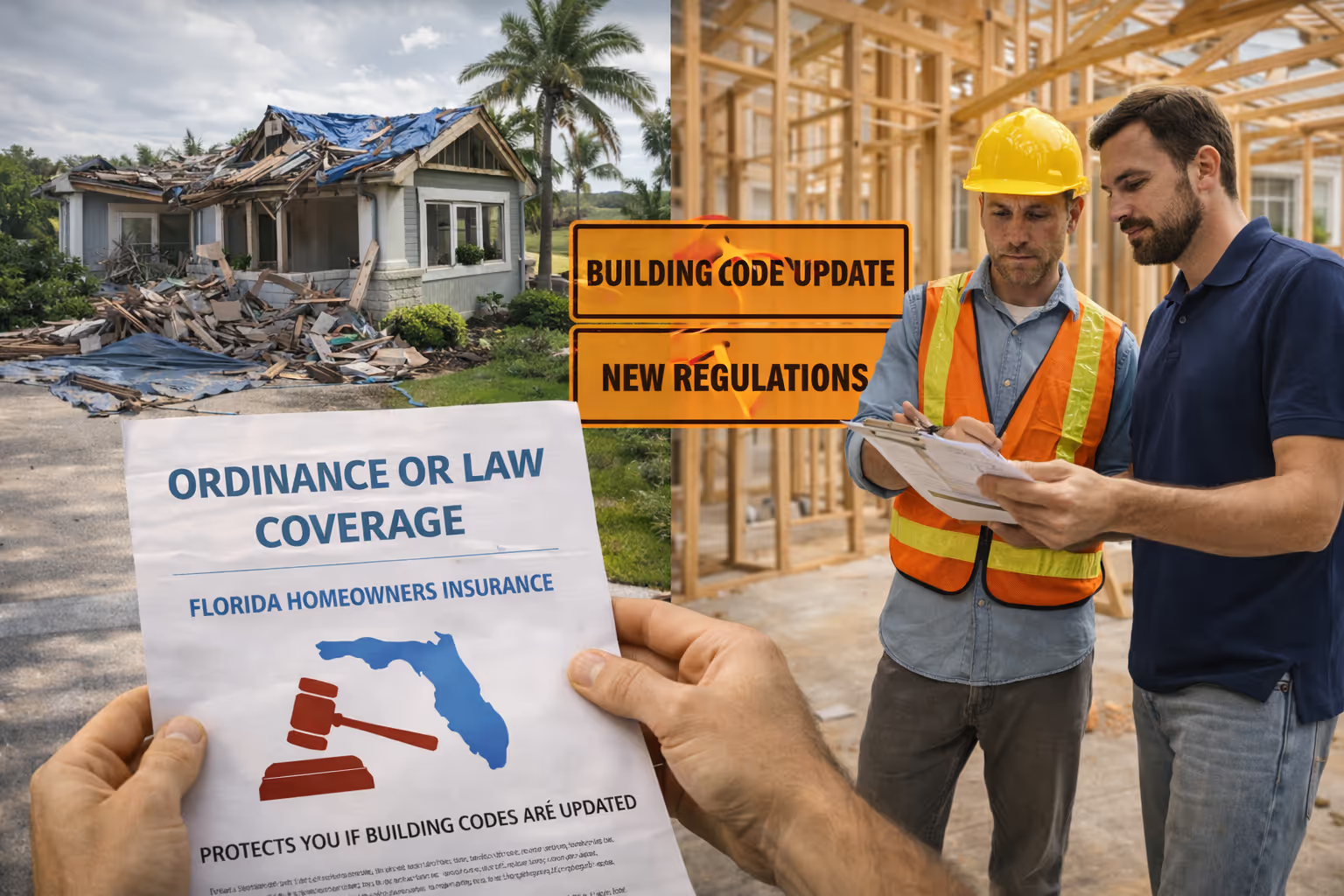
Florida ordinance or law coverage protects homeowners from additional expenses that arise when local laws, zoning regulations, or building codes affect how you can repair or rebuild your damaged home.
This coverage goes beyond building code upgrade requirements, addressing situations where ordinances might require demolishing undamaged portions of your home, prevent rebuilding in the same location, or mandate changes to your property's use or configuration. In a state where coastal setback requirements, flood regulations, and zoning changes constantly evolve, ordinance or law coverage provides essential protection against regulatory surprises.
Standard homeowners policies typically exclude losses resulting from the enforcement of ordinances or laws regulating construction, repair, or demolition. Without specific ordinance or law coverage, you could find yourself with insurance paying to rebuild your damaged home but local regulations preventing that reconstruction or requiring expensive modifications. The gap between what insurance covers and what regulations demand can leave homeowners facing impossible financial situations through no fault of their own.
Understanding Ordinance or Law Coverage Components
Ordinance or law coverage typically includes three distinct protection components, each addressing different ways regulations can increase your costs after a covered loss. Understanding each component helps you evaluate whether your coverage adequately addresses your potential exposure.
Coverage A protects against loss of value in the undamaged portion of your building when an ordinance requires demolition. Imagine a hurricane damages 60% of your home, but local regulations require complete demolition because damage exceeds 50% of building value. Standard dwelling coverage pays for the damaged 60%. Coverage A pays for the undamaged 40% that you're forced to lose due to the ordinance.
Coverage B pays for demolition and debris removal costs associated with the undamaged portion. Once regulations require demolishing the undamaged structure, significant expense follows. Tearing down the remaining building, hauling away materials, and preparing the site for new construction involves costs that standard coverage doesn't address. Coverage B handles these demolition expenses.
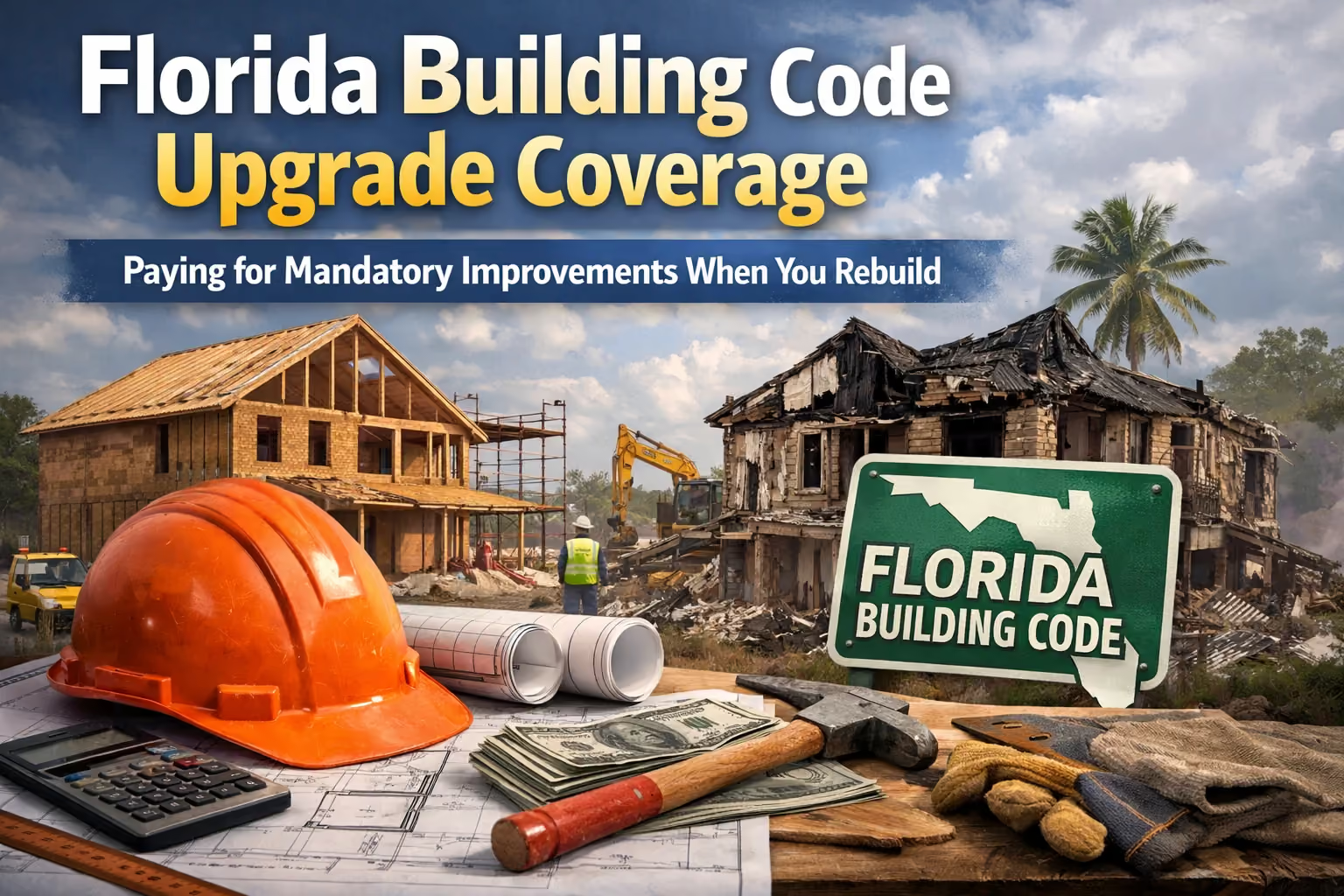
Coverage C addresses increased cost of construction to comply with current building codes, zoning requirements, or other regulations. When your rebuilt home must include features not required when the original was constructed, this coverage pays the difference. Hurricane-resistant construction, updated electrical systems, accessibility features, and other mandated improvements fall under Coverage C.
Combined limits versus separate sub-limits vary by policy. Some policies provide a single pool of coverage applicable across all three components. Others establish separate limits for each, potentially leaving gaps if one component's costs exceed its sub-limit while another has unused capacity. Understanding your policy's structure helps you identify potential shortfalls.
Types of Ordinances and Laws That Create Exposure
Various regulations can affect your ability to repair or rebuild after a loss. Understanding the types of ordinances creating exposure helps you appreciate why this coverage matters in Florida.
Building codes establishing construction standards represent the most common ordinance exposure. Florida's building codes have strengthened dramatically since Hurricane Andrew, requiring hurricane-resistant features, updated systems, and improved construction methods that older homes lack. Rebuilding triggers compliance with current codes regardless of original construction standards.
The 50% rule enforced in many Florida jurisdictions requires homes damaged beyond 50% of their value to be brought into full code compliance or demolished. This threshold can transform partial damage into total reconstruction requirements, dramatically increasing costs and complexity.
Flood zone regulations impose requirements including elevation above base flood elevation, flood-resistant construction methods, and sometimes complete rebuilding when substantial damage occurs. FEMA's substantial damage rules can require elevation of homes damaged beyond 50% of value in flood zones, potentially adding $50,000 to $150,000 or more.
Coastal setback requirements establish how close to water structures may be built. These setbacks have generally increased over time. A home built legally at 50 feet from the high-water line might not be rebuildable at that location if current setbacks require 100 feet. You could have a total loss with no ability to rebuild on your property.
Zoning changes may affect whether your property can be used as it was before damage. A home in an area rezoned from residential to commercial, or from single-family to multi-family, might face restrictions on rebuilding the same type of structure.
Environmental regulations including wetland protections, endangered species habitats, and coastal resource protection can prevent or restrict rebuilding in ways that didn't apply when your home was originally constructed.
Historic preservation requirements in designated districts may mandate specific reconstruction methods, materials, or features that increase costs beyond standard construction.
Florida-Specific Regulatory Concerns
Florida's regulatory environment creates particular ordinance and law exposures that homeowners in other states may not face. Understanding these Florida-specific concerns helps you evaluate your coverage needs.
Coastal Construction Control Line regulations restrict development seaward of established lines along Florida's beaches. Homes built before CCCL establishment may be legal nonconforming structures that cannot be rebuilt if destroyed. Properties between the water and the CCCL face the most restrictive regulations.
Beach and shore preservation rules may prevent rebuilding structures that interfere with natural beach processes or public access. Seawalls, revetments, and other coastal structures face particular restrictions that can affect whether and how damaged homes are reconstructed.
Velocity Zone flood requirements in coastal areas subject to wave action during storms impose the strictest flood construction standards. Homes in V-zones must meet specific elevation, foundation, and construction requirements that may differ substantially from original construction.
Florida Building Code hurricane requirements have created a substantial gap between pre-code and post-code construction. Homes built before 2002 when the statewide code took effect, and especially those built before post-Andrew code improvements, face significant upgrade requirements when rebuilt.
Local historic districts in communities throughout Florida impose architectural and construction requirements that can increase rebuilding costs substantially. St. Augustine, Key West, Miami Beach, and other communities with historic protections may require period-appropriate materials, methods, and designs.
Environmental permitting for construction near wetlands, on barrier islands, or in other sensitive areas may be more difficult or expensive to obtain than when original construction occurred. Regulations have generally tightened over time, creating exposure for older homes in these locations.
How Much Coverage Do You Need
Determining adequate ordinance or law coverage requires evaluating your specific property's exposure to various regulatory requirements. Several factors influence appropriate coverage levels.
Property age indicates regulatory gap severity. Older homes face greater exposure because more regulations have changed since original construction. A home built in the 1960s faces far more potential upgrade requirements than one built in 2015.
Location determines which regulations apply. Coastal properties face setback and coastal construction regulations that inland homes don't. Flood zone properties face FEMA requirements. Historic district homes face preservation rules. Your specific location determines your regulatory exposure.
Structure characteristics affect compliance costs. A simple ranch home costs less to bring into code compliance than a complex multi-story structure. Original construction methods and materials influence what upgrades are needed.
Potential damage scenarios matter. If your home could suffer damage exceeding the 50% threshold, you face substantially greater exposure than if likely damage would remain below that level. Hurricane exposure in Florida makes substantial damage scenarios realistic for most properties.
Standard coverage of 10% of dwelling limit may be insufficient for older Florida homes with significant regulatory exposure. Consider whether 25%, 50%, or higher limits better match your situation. A $400,000 dwelling limit with 10% ordinance or law coverage provides only $40,000, potentially inadequate for a pre-1992 coastal home facing major code gaps.
Professional assessment from a contractor or code consultant familiar with Florida regulations can estimate your specific exposure. This evaluation considers your home's original construction, applicable current requirements, and potential compliance costs.
Coverage Gaps and Limitations
Even with ordinance or law coverage, limitations and exclusions may leave gaps in your protection. Understanding these limitations helps you manage expectations and plan accordingly.
Percentage limits may prove insufficient. If your policy limits ordinance or law coverage to 10% or 25% of dwelling coverage, substantial damage to an older home with significant code gaps could exhaust this coverage while leaving major expenses unaddressed.
Cosmetic versus functional requirements may face different treatment. Insurers generally pay for functionally required upgrades but may dispute coverage for requirements affecting only appearance, such as historic district aesthetic requirements.
Zoning that prevents rebuilding entirely creates complex situations. If regulations prohibit rebuilding your home's type of structure at its current location, ordinance or law coverage may pay to clear the site but cannot force regulations to allow rebuilding. You may receive payment but still face property you cannot use as before.
Elective improvements versus required compliance must be distinguished. Ordinance or law coverage pays for required compliance, not improvements you choose to make while rebuilding. Upgrades beyond code requirements aren't covered even when made during the same construction project.
Pre-existing violations may affect coverage. If your property already violated regulations before the loss, coverage for bringing it into compliance may be limited or denied. Ordinance coverage typically addresses new compliance requirements triggered by rebuilding, not pre-existing issues.
Waiting periods and time limits for completing code-compliant reconstruction may apply. Understand any deadlines for completing work and claiming ordinance-related expenses.
Obtaining Adequate Coverage
Securing appropriate ordinance or law coverage requires understanding your options and potentially taking action beyond accepting standard policy provisions.
Review your current policy to understand existing coverage. Locate the ordinance or law section and note coverage limits, whether expressed as percentages or dollar amounts. Determine whether you have combined or separate limits for the three coverage components.
Compare options when shopping for coverage. Different insurers offer different ordinance or law provisions. An insurer with slightly higher base premium but substantially better ordinance coverage may provide better overall value, especially for older properties.
Request limit increases if standard coverage seems inadequate. Many insurers offer higher ordinance or law limits for additional premium. The cost of increasing from 10% to 25% coverage is typically modest relative to the additional protection.
Consider endorsements that enhance coverage beyond standard provisions. Some insurers offer specific endorsements expanding ordinance or law protection, addressing demolition costs more comprehensively, or covering scenarios standard provisions might exclude.
Separate specialty coverage may be available if your primary insurer offers inadequate protection. Specialized policies addressing ordinance exposure exist, though they add complexity to your insurance program.
Work with an independent insurance agent familiar with Florida's regulatory environment. Agents who understand ordinance and law exposure can help you identify adequate coverage and compare options across multiple carriers.
Preventing and Managing Ordinance-Related Issues
Beyond insurance, proactive steps can reduce your ordinance and law exposure or help you manage situations when they arise.
Understand current regulations affecting your property before losses occur. Research applicable building codes, flood requirements, coastal setbacks, and zoning rules. Knowing what would be required if you rebuilt helps you evaluate coverage needs and plan appropriately.
Maintain compliance with current requirements where practical. Some homeowners proactively upgrade older homes to meet current standards, eliminating potential gaps before damage forces the issue. While expensive, this approach puts you in control of timing and scope.
Document original construction thoroughly. Records of original building methods, materials, and features help establish what upgrading would entail. This documentation supports insurance claims and planning efforts.
Consult professionals before filing major claims. Understanding code implications of proposed repairs helps you navigate damage assessment and claims processes. A few hundred dollars for professional guidance can prevent costly mistakes.
Engage early with building officials when damage occurs. Understanding what they'll require for permits and inspections helps you plan reconstruction and insurance claims appropriately.
Frequently Asked Questions
What is ordinance or law coverage?
Ordinance or law coverage pays additional costs when local laws, building codes, or regulations affect how you can repair or rebuild after a covered loss. This includes paying for demolition of undamaged portions when required by law, debris removal costs, and increased construction expenses to meet current code requirements.
How is ordinance or law coverage different from building code coverage?
The terms are often used interchangeably and overlap significantly. Building code coverage specifically addresses code upgrade costs during reconstruction. Ordinance or law coverage more broadly addresses all regulation-related costs including situations where zoning, setbacks, or other ordinances beyond building codes affect your rebuild.
How much ordinance or law coverage do I need in Florida?
Coverage needs depend on your home's age, location, and applicable regulations. Older coastal homes may need 25% to 50% or more of dwelling coverage. Newer inland homes might adequately manage with 10% to 15%. Professional assessment of your specific property provides the most accurate guidance.
What is the 50% rule and how does it affect my coverage needs?
Many Florida jurisdictions require homes damaged beyond 50% of their value to meet full current code compliance. This threshold can transform partial damage into complete reconstruction requirements, dramatically increasing costs. If your home could sustain 50%+ damage, adequate ordinance coverage becomes critical.
Does ordinance coverage help if I can't rebuild due to setback requirements?
Ordinance coverage typically pays for demolition and clearing when regulations prevent rebuilding, but it cannot force authorities to allow reconstruction. You may receive payment for what you lost but still face a property you cannot use as before. Understanding potential setback issues before purchasing property helps manage this risk.
Is ordinance or law coverage included in standard Florida homeowners policies?
Coverage varies significantly. Many policies include modest ordinance coverage, often 10% of dwelling coverage. Others include minimal coverage or require separate endorsement. Premium policies may include higher limits. Check your specific policy and consider increasing coverage if limits seem inadequate for your property's exposure.
If you’re a homeowner in Florida, having the right insurance coverage is essential to protect your investment from hurricanes, floods, and other unexpected events. Learn more about the different coverage options, policy requirements, and ways to save by visiting our detailed guide to Florida homeowners insurance.

Get a
Florida Home Insurance
Quote



.avif)















To see how Worth can reduce your risk.
Get a Free Quote


