Florida Claims-Free Home Insurance Discounts: How Your Loss History Affects Your Premium

Florida claims-free home insurance discounts reward homeowners who maintain coverage without filing claims, typically saving 5% to 20% on premiums depending on how long you've remained claim-free.
In a state where insurance costs already strain household budgets, these discounts provide meaningful savings for homeowners who either experience few losses or choose to pay smaller damages out of pocket rather than file claims. Understanding how claims history affects your premiums helps you make smarter decisions about when filing a claim actually makes financial sense.
Your claims history follows you from insurer to insurer through industry databases that track your loss record for at least five to seven years. A single claim can eliminate your claims-free discount immediately while potentially triggering a surcharge that increases your premium beyond where it started. Multiple claims within a short period create compounding premium impacts that persist for years. Knowing these dynamics helps you weigh the true cost of filing claims against simply absorbing smaller losses yourself.
How Claims-Free Discounts Work
Insurance companies structure claims-free discounts differently, but the underlying principle remains consistent: homeowners without recent claims present lower risk and earn lower premiums. Understanding discount mechanics helps you evaluate your situation.
Discount tiers typically increase with longer claims-free periods. A homeowner with one year claim-free might receive a 5% discount. Three years without claims might earn 10%. Five or more years could qualify for 15% to 20%. Each additional year of clean history builds toward maximum discount levels.
Discount reset happens when you file a claim. Your claims-free tenure returns to zero, eliminating accumulated discounts immediately. That 15% discount you've built over five years disappears with a single claim, even a small one. The discount rebuilds only by maintaining another extended period without claims.
New policy claims-free history transfers between insurers through the Comprehensive Loss Underwriting Exchange database and similar industry reporting systems. When you apply for new coverage, insurers check your claims history from previous carriers. Discounts earned with one company carry over to another based on your actual loss record, not just tenure with a specific insurer.
Prior claims from previous addresses count toward your history. If you filed claims on a former home, those claims affect your current property's premium. Your claims history follows you personally, not just the property you're insuring.
Claim type may affect discount impact differently. Some insurers treat weather-related claims more leniently than theft or liability claims on the theory that hurricanes affect entire regions regardless of homeowner behavior. However, even weather claims affect your record and can reduce or eliminate claims-free discounts.
Claims inquiry versus actual claims create different impacts with some insurers. Simply asking whether something would be covered or getting an adjuster to inspect damage without proceeding to payment may or may not affect your record depending on insurer practices. However, many insurers record even inquiries, so asking can carry risk.
Typical Discount Amounts
Claims-free discount amounts vary by insurer but follow general industry patterns. Understanding typical ranges helps you estimate your potential savings.
Entry-level discounts of 5% to 8% typically apply after one to two years without claims. On a $5,000 annual Florida premium, this represents $250 to $400 in savings. Even modest percentage discounts translate to meaningful dollars given Florida's high base premiums.
Mid-tier discounts of 10% to 15% reward three to five years of claims-free history. On that same $5,000 premium, savings reach $500 to $750 annually. The cumulative value of maintaining this discount over additional years compounds substantially.
Maximum discounts of 15% to 20% or occasionally higher reward extended claims-free periods of five years or more. Some insurers cap discounts at 15% while others offer 20% or more for lengthy clean records. Maximum discount thresholds vary significantly between companies.
Total dollar impact grows with premium size. A 15% claims-free discount on a $3,000 premium saves $450. The same 15% on an $8,000 coastal premium saves $1,200. Florida homeowners with expensive coverage have the most to gain from protecting claims-free status.
Discount stacking with other credits amplifies total savings. Claims-free discounts typically combine with bundling discounts, security system credits, wind mitigation discounts, and other available savings. A homeowner qualifying for multiple discount categories enjoys compounded benefits.
Comparative impact between insurers means claims-free value varies when shopping. One insurer offering 20% claims-free discounts provides more value than one offering 10% for the same clean history. When comparing coverage options, evaluate how each company rewards claims-free status.
How Claims Affect Your Premium
Filing a claim does more than eliminate your claims-free discount. Understanding the full premium impact helps you evaluate whether filing makes financial sense.
Immediate discount loss eliminates claims-free savings effective with your next premium. If you're paying $5,000 with a 15% claims-free discount, your underlying rate is actually about $5,880. Filing a claim means your next renewal starts from that higher base, costing $880 more in year one alone.
Claim surcharges may apply on top of lost discounts. Some insurers impose additional premium increases for recent claims, effectively penalizing you beyond simply removing discounts. A claim might trigger a 10% to 25% surcharge that stacks with lost claims-free savings.
Multi-year premium impact compounds losses over time. A claim affecting your premium for three to five years creates cumulative costs far exceeding the single-year impact. A $500 annual premium increase sustained for five years costs $2,500 total, assuming no additional increases during that period.
Multiple claims create compounding problems. Two claims within three years may trigger non-renewal rather than just premium increases. Insurers view claim frequency as a major risk indicator, and even modest claims filed close together signal trouble.
Claim type influences severity of impact. Water damage claims, which often indicate ongoing problems, may affect premiums more than one-time weather events. Liability claims suggesting personal negligence can be particularly damaging. Understanding how insurers view different claim types helps inform filing decisions.
Shopping difficulty increases with claims on your record. When you have recent claims, fewer insurers want your business, and those willing to offer coverage charge more. Claims-free homeowners have maximum market access and pricing leverage.
When to File Claims Versus Pay Out of Pocket
The decision to file a claim involves more than whether damage exceeds your deductible. A complete analysis considers long-term premium impacts against immediate claim benefits.
Calculate your true deductible by adding your actual deductible to expected premium increases. If your deductible is $2,500 and filing a claim will increase premiums by $800 annually for five years, your effective cost of filing reaches $6,500. The claim only makes financial sense if damage substantially exceeds this effective threshold.
Small claims rarely make financial sense to file. Damage slightly exceeding your deductible is usually better absorbed out of pocket. If your $2,500 deductible means you'll receive $1,000 from a $3,500 loss, but that claim costs $4,000 in premium increases over coming years, you've lost money by filing.
Large claims justify filing despite premium consequences. When damage reaches $20,000, $50,000, or more, premium impacts become proportionally smaller relative to recovery. Catastrophic losses are exactly what insurance is designed to cover, and premium consequences shouldn't deter filing legitimate major claims.
Claim frequency matters more than claim size to many insurers. One large claim may affect your record less than multiple small claims. An insurer might tolerate a single $30,000 hurricane claim better than three $5,000 water damage claims over the same period.
Consider your claims-free tenure when deciding. If you've been claims-free for seven years earning maximum discounts, you have more to lose from filing than someone already carrying claims on their record. Protecting a long claims-free streak has concrete financial value.
Emergency and safety situations warrant claims regardless of financial calculation. If your home is uninhabitable, structural safety is compromised, or you cannot afford necessary repairs, file the claim. Insurance exists for these situations, and financial optimization matters less than having a functional, safe home.
Protecting Your Claims-Free Status
Preventing claims protects your discount better than managing claims strategically. Proactive measures reduce loss likelihood while preserving your favorable insurance standing.
Regular maintenance prevents many claimable losses. Roof inspections, plumbing checks, appliance maintenance, and electrical reviews catch problems before they become claims. The cost of preventive maintenance typically pales compared to premium impacts of preventable claims.
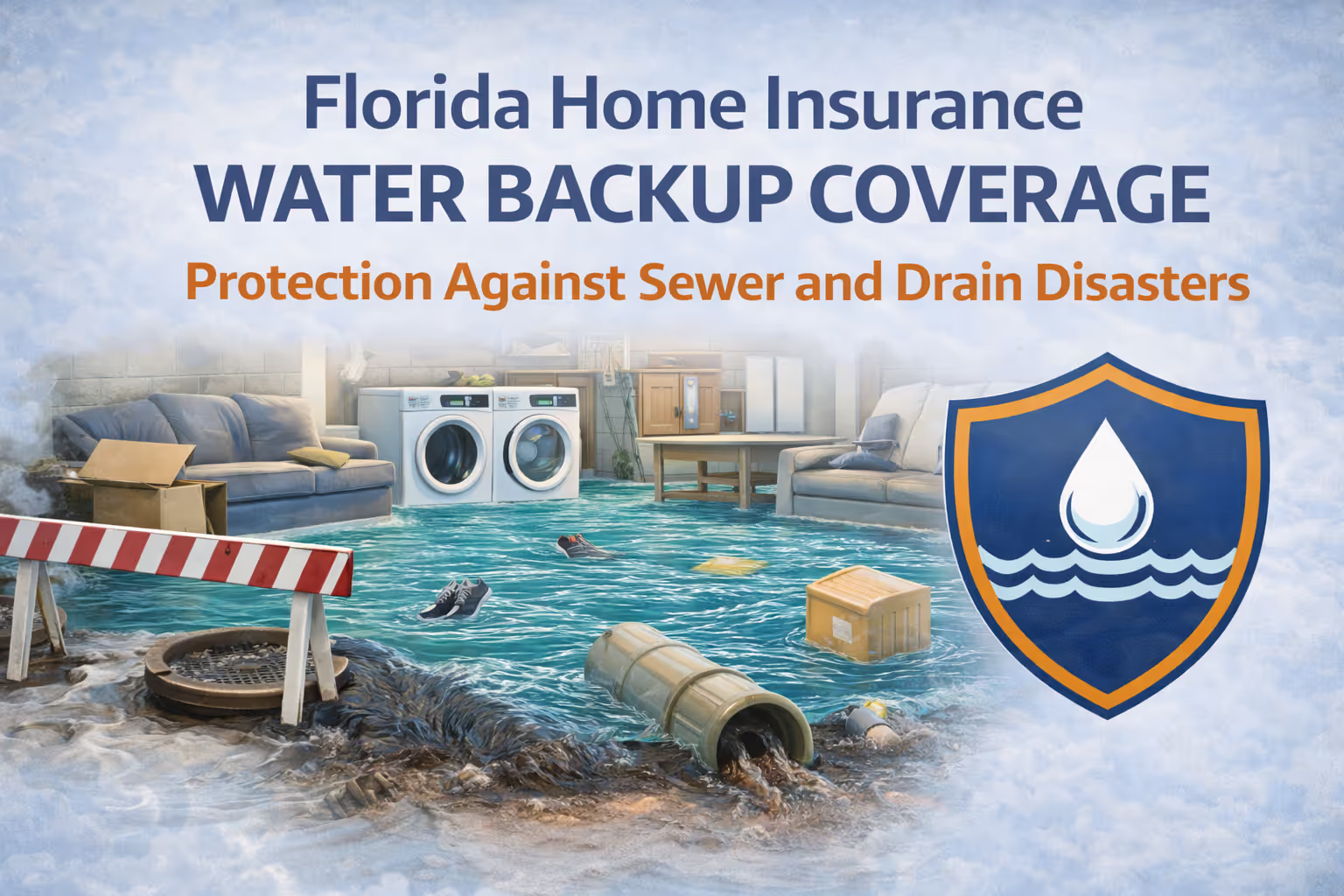
Water damage prevention deserves particular attention since water claims are common and often suggest ongoing problems to insurers. Fix leaks immediately, maintain water heaters, replace aging supply hoses, and consider water leak detection systems that catch problems early.
Storm preparation reduces hurricane claim likelihood. Properly installed hurricane shutters, secured outdoor items, trimmed trees, and maintained roofs minimize damage when storms strike. Every storm that passes without generating a claim extends your claims-free streak.
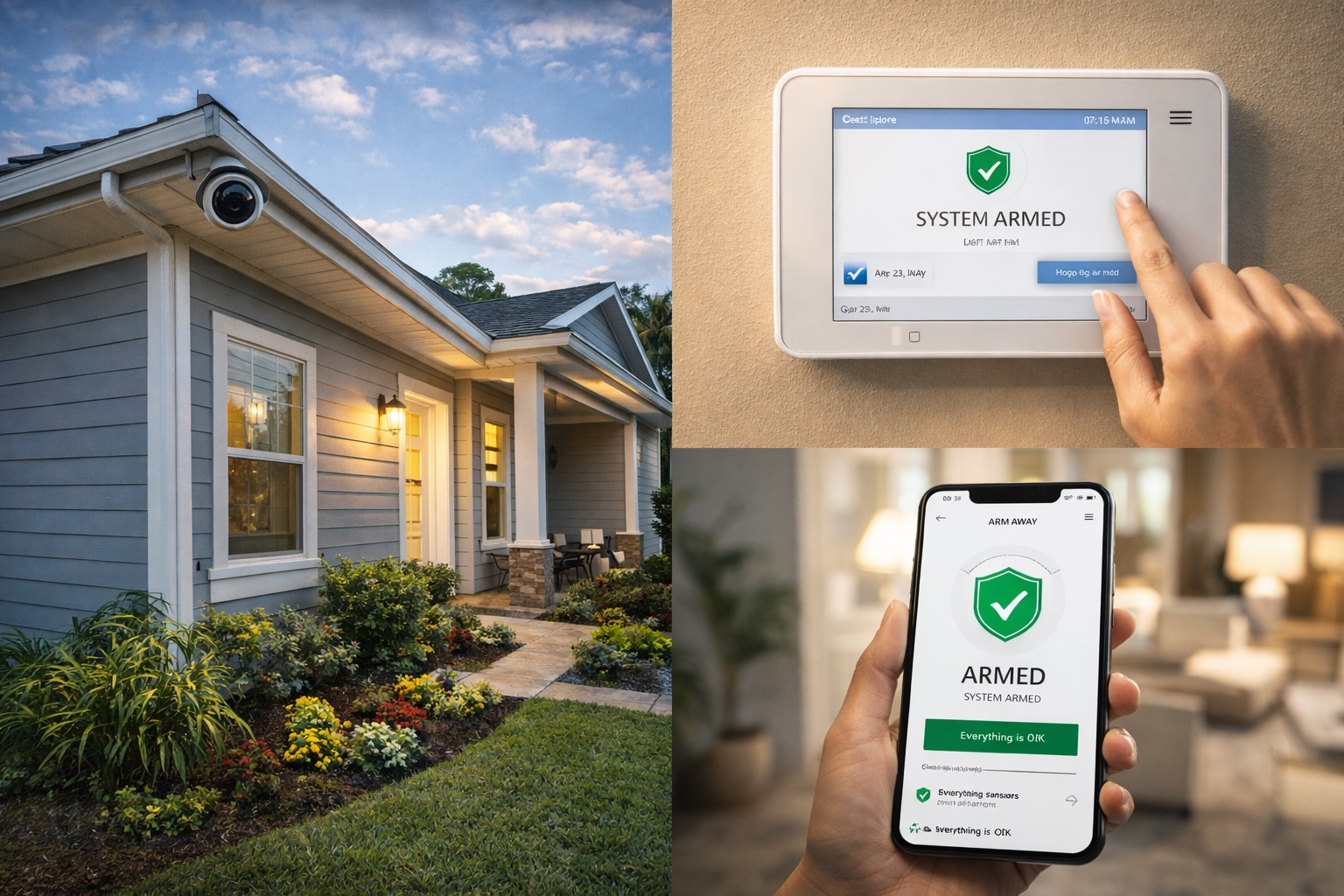
Security measures prevent theft claims. Alarm systems, quality locks, secured valuables, and neighborhood awareness reduce burglary risk. A theft claim affects your record just like any other loss.
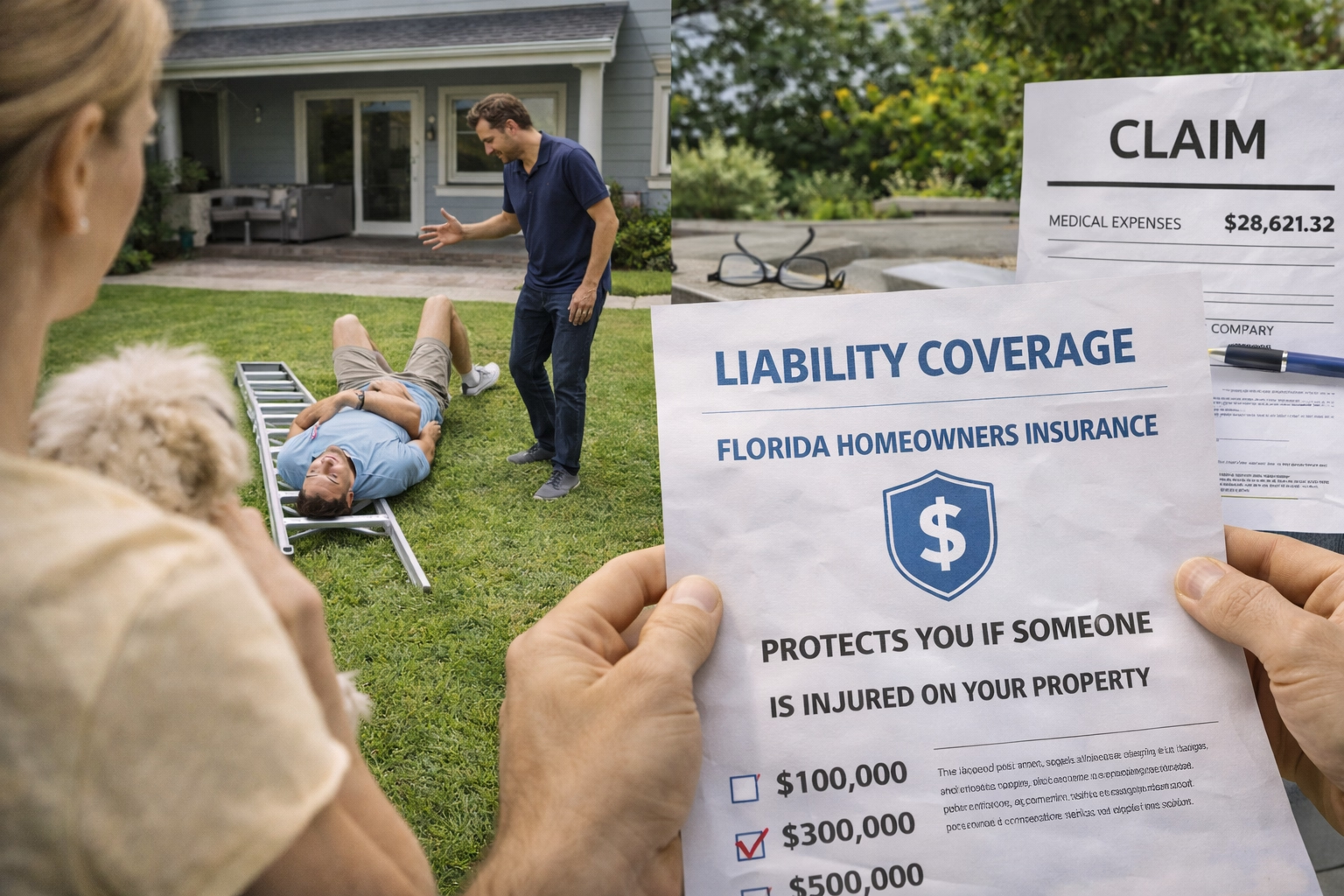
Liability risk reduction prevents the most damaging claim category. Maintain safe premises, address hazards promptly, supervise activities at your home carefully, and consider appropriate liability coverage limits for incidents that do occur.
Small repairs done promptly prevent larger problems. A minor roof leak fixed immediately costs a few hundred dollars. Ignored for months, it becomes water damage affecting multiple rooms and potentially generating a claim costing thousands in premium impact.
Claims History Reporting and Your Rights
Understanding how claims information flows through the insurance industry helps you manage your record and correct errors affecting your premium.
CLUE reports track your claims history. The Comprehensive Loss Underwriting Exchange database, maintained by LexisNexis, records claims filed on properties you've owned and follows you to future policies. Insurers check CLUE when pricing coverage and making underwriting decisions.
Requesting your CLUE report reveals what insurers see about your history. You're entitled to one free report annually under federal law. Review your report for accuracy and dispute any errors. Incorrect claims on your record affect your premiums unfairly.
A-PLUS is another claims database maintained by Verisk. Some insurers use A-PLUS instead of or alongside CLUE. Request both reports to see complete information affecting your insurance.
Dispute resolution processes exist for incorrect information. If your report shows claims you didn't file, claims on properties you never owned, or inaccurate claim details, submit disputes to the reporting agency. Corrected records can restore discounts you've been unfairly denied.
Claims generally remain on record for five to seven years depending on the database and claim type. Older claims eventually age off your history, gradually restoring your ability to earn maximum claims-free discounts. Patience and continued claims-free behavior eventually overcome past history.
Inquiry recording varies by insurer and database. Some insurers record claim inquiries even when no claim is paid. Before calling your insurer to ask whether something is covered, consider that the call itself might be noted. For simple questions, consult your policy documents or agent first.
Rebuilding After Claims
If you've filed claims and lost your claims-free discount, strategies exist to minimize ongoing impact and rebuild your discount status over time.
Avoid additional claims during the rebuilding period. With one claim already affecting your record, a second claim creates much greater problems. Be especially conservative about filing during the three to five years after a previous claim.
Shop for coverage recognizing your current status. Different insurers penalize claims differently. Some may offer better rates despite your claims history while others penalize it heavily. Shopping with claims on your record takes more effort but can identify insurers treating your situation more favorably.
Document your claims-free progress going forward. As years pass without additional claims, your record improves. By year three after a claim, you're rebuilding meaningful claims-free tenure. By year five or beyond, the prior claim ages off many calculations.
Consider higher deductibles to reduce future filing temptation. A $5,000 or $10,000 deductible makes filing small claims financially illogical, reducing the chance of additional claims during your rebuilding period. The lower premium from higher deductibles partially offsets lost claims-free discount.
Invest in loss prevention to avoid repeat issues. If water damage generated your claim, invest in leak detection and plumbing improvements. If storm damage was the cause, improve your home's hurricane resistance. Preventing the same type of loss from recurring protects your rebuilding progress.
Frequently Asked Questions
How much can I save with a claims-free discount in Florida?
Claims-free discounts typically range from 5% to 20% depending on how long you've remained claim-free and which insurer you use. On a $5,000 annual premium, this represents $250 to $1,000 in savings. Maximum discounts usually require five or more years without claims.
How long do claims stay on my insurance record?
Claims typically remain on your CLUE report and affect your premiums for five to seven years. Some insurers weight recent claims more heavily than older ones, so impact may diminish before claims fully age off your record.
Will filing one claim significantly increase my premium?
Usually yes. Filing a claim eliminates your claims-free discount immediately and may trigger additional surcharges. A single claim can increase premiums by 10% to 30% or more, with impacts lasting several years. Calculate total multi-year premium impact before filing smaller claims.
Should I file small claims that barely exceed my deductible?
Generally no. If damage only slightly exceeds your deductible, the insurance recovery is small while premium impact can be large. A $3,500 loss with a $2,500 deductible yields only $1,000 in insurance payment but could cost thousands in premium increases over subsequent years.
Does my claims history follow me when I switch insurance companies?
Yes. Insurers check industry databases like CLUE when you apply for coverage. Your claims history from previous properties and previous insurers affects your new policy's pricing. Claims-free discounts transfer based on your actual loss record.
Can I dispute incorrect claims on my insurance record?
Yes. Request your CLUE report from LexisNexis annually for free. Review for errors including claims you didn't file, claims on properties you never owned, or inaccurate details. Submit disputes for incorrect information, which the reporting agency must investigate and correct if warranted.
If you’re a homeowner in Florida, having the right insurance coverage is essential to protect your investment from hurricanes, floods, and other unexpected events. Learn more about the different coverage options, policy requirements, and ways to save by visiting our detailed guide to Florida homeowners insurance.

Get a
Florida Home Insurance
Quote







.avif)




























To see how Worth can reduce your risk.
Get a Free Quote


