Florida Home Insurance Liability Coverage: What It Protects and How Much You Need
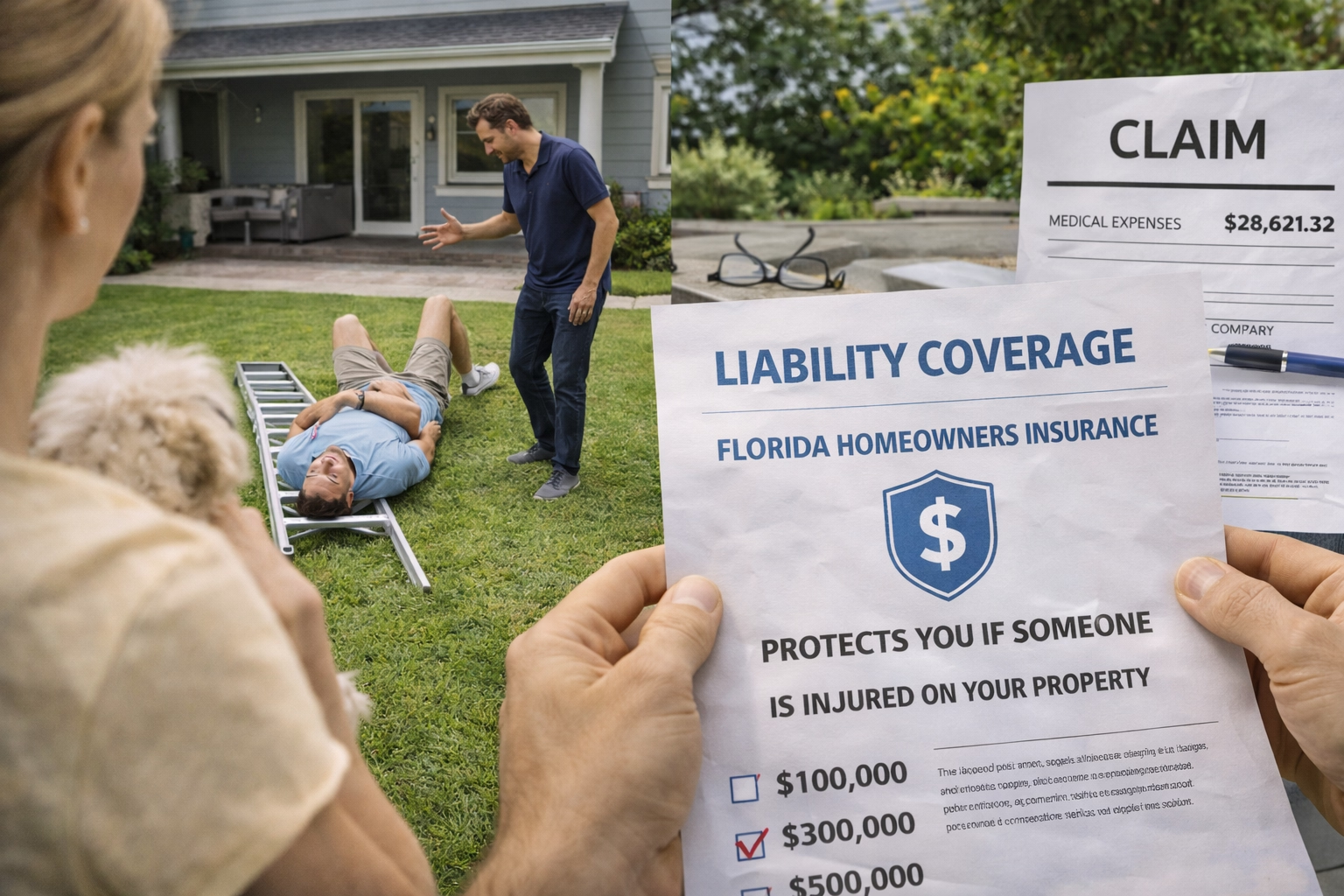
Florida home insurance liability coverage pays for legal expenses and damages when you're held responsible for injuring someone or damaging their property.
If a guest slips on your wet pool deck and breaks their hip, or your child accidentally throws a baseball through a neighbor's window, liability coverage handles the financial fallout.
Standard Florida homeowners policies include $100,000 in liability protection, though this baseline often falls short given today's medical costs and legal judgments.
Liability coverage works as your financial shield against lawsuits and claims arising from accidents connected to your property or your actions.
It covers legal defense costs even if a lawsuit is frivolous, pays settlements or judgments up to your policy limits, and includes medical payments coverage for minor injuries regardless of fault.
Understanding how this protection works helps you decide whether your current limits adequately protect your assets.
What Liability Coverage Actually Covers
Your liability coverage kicks in when someone suffers bodily injury or property damage for which you're legally responsible. The coverage extends beyond incidents on your property to include accidents you or family members cause elsewhere, with some exceptions.
Imagine a scenario where your dog bites a delivery driver on your front porch. Liability coverage would pay the driver's medical bills, lost wages, and pain and suffering damages up to your policy limits. It would also cover your legal defense if the driver sued you. The same protection applies if your tree falls onto a neighbor's car during a storm and you're found negligent for not removing a visibly dying tree.
Coverage extends to incidents away from home in many situations. If your child accidentally injures another player during a neighborhood soccer game, or you damage someone's property while helping them move furniture, your homeowners liability may respond. However, auto accidents fall under car insurance, and business activities typically require separate coverage.
Your policy also includes medical payments coverage, usually $1,000 to $5,000, which pays for minor injuries to guests regardless of whether you're at fault. This no-fault coverage handles situations like a friend twisting their ankle on your stairs without requiring a liability claim or lawsuit.
What Liability Coverage Doesn't Cover
Understanding exclusions prevents unpleasant surprises when you need coverage most. Intentional acts fall outside liability protection entirely. If you deliberately injure someone or damage property, your insurance won't help. Courts have consistently upheld this exclusion even when policyholders claim they didn't intend the specific harm that resulted.
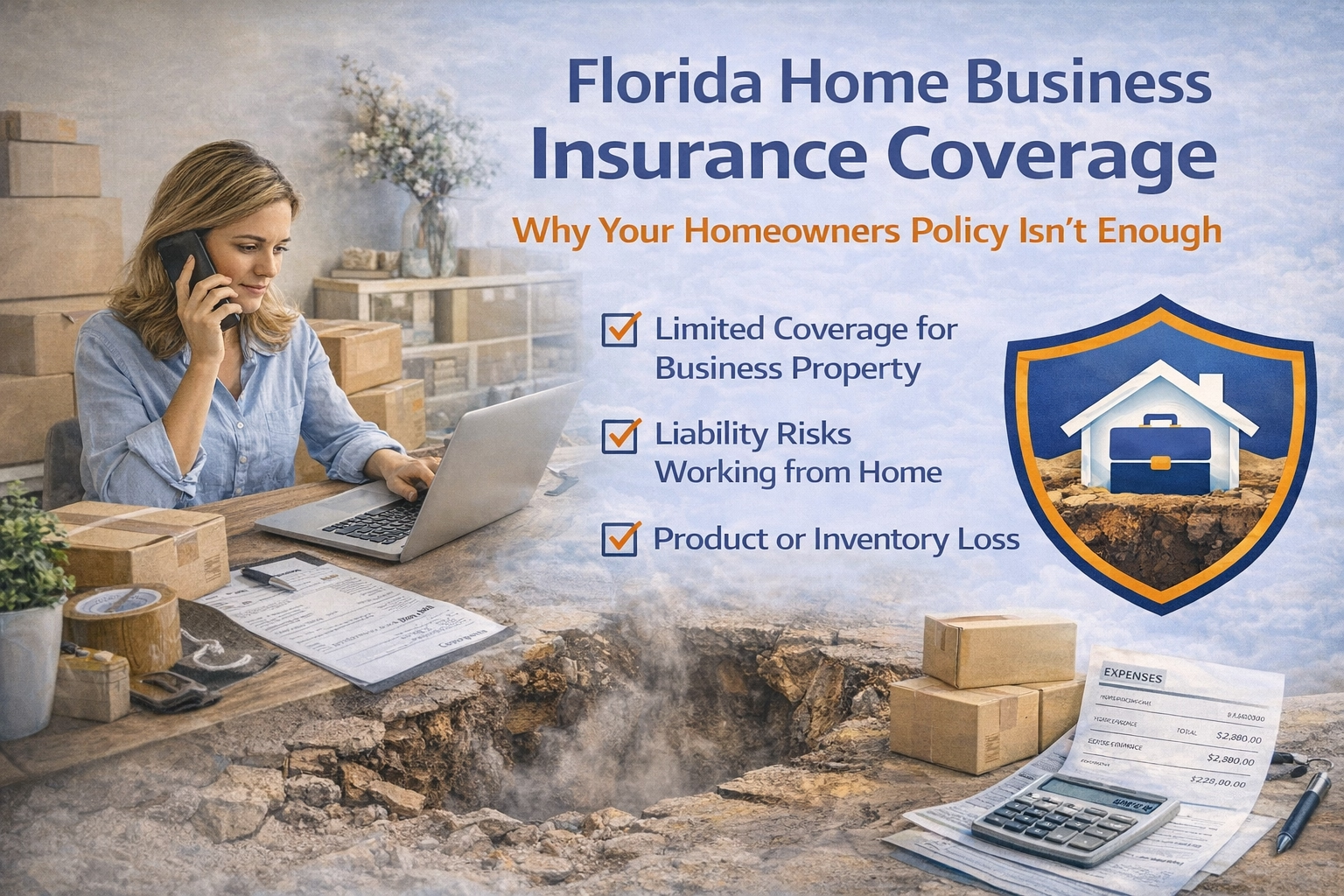
Business activities conducted from home typically aren't covered under personal liability. If clients visit your home office and someone gets hurt, your homeowners policy likely won't respond. Professional liability insurance or a home business endorsement addresses this gap.
Motor vehicle accidents require auto insurance even when they occur on your property. If you accidentally run over a neighbor while backing down your driveway, that's an auto claim. Watercraft over certain horsepower limits need separate boat insurance coverage as well.
Most policies exclude or limit coverage for certain dog breeds deemed dangerous. If you own a pit bull, Rottweiler, or other breed on your insurer's restricted list, liability coverage for dog bites may be excluded or limited. Some Florida insurers won't write policies at all for homes with restricted breeds.
How Much Liability Coverage Do You Need
The standard $100,000 liability limit leaves many Florida homeowners dangerously exposed. A serious injury lawsuit can easily exceed this amount, leaving you personally responsible for the difference. Consider what you have to lose when evaluating appropriate limits.
Courts can garnish wages, seize bank accounts, and place liens on property to satisfy judgments exceeding your insurance limits. If you own a home with equity, have retirement savings, earn a good income, or possess other assets, you have more to protect. A lawsuit judgment of $500,000 against someone with only $100,000 in liability coverage means $400,000 in personal exposure.
Most insurers offer liability limits of $100,000, $300,000, or $500,000 on standard Florida home insurance policies. The premium difference between $100,000 and $300,000 is typically modest, often just $20 to $50 annually. Moving from $100,000 to $500,000 might cost $50 to $100 more per year. Given the protection gained, higher limits represent excellent value.
A common guideline suggests carrying liability coverage at least equal to your net worth. Someone with $400,000 in assets should consider at least $400,000 in coverage. However, future earnings also face exposure in major lawsuits, so even those with modest current assets should consider higher limits.
When You Need Umbrella Insurance
When $500,000 in liability coverage isn't enough, umbrella insurance provides additional protection. Umbrella policies sit above your home and auto liability coverage, adding $1 million or more in limits for relatively low premiums.
Let's say you carry $300,000 in homeowners liability and someone suffers a severe injury on your property resulting in a $1.2 million judgment. Without umbrella coverage, you'd owe $900,000 personally. With a $1 million umbrella policy, the umbrella would cover the excess after your homeowners liability pays its $300,000, leaving you responsible for only $200,000 rather than $900,000.
Umbrella policies typically cost $200 to $400 annually for $1 million in coverage, making them remarkably affordable given the protection they provide. They usually require you to maintain minimum underlying liability limits on your home and auto policies, often $300,000 or more.
Florida homeowners with pools, trampolines, boats, rental properties, teenage drivers, or significant assets should seriously consider umbrella coverage. The combination of Florida's active outdoor lifestyle and its reputation for litigation makes higher liability limits prudent for many households.
Liability Considerations for Florida-Specific Risks
Florida's climate and lifestyle create liability exposures that homeowners elsewhere might not face. Swimming pools represent one of the most significant risks. Pool drownings and diving injuries generate some of the largest premises liability claims, and Florida has more residential pools than any other state.
If you have a pool, ensure your liability limits reflect this increased risk. Many insurance professionals recommend at least $300,000 in liability coverage for pool owners, with umbrella coverage strongly advised. Proper fencing, self-latching gates, and pool alarms can reduce both your risk and potentially your premiums.
Trampolines create similar concerns. Injuries from trampoline accidents result in thousands of emergency room visits annually. Some Florida insurers exclude trampoline injuries from coverage entirely, while others require safety netting and other precautions. Check your policy language if you have a trampoline.
If you rent out your home seasonally or through platforms like Airbnb, standard homeowners liability may not cover incidents involving paying guests. Landlord insurance or specialized short-term rental coverage addresses this gap.
The Claims Process for Liability Incidents
When someone threatens to sue or actually files a lawsuit, your liability coverage response begins with notifying your insurer immediately. Prompt notification matters because policies require timely reporting, and delays can jeopardize coverage.
Your insurer assigns a claims adjuster and, if a lawsuit is filed, provides legal defense through attorneys they select. This defense comes at no additional cost to you and doesn't reduce your liability limits. Even frivolous lawsuits that ultimately get dismissed can cost tens of thousands in legal fees, which your coverage handles.
If the claim has merit, your insurer typically attempts to negotiate a settlement within your policy limits. You have input in this process, but insurers generally have authority to settle claims they believe could result in larger judgments at trial. If a claim exceeds your limits, the insurer will often advise you to retain personal counsel to protect your interests in any excess exposure.
Document everything when incidents occur. Take photographs, gather witness contact information, and write down exactly what happened while details are fresh. Don't admit fault or make statements that could be used against you later. Cooperate fully with your insurer's investigation.
Frequently Asked Questions
What does homeowners liability coverage actually pay for?
Liability coverage pays for bodily injury and property damage you're legally responsible for causing. This includes medical expenses for the injured person, their lost wages, pain and suffering damages, and property repair or replacement costs. It also pays your legal defense costs regardless of whether the lawsuit succeeds.
How much liability coverage should I carry on my Florida home insurance?
At minimum, consider $300,000 in liability coverage, which costs only modestly more than the standard $100,000. Homeowners with pools, significant assets, or higher incomes should consider $500,000 or adding an umbrella policy. The goal is coverage sufficient to protect your assets and future earnings from a lawsuit judgment.
Does liability coverage protect me if my dog bites someone?
Most Florida homeowners policies cover dog bite liability, but many insurers exclude certain breeds or limit coverage after a first bite incident. Check your policy for breed restrictions and bite history provisions. If you own a restricted breed, you may need to find specialized coverage.
Am I covered if someone gets hurt at my house during a party?
Yes, liability coverage generally applies when guests are injured on your property during social gatherings. Medical payments coverage handles minor injuries without requiring proof of fault. For serious injuries where you might be found negligent, liability coverage provides legal defense and pays damages up to your limits.
What's the difference between liability coverage and medical payments coverage?
Liability coverage requires you to be legally at fault and pays larger amounts for serious injuries and lawsuits. Medical payments coverage pays smaller amounts, typically $1,000 to $5,000, for guest injuries regardless of fault. Medical payments provide quick resolution for minor incidents without involving liability claims.
Does my homeowners liability cover me away from home?
Personal liability coverage often extends to incidents away from your property where you or family members accidentally injure someone or damage property. However, auto accidents require car insurance, and many activities like organized sports may have exclusions. Review your policy for specific coverage territory details.
If you’re a homeowner in Florida, having the right insurance coverage is essential to protect your investment from hurricanes, floods, and other unexpected events. Learn more about the different coverage options, policy requirements, and ways to save by visiting our detailed guide to Florida homeowners insurance.

Get a
Florida Home Insurance
Quote






.avif)




















To see how Worth can reduce your risk.
Get a Free Quote


