Florida Umbrella Insurance for Homeowners: Extra Protection When Standard Limits Aren't Enough

Florida umbrella insurance provides an additional layer of liability protection beyond what your homeowners and auto policies cover. When a serious accident results in a lawsuit exceeding your standard policy limits, an umbrella policy steps in to cover the excess, potentially saving you from financial devastation.
A guest who suffers a catastrophic injury at your pool, a car accident where you're at fault for someone's permanent disability, or a defamation claim from something you posted online can all generate judgments far exceeding typical liability limits. Umbrella insurance exists specifically for these scenarios.
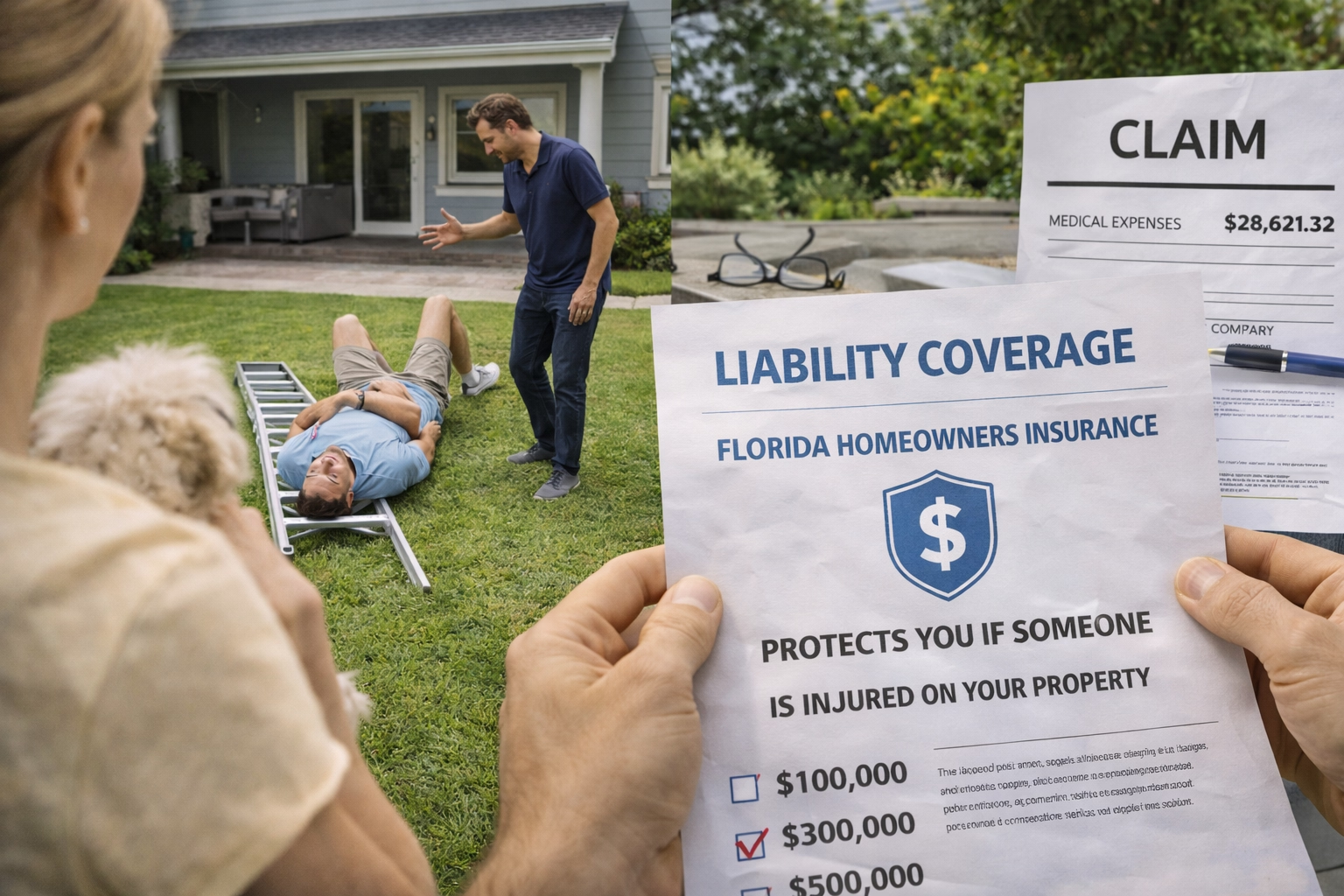
Standard Florida home insurance policies typically include $100,000 to $500,000 in liability coverage. While this seems substantial, a single serious injury lawsuit can easily exceed these amounts. Medical costs for traumatic injuries reach hundreds of thousands of dollars. Lost wages for someone who can't work again add more. Pain and suffering awards multiply the total further. A $1 million or $2 million judgment against someone with only $300,000 in liability coverage means $700,000 to $1.7 million in personal exposure. Umbrella insurance closes this gap.
How Umbrella Insurance Works
Umbrella policies function as excess liability coverage sitting above your underlying homeowners and auto insurance. They don't replace your existing coverage but extend it, activating only after your primary policies pay their limits.
Consider this scenario: a visitor slips on your wet pool deck, suffers a severe spinal injury, and sues you for $1.2 million. Your homeowners policy includes $300,000 in liability coverage. Without an umbrella, your insurer pays $300,000 and you personally owe the remaining $900,000. With a $1 million umbrella policy, the umbrella covers the $900,000 excess after your homeowners policy pays its limit, and you owe nothing beyond your normal insurance costs.
The same principle applies to auto accidents. If you cause a crash resulting in $800,000 in damages and your auto policy provides $250,000 in liability coverage, the umbrella pays the $550,000 difference. Umbrella policies typically cover both your homeowners and auto liability exposures under a single policy.
Umbrella policies also cover some claims your underlying policies exclude. Personal injury claims including defamation, libel, slander, and false arrest often fall under umbrella coverage even when homeowners policies exclude them. This broader coverage extends your protection beyond simply adding higher limits to existing coverage categories.
Most umbrella claims arise from auto accidents rather than homeowners incidents simply because driving creates more frequent serious injury opportunities. However, Florida's outdoor lifestyle with pools, boats, and recreational activities makes homeowners-related umbrella claims more common here than in many states.
What Umbrella Insurance Covers
Umbrella policies cover a broad range of liability exposures affecting you and your household members. Understanding this scope helps you appreciate the protection's value.
Bodily injury liability covers injuries you cause to others, whether through negligence at your home, in your car, or elsewhere. Medical expenses, rehabilitation costs, lost income, and pain and suffering all fall under this coverage. The severe injury claims generating umbrella-level judgments typically involve permanent disabilities, disfigurement, or death.
Property damage liability covers damage you cause to others' property. While property damage claims rarely reach umbrella limits in isolation, they can combine with bodily injury claims in the same incident. A car accident that totals an expensive vehicle while injuring occupants might exceed underlying limits through combined property and injury damages.
Personal injury liability covers non-physical harms including defamation, libel, slander, invasion of privacy, false arrest, and malicious prosecution. Social media posts damaging someone's reputation, false accusations against neighbors, or privacy violations can all trigger these claims. Many homeowners policies exclude or limit personal injury coverage, making umbrella protection particularly valuable.
Landlord liability extends coverage to rental properties you own. If a tenant or visitor is injured at your rental property and sues beyond your landlord insurance limits, your umbrella policy responds. This matters for Florida homeowners who rent properties seasonally or own investment real estate.
Legal defense costs are covered under most umbrella policies, often in addition to your liability limits rather than reducing them. Complex liability lawsuits can generate six-figure defense costs before any settlement or judgment. Having defense costs covered separately preserves your full liability limits for actual damages.
What Umbrella Insurance Doesn't Cover
Understanding exclusions prevents unpleasant surprises when you expect coverage that doesn't exist. Umbrella policies exclude certain categories of claims that require separate coverage.
Business activities fall outside personal umbrella coverage. Professional errors, business liability claims, and employment-related lawsuits need commercial coverage. If you operate a home business, your personal umbrella won't cover business-related claims. Professional liability insurance and business liability policies address these exposures.
Intentional acts aren't covered regardless of circumstances. If you deliberately injure someone or damage property, umbrella coverage won't respond. This exclusion extends to criminal acts and knowing violations of law. Courts have consistently upheld these exclusions even when defendants claim they didn't intend the specific harm that resulted.
Contractual liability assumed through agreements typically falls outside coverage. If you sign a contract making you responsible for another party's actions, that assumed liability generally isn't covered. Business contracts, lease agreements, and service contracts can create exposures umbrella policies won't address.
Workers' compensation claims for household employees need separate coverage. If you employ housekeepers, nannies, caregivers, or other domestic workers, injuries they suffer on the job require workers' compensation insurance, not umbrella coverage.
Damage to your own property isn't liability. Umbrella policies cover claims from others, not your own losses. Your homeowners policy covers damage to your property, while umbrella coverage addresses your liability to others.
Certain vehicle types may face exclusions. Aircraft liability, watercraft over specified sizes, and recreational vehicles may be excluded or require specific scheduling. If you own boats or other vehicles, verify umbrella coverage applies or obtain separate policies.
How Much Umbrella Coverage Do You Need
Determining appropriate umbrella limits involves assessing what you have to lose and what scenarios might create large claims. There's no universal right answer, but several factors guide the decision.
Your net worth provides a starting point. Assets courts can seize to satisfy judgments include home equity, investment accounts, retirement funds in some cases, and other property. Someone with $1 million in assets faces $1 million in potential exposure from uninsured judgments. Coverage should at least match assets you want to protect.
Future income also faces exposure. Courts can garnish wages to satisfy judgments for years. A professional earning $200,000 annually could see $50,000 or more garnished yearly until a judgment is satisfied. High earners face greater exposure than their current assets alone suggest.
Your risk profile matters. Do you have a swimming pool? Teenagers who drive? A dog? Regular houseguests? Rental properties? Active social media presence? Each factor creates potential for claims. Higher-risk situations warrant higher limits.
Common umbrella policy limits range from $1 million to $5 million, with some insurers offering $10 million or higher. Most Florida homeowners find $1 million to $2 million appropriate for their situations. Those with substantial assets or high incomes often carry $3 million to $5 million.
The cost difference between coverage levels is relatively modest. Adding another million in coverage typically costs $75 to $150 annually after the first million. This low marginal cost makes higher limits attractive for anyone with meaningful assets to protect.
Umbrella Insurance Costs and Requirements
Umbrella insurance offers remarkable value given the protection provided. Understanding pricing and requirements helps you budget appropriately.
A $1 million umbrella policy typically costs $200 to $400 annually for most Florida households. Factors affecting price include your claims history, the number of homes, vehicles, and drivers covered, whether you have pools or other risk factors, and your selected coverage limit.
Each additional million in coverage adds relatively little cost. Moving from $1 million to $2 million might add $75 to $150 annually. A $5 million policy might cost $500 to $800 total annually, providing substantial protection for modest additional premium beyond the first million.
Underlying insurance requirements must be met before umbrella coverage activates. Insurers require minimum liability limits on your homeowners and auto policies, typically $300,000 to $500,000 on homeowners and $250,000/$500,000 bodily injury limits on auto. If your current policies carry lower limits, you'll need to increase them before obtaining umbrella coverage.
These underlying requirements exist because umbrella policies are excess coverage, not primary coverage. The umbrella activates only after underlying policies pay their limits. Adequate underlying coverage ensures umbrella policies respond to truly catastrophic losses rather than routine claims.
Most insurers prefer or require you to have your umbrella policy with the same company providing your homeowners and auto coverage. This coordination ensures seamless coverage without gaps between underlying and umbrella policies. Some insurers offer umbrella discounts when you bundle multiple policies with them.
Who Needs Umbrella Insurance
While anyone can face a catastrophic liability claim, certain factors make umbrella coverage particularly important for some Florida homeowners.
Pool owners face elevated drowning and injury risk. Swimming pool liability claims can reach millions of dollars when serious injuries occur. Florida has more residential pools than any other state, and umbrella coverage provides essential protection for pool owners.
Teenage drivers in the household dramatically increase auto accident risk. Young drivers cause accidents at higher rates than experienced drivers, and serious accidents can exceed auto policy limits. Parents of teen drivers should strongly consider umbrella coverage.
Dog owners face bite liability that can result in substantial claims. Serious dog attacks cause injuries generating large medical bills and pain and suffering awards. Certain breeds may require umbrella coverage for any protection since some homeowners policies exclude them.
Landlords with rental properties face liability from multiple properties. Even with adequate landlord insurance on each property, a serious incident could exceed single-property limits. Umbrella coverage extends protection across all properties you own.
High-net-worth households have more to protect and more to lose. Greater assets mean greater exposure to judgment collection. Higher incomes mean more future earnings at risk. Those with significant wealth should carry umbrella limits reflecting their exposure.
Active social media users face defamation and privacy risks that barely existed a generation ago. Posts, comments, and shares can create liability for reputational harm. Umbrella policies covering personal injury provide protection homeowners policies often exclude.
Boat owners face watercraft liability that may exceed boat insurance limits. Serious boating accidents can generate large claims, and Florida boat insurance limits may not suffice. Umbrella policies can extend protection to watercraft within specified size limits.
Anyone who hosts gatherings faces premises liability for guest injuries. Regular entertaining increases the opportunities for someone to be injured at your home. A single serious injury to a guest can exceed standard homeowners liability limits.
Frequently Asked Questions
What is umbrella insurance?
Umbrella insurance provides additional liability coverage beyond your homeowners and auto policy limits. It activates when a claim exceeds your underlying coverage, protecting your assets from large judgments. Umbrella policies also cover some claims underlying policies exclude, like certain personal injury claims.
How much does umbrella insurance cost in Florida?
A $1 million umbrella policy typically costs $200 to $400 annually for most Florida households. Each additional million in coverage adds approximately $75 to $150. A $2 million policy might cost $300 to $500 annually, while $5 million coverage might run $500 to $800.
How much umbrella coverage do I need?
Coverage should at least match your net worth plus consideration for future earnings. Someone with $500,000 in assets and high income might want $1 million to $2 million. Those with $1 million or more in assets often carry $2 million to $5 million. The low marginal cost of additional coverage makes higher limits attractive.
What are the requirements for umbrella insurance?
Insurers require minimum underlying liability limits on your homeowners and auto policies before issuing umbrella coverage. Typical requirements include $300,000 to $500,000 in homeowners liability and $250,000/$500,000 in auto bodily injury liability. You may need to increase existing coverage to meet these thresholds.
Does umbrella insurance cover my business?
No. Personal umbrella policies exclude business activities, professional liability, and employment-related claims. If you operate a business, you need commercial liability coverage separate from your personal umbrella policy. Home-based businesses require their own coverage since personal umbrella policies won't protect business claims.
Does umbrella insurance cover rental properties?
Yes, typically. Umbrella policies generally extend coverage to rental properties you own personally. However, you should maintain adequate landlord insurance as underlying coverage on each rental property. The umbrella activates when claims exceed your landlord policy limits.
If you’re a homeowner in Florida, having the right insurance coverage is essential to protect your investment from hurricanes, floods, and other unexpected events. Learn more about the different coverage options, policy requirements, and ways to save by visiting our detailed guide to Florida homeowners insurance.

Get a
Florida Home Insurance
Quote





.avif)


















To see how Worth can reduce your risk.
Get a Free Quote


