Florida Home Insurance Fire Alarm Discounts: How Smoke Detectors and Fire Monitoring Save You Money
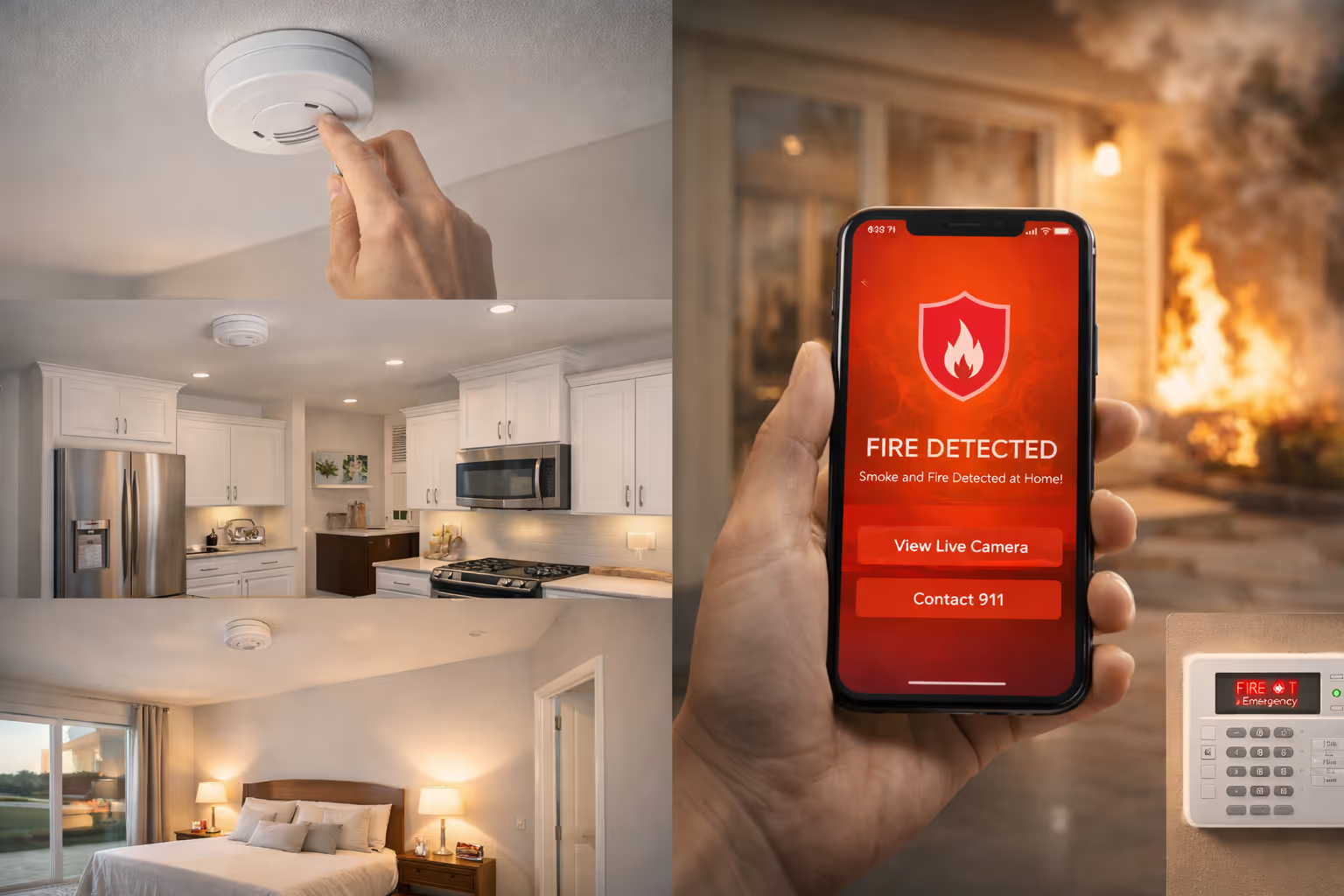
Florida home insurance fire alarm discounts reward homeowners who install smoke detectors, fire alarms, and fire monitoring systems with premium reductions ranging from 2% to 10% depending on the type and sophistication of protection.
While Florida homeowners understandably focus on hurricane coverage, fire remains a significant cause of home insurance claims and accounts for billions in property losses nationwide each year. Insurers recognize that early fire detection dramatically reduces damage severity, and they pass along savings to homeowners who invest in fire protection.
Every Florida home should have working smoke detectors regardless of insurance discounts since they save lives. The insurance savings simply add financial incentive to what's already essential safety equipment. Understanding how different fire protection levels affect your premium helps you make informed decisions about upgrading beyond basic smoke detectors to more sophisticated systems that earn larger discounts while providing better protection.
Types of Fire Alarm Discounts
Insurance companies categorize fire protection into tiers based on detection capability and response assurance. Each tier earns different discount levels reflecting its effectiveness at reducing fire losses.
Basic smoke detector discounts apply to standard battery-operated or hardwired smoke detectors installed in your home. These fundamental devices detect smoke and sound local alarms alerting occupants to evacuate. Florida building codes require smoke detectors in all residences, making this baseline protection nearly universal. Discounts for basic smoke detectors typically range from 1% to 3% since most homes already have them.
Hardwired smoke detector discounts may slightly exceed battery-operated detector credits at some insurers. Hardwired detectors connect to your home's electrical system with battery backup, ensuring continuous operation without depending on battery replacement. The reliability advantage earns marginally higher discounts of 2% to 4% from some insurers.
Interconnected smoke detector systems where all detectors sound simultaneously when any single unit detects smoke earn additional recognition. When smoke is detected in the basement, detectors throughout the house alert everyone regardless of location. This interconnection improves evacuation response and may qualify for enhanced discounts.
Monitored fire alarm discounts provide the largest savings, typically 5% to 10%. These systems connect to professional monitoring centers that dispatch fire departments when alarms trigger, ensuring response even when occupants are away, asleep, or incapacitated. The guaranteed professional response dramatically improves outcomes and earns the highest discount tier.
Fire sprinkler system discounts reward homes with automatic sprinkler systems that suppress fires immediately upon detection. Residential sprinklers are uncommon in existing Florida homes but increasingly appear in new construction and high-value properties. Discounts of 5% to 15% may apply depending on system type and coverage extent.
Combination fire and burglar monitoring typically qualifies for comprehensive protective device discounts exceeding what either system would earn alone. Bundling fire protection with security system coverage through a single monitoring service maximizes total savings.
How Much Can Fire Protection Save
Calculating actual savings reveals whether fire protection investments make financial sense beyond their primary safety value. The math often favors upgrading from basic smoke detectors to monitored systems.
On a $5,000 annual Florida home insurance premium, basic smoke detector discounts of 2% save $100 annually. This modest savings doesn't justify installing smoke detectors for insurance purposes alone, but since every home needs them anyway, the discount is essentially free money for equipment you should already have.
Upgrading to monitored fire protection earning a 7% discount saves $350 annually on that same $5,000 premium. The $250 additional savings compared to basic detectors often exceeds monitoring costs when fire monitoring is bundled with burglar alarm service. If combined security and fire monitoring costs $30 monthly, the $360 annual monitoring cost is largely offset by the $350 fire discount alone, before counting burglar alarm discounts.
Fire sprinkler systems generate larger discounts but involve significant installation costs. A 10% discount on a $5,000 premium saves $500 annually, but residential sprinkler installation costs $10,000 to $30,000 depending on home size and complexity. The payback period of 20 to 60 years makes sprinklers difficult to justify purely for insurance savings in existing homes, though they may make sense in new construction where installation is simpler and cheaper.
Higher premiums amplify savings proportionally. A coastal Florida homeowner paying $10,000 annually saves $700 with 7% monitored fire protection discounts. Over a decade of ownership, $7,000 in fire alarm savings substantially exceeds equipment and monitoring costs.
Premium savings combine with potential claim reduction. Homes with monitored fire protection experience smaller average fire losses because early detection and rapid response limit damage. Even if fire discounts seem modest, avoiding a major fire loss represents enormous financial protection beyond premium savings.
Qualifying for Fire Alarm Discounts
Obtaining fire protection discounts requires proper documentation and communication with your insurer. Simply having equipment installed doesn't automatically generate savings.
Notify your insurer about your fire protection when obtaining quotes or at policy inception. Provide details about detector types, locations, whether systems are monitored, and monitoring company information. Insurers need this information to apply appropriate discounts.
Documentation requirements vary but typically include monitoring service contracts for monitored systems, installation certificates or receipts, and sometimes equipment specifications. Professional installation documentation may carry more weight than DIY installation for some insurers.
Monitoring service verification confirms active professional monitoring rather than dormant equipment. Insurers may request monitoring certificates or contact information to verify your service. If you cancel monitoring, notify your insurer to remove discounts that no longer apply.
Inspection may be required for larger discounts, particularly for fire sprinkler systems. Insurers may send inspectors or request inspection reports from local fire marshals before applying maximum discounts.
Annual renewal verification maintains discounts over time. Some insurers confirm continued protection at each renewal. Maintaining documentation and being prepared to verify your fire protection ensures uninterrupted discounts.
Proper maintenance of fire protection equipment matters for both safety and insurance. Smoke detectors with dead batteries or malfunctioning monitoring connections don't provide protection. Regular testing and maintenance keep your protection and your discounts valid.
Smoke Detector Placement and Requirements
Proper smoke detector placement maximizes both safety and discount eligibility. Understanding requirements helps ensure your installation qualifies for available credits.
Florida building codes require smoke detectors in every bedroom, outside each sleeping area, and on every level of the home including basements. Homes built under different code eras may have fewer detectors than current standards require. Bringing your home up to current standards improves both safety and potential discount eligibility.
Kitchen smoke detectors should be positioned to detect fires without excessive false alarms from cooking. Placement 10 to 20 feet from cooking appliances or using photoelectric detectors that are less sensitive to cooking smoke helps prevent nuisance alarms that lead people to disable detectors.
Basement and attic detectors protect areas where fires may start undetected and spread before reaching living spaces. Heat detectors rather than smoke detectors work better in some environments like garages and attics where temperature changes indicate fire more reliably than smoke.
Carbon monoxide detectors, while not fire alarms, protect against another deadly household hazard. Some insurers include CO detector discounts in their protective device programs. Combined smoke and CO detectors simplify installation while providing dual protection.
Detector interconnection ensures all units alarm when any detector senses danger. Hardwired interconnected systems are standard in newer construction. Wireless interconnection options exist for older homes where running wires would be difficult or expensive.
Ten-year sealed battery detectors eliminate battery replacement concerns and ensure reliable operation throughout the detector's lifespan. These units cost more initially but require no maintenance beyond periodic testing and eventual replacement.
Monitored Fire Alarm Systems
Professional fire monitoring represents the highest tier of fire protection for insurance discount purposes. Understanding how these systems work helps you evaluate whether upgrading makes sense.
How monitoring works begins when your fire alarm triggers. The signal transmits to a central monitoring station staffed around the clock by trained operators. The operator attempts to verify the emergency by calling your home. If no one answers or the caller confirms fire, the operator dispatches your local fire department immediately.
Response time advantages prove critical since fires double in size approximately every minute. A monitored system that dispatches firefighters within minutes of detection catches fires while they're still manageable. Unmonitored systems depend on occupants noticing, calling 911, and fire department response to that call, adding precious minutes during which fire spreads.
False alarm management differentiates quality monitoring services. Good monitoring centers verify alarms before dispatching, reducing false alarm responses that waste fire department resources and may generate fines. Verification attempts by phone, reviewing sensor data, or checking connected cameras help distinguish real emergencies from burnt toast.
Monitoring options include traditional phone line connections, cellular backup ensuring connection even if phone lines fail, and internet-connected systems. Redundant communication paths ensure monitoring continues regardless of individual connection failures.
Integration with security monitoring makes fire protection cost-effective. Most security monitoring companies offer fire monitoring as an add-on service for modest additional monthly cost. If you're already paying for burglar alarm monitoring, adding fire monitoring might cost only $3 to $10 extra monthly while generating meaningful insurance discounts.
Monitoring company quality matters for both protection and insurance discounts. Established companies with UL certification, adequate staffing, and strong response procedures provide better service. Some insurers offer higher discounts for monitoring through certified companies meeting specific standards.
Fire Sprinkler Systems
Residential fire sprinklers represent the most effective fire protection but involve significant cost and complexity. Understanding the trade-offs helps Florida homeowners evaluate this option.
How sprinklers work differs from what movies suggest. Only the sprinkler heads nearest the fire activate, not every sprinkler simultaneously. Individual heads activate when heat reaches a specific threshold, typically around 155 degrees Fahrenheit. Water flows only where needed, limiting water damage while suppressing fire.
Effectiveness data strongly supports sprinklers. The National Fire Protection Association reports that sprinklers reduce civilian fire death risk by about 80% and property damage by about 70% compared to homes without sprinklers. Fires in sprinklered homes rarely spread beyond the room of origin.
Installation costs in existing homes range from $10,000 to $30,000 or more depending on home size, construction type, and plumbing complexity. Retrofit installation in finished homes requires opening walls and ceilings to run piping, adding substantially to costs and disruption.
New construction sprinkler costs run significantly lower, often $1 to $2 per square foot, since installation happens before walls are finished. Florida doesn't require residential sprinklers statewide, but some local jurisdictions mandate them in new construction.
Insurance discounts for sprinklers vary widely but may reach 5% to 15% at some insurers. On high premiums, this generates substantial annual savings, but payback periods for retrofit installation often exceed practical homeownership timelines unless you place high value on the safety benefits.
Maintenance requirements include annual inspections, periodic testing, and protection against freezing in parts of Florida where temperatures occasionally drop below 32 degrees. Neglected sprinkler systems may not function when needed and may not qualify for continued insurance discounts.
Frequently Asked Questions
How much discount can I get for smoke detectors on Florida home insurance?
Basic smoke detector discounts typically range from 1% to 3% of your premium. On a $5,000 annual premium, this represents $50 to $150 in savings. Hardwired or interconnected systems may qualify for slightly higher discounts. Monitored fire alarm systems earn substantially more, typically 5% to 10%.
Do I need professional monitoring to get fire alarm insurance discounts?
No, basic smoke detectors qualify for small discounts without monitoring. However, professionally monitored fire alarm systems earn significantly higher discounts of 5% to 10% versus 1% to 3% for unmonitored detectors. The additional savings from monitoring often exceed or approach monitoring costs, especially when bundled with security monitoring.
What documentation do I need for fire alarm discounts?
Requirements vary by insurer but typically include verification that smoke detectors are installed throughout your home as required by code. For monitored systems, monitoring service contracts and company contact information are needed. Professional installation certificates may strengthen your application for maximum discounts.
Do fire sprinklers qualify for larger insurance discounts?
Yes, fire sprinkler systems typically qualify for the largest fire protection discounts, often 5% to 15%. However, retrofit installation costs of $10,000 to $30,000 make sprinklers difficult to justify purely for insurance savings in existing homes. New construction installation costs are much lower and may make sprinklers economically attractive.
Can I combine fire alarm discounts with other security discounts?
Yes, fire alarm discounts typically stack with burglar alarm discounts, water leak detection discounts, and other protective device credits. Comprehensive monitored systems covering fire, burglar, and water detection can generate total discounts of 15% to 20% or more. Each protection layer adds to your overall savings.
Are battery-operated smoke detectors enough for insurance discounts?
Battery-operated smoke detectors qualify for basic fire alarm discounts, typically 1% to 3%. Hardwired detectors with battery backup may qualify for slightly higher credits. For maximum discounts, professionally monitored fire alarm systems connected to central stations provide the greatest insurance savings.
If you’re a homeowner in Florida, having the right insurance coverage is essential to protect your investment from hurricanes, floods, and other unexpected events. Learn more about the different coverage options, policy requirements, and ways to save by visiting our detailed guide to Florida homeowners insurance.

Get a
Florida Home Insurance
Quote








.avif)

































To see how Worth can reduce your risk.
Get a Free Quote


