Florida Home Insurance Replacement Cost Coverage: Getting Full Value When Disaster Strikes
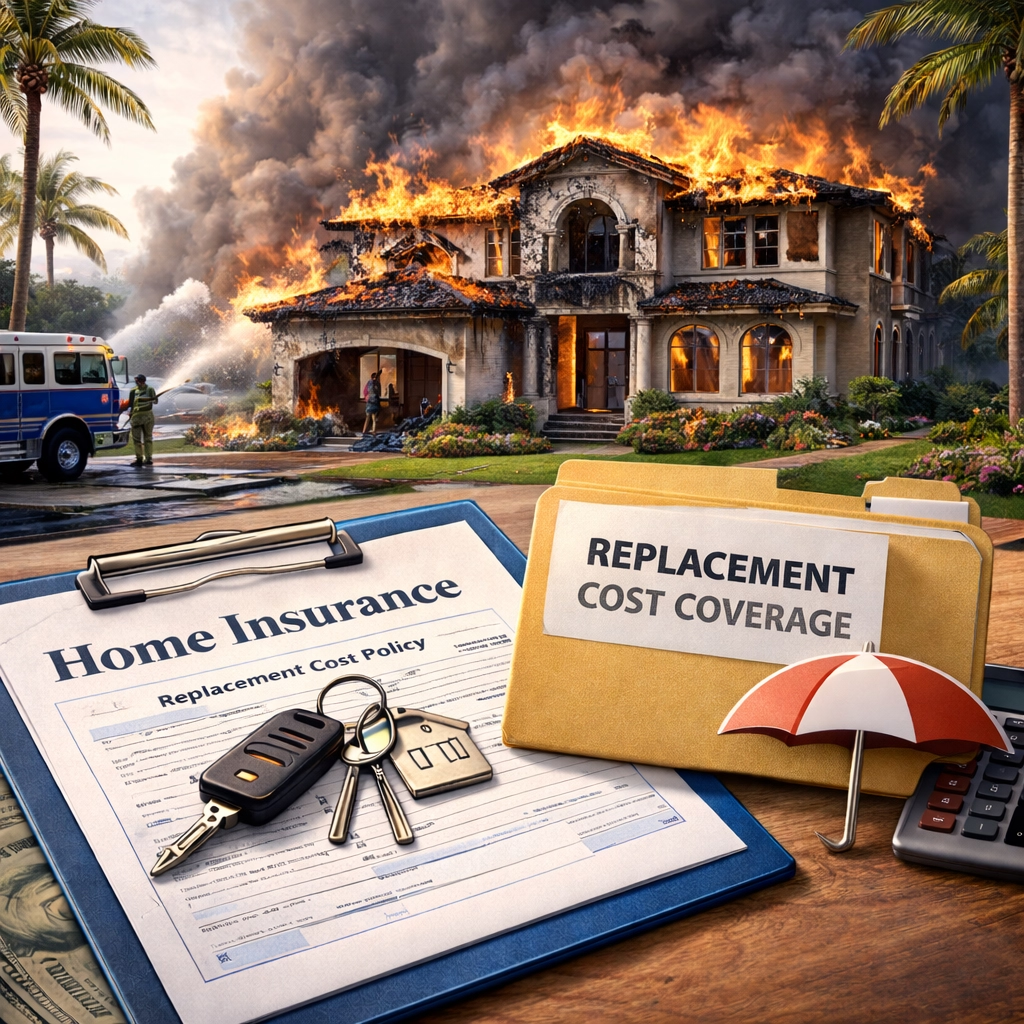
Florida home insurance replacement cost coverage pays to repair or replace damaged property with new items of similar kind and quality without deducting for depreciation. When a hurricane destroys your 10-year-old roof, replacement cost coverage pays for a brand new roof rather than calculating what a decade-old roof was worth.
This distinction matters enormously in claim settlements, often meaning the difference between fully recovering from a loss and facing significant out-of-pocket expenses to restore your home.
The alternative, actual cash value coverage, deducts depreciation based on age and condition before paying claims. That same 10-year-old roof, perhaps halfway through its useful life, would generate only about half the replacement cost under an ACV policy. You'd receive a check for a half-worn roof, which doesn't exist, leaving you to fund the substantial difference to buy an actual new roof. Understanding these coverage types and ensuring you have replacement cost protection is fundamental to adequate Florida home insurance.
How Replacement Cost Coverage Works
Replacement cost coverage (RCV) calculates claim payments based on what it actually costs to repair or replace damaged property today, regardless of the property's age or pre-loss condition. The mechanics of this coverage type affect both how much you receive and when you receive it.
No depreciation deduction is the defining feature. A five-year-old air conditioning system destroyed in a fire receives full replacement with a new equivalent system. A 15-year-old kitchen with original cabinets damaged by water gets restored with new cabinets of comparable quality. Age doesn't reduce your payment.
Like kind and quality standards determine what "replacement" means. Insurers pay to replace damaged items with similar items, not upgrades. If your destroyed carpet was mid-grade berber, you receive mid-grade berber replacement, not premium hardwood floors. The coverage restores what you had, not what you might prefer.
Two-stage payment processes apply under many replacement cost policies. The insurer initially pays actual cash value of the loss. After you actually replace the item and submit receipts, the insurer pays the remaining replacement cost difference. This holdback structure ensures you actually replace items rather than pocketing depreciation differences.
Time limits for replacement cost recovery typically range from 180 days to two years depending on your policy. You must complete replacement and submit documentation within this window to recover the held-back depreciation. Missing deadlines means receiving only the initial ACV payment.
Replacement cost on dwelling versus contents may differ. Most Florida policies provide replacement cost coverage on the dwelling structure. Personal property coverage might be replacement cost or actual cash value depending on your policy and any endorsements. Verify coverage type for both your home and belongings.
Policy limits still apply regardless of replacement cost provisions. If your dwelling coverage limit is $400,000 and replacement actually costs $500,000, you receive only $400,000. Replacement cost coverage means no depreciation deduction, not unlimited payment. Adequate limits remain essential.
Replacement Cost Versus Actual Cash Value
The financial difference between replacement cost and actual cash value coverage becomes starkly apparent during claims. Understanding this comparison helps you appreciate why coverage type matters.
Actual cash value (ACV) equals replacement cost minus depreciation. Insurers calculate what a new equivalent item costs, then subtract for age, wear, and remaining useful life. The result represents what your damaged property was theoretically worth immediately before the loss.
Depreciation calculations vary by item type. Roofs might depreciate over 20 to 30 years depending on material. Electronics depreciate over 5 to 10 years. Furniture might depreciate over 10 to 15 years. Each item category has different useful life assumptions affecting depreciation.
Real-world impact examples illustrate the difference. Consider a 12-year-old roof on a 20-year depreciation schedule destroyed by a hurricane. Replacement cost coverage pays the full $25,000 for a new roof. Actual cash value coverage deducts 60% depreciation, paying only $10,000. The homeowner under ACV coverage must find $15,000 to complete the roof.
Whole-home scenarios multiply these differences dramatically. A major hurricane damaging roof, siding, windows, HVAC, flooring, and appliances across a home creates dozens of depreciation calculations under ACV coverage. Total depreciation deductions can reach $50,000 to $100,000 or more on a significant loss, leaving homeowners unable to afford complete restoration.
Premium differences between coverage types exist but are often modest. Replacement cost coverage typically costs 10% to 15% more than actual cash value coverage. On a $4,000 annual premium, that's $400 to $600 additional for coverage that might pay tens of thousands more in a major claim.
Cost-benefit analysis strongly favors replacement cost. The modest premium increase for RCV coverage provides dramatically better protection when losses occur. Actual cash value coverage saves a few hundred dollars annually but can leave you short by tens of thousands when you need your insurance most.
Replacement Cost for Your Dwelling
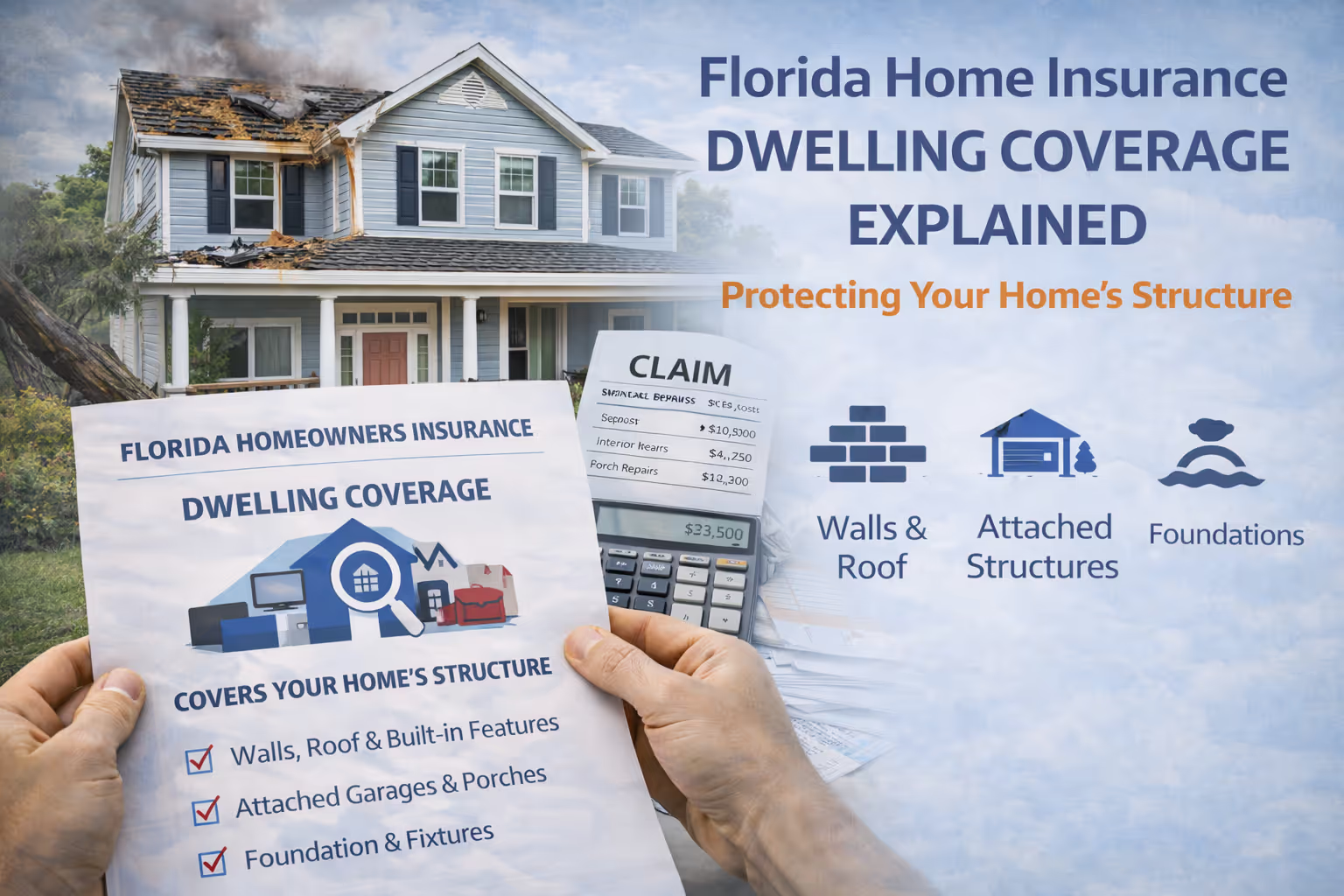
Dwelling coverage represents the largest component of your policy, and replacement cost protection here matters most. Understanding how replacement cost applies to your home's structure ensures adequate protection.
Building materials and labor costs determine dwelling replacement. Your policy should cover what rebuilding your home actually costs today using similar materials and construction methods. Replacement cost coverage pays these current costs without reduction for your home's age.
Florida construction cost fluctuations make replacement cost coverage particularly important. Material costs and contractor availability have swung dramatically in recent years, especially following major hurricanes. Replacement cost coverage pays current prices even when they've risen substantially since you purchased coverage.
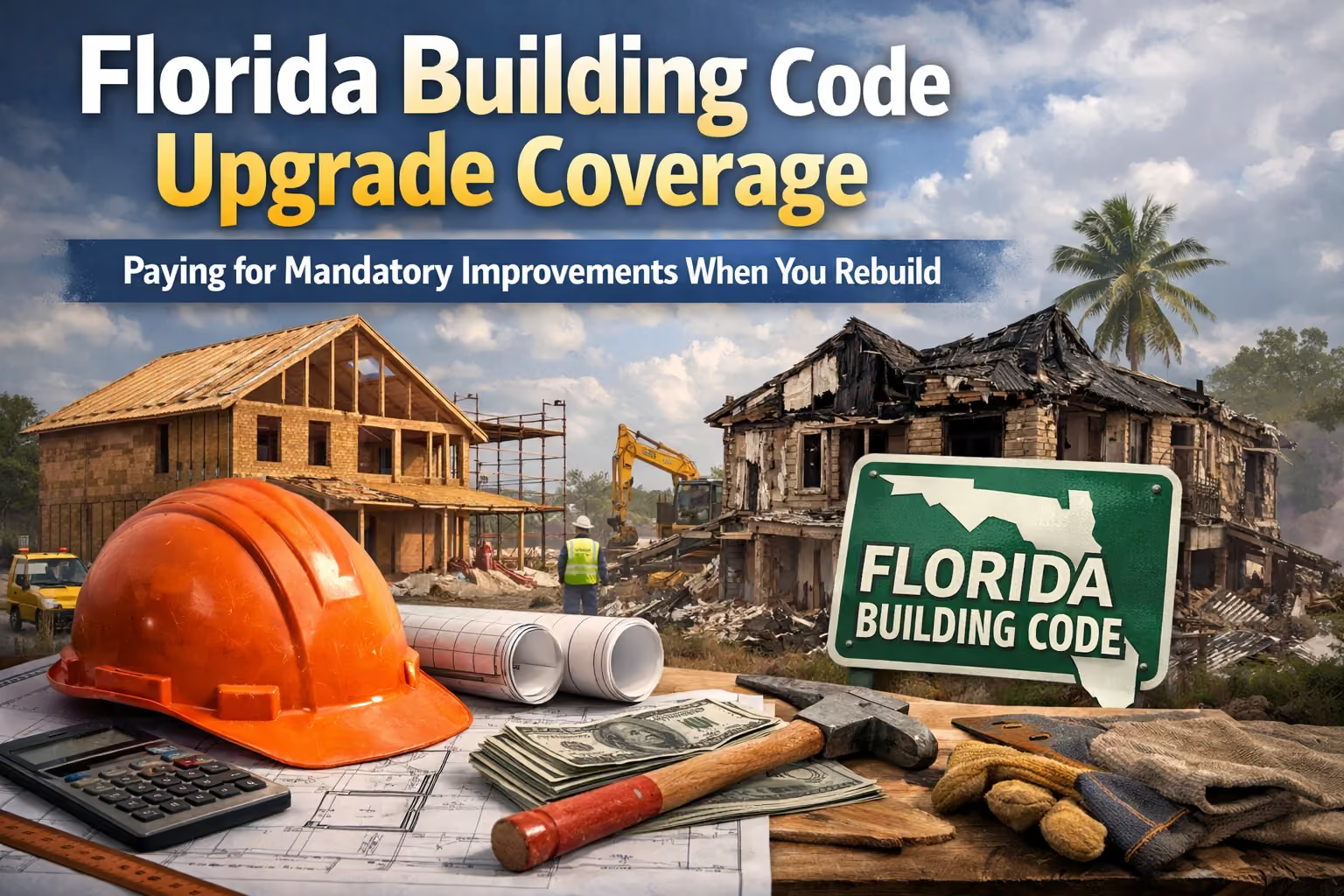
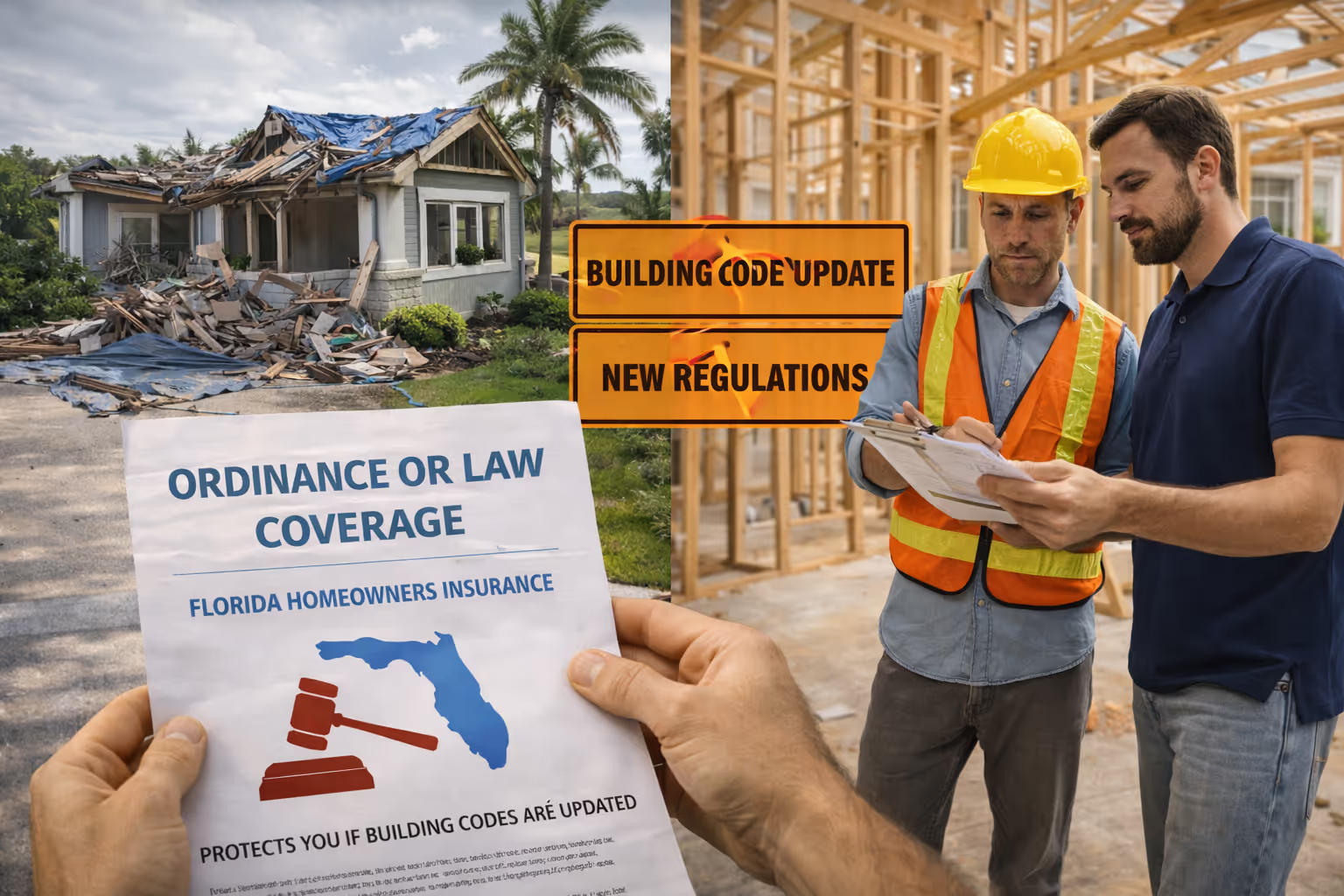
Code upgrade costs may or may not be included in replacement cost coverage. When rebuilding, current building codes may require improvements beyond original construction. Standard replacement cost covers rebuilding to original specifications. Ordinance or law coverage, discussed below, addresses required upgrades.
Contractor selection typically remains yours under replacement cost coverage. You choose who rebuilds your home, and the insurer pays reasonable costs for the work. Some policies include preferred contractor provisions affecting payments, so understand any such requirements.
Matching considerations arise when partial damage occurs. If half your roof needs replacement, replacement cost should cover matching the remaining half so your roof appears uniform. Insurers sometimes dispute matching claims, arguing only damaged portions require replacement. Understanding your policy's matching provisions prevents surprises.
Rebuilding timeline affects payment. Most insurers require you to actually rebuild to receive full replacement cost. If you choose not to rebuild, you may receive only actual cash value. Policies differ on whether rebuilding must occur at the same location or whether rebuilding elsewhere qualifies.
Replacement Cost for Personal Property
Personal property replacement cost coverage ensures your belongings receive the same protection as your dwelling. However, this coverage often requires specific attention since it's not always standard.
Standard versus optional coverage varies by insurer and policy form. Some Florida policies include replacement cost on personal property automatically. Others provide ACV on contents with replacement cost available as an optional endorsement for additional premium.
Endorsement costs for personal property replacement cost typically add 10% to 20% to the contents coverage premium. If your contents coverage costs $500 annually, the replacement cost endorsement might add $50 to $100. This modest cost provides substantially better recovery.
Item-by-item depreciation under ACV coverage creates complex claims. Every damaged item receives individual depreciation calculation. Your claim inventory might include hundreds of items each depreciated differently. Under replacement cost, you simply document replacement costs without depreciation complexity.
High-value item considerations persist regardless of coverage type. Jewelry, art, and collectibles face sub-limits under standard policies. Replacement cost coverage helps, but scheduled coverage remains necessary for valuable items exceeding sub-limits.
Documentation requirements for personal property claims include replacement receipts under replacement cost policies. Maintain records of major purchases. After losses, save all replacement receipts to support the second-stage payment recovering held-back depreciation.
Used item replacement presents practical challenges. Replacement cost technically covers replacing with new equivalent items. But some items, like antiques or discontinued products, cannot be replaced with new equivalents. Policies handle these situations differently, potentially paying what new comparable items cost or negotiating settlements.
Extended and Guaranteed Replacement Cost
Standard replacement cost coverage pays up to your policy limits. Extended and guaranteed replacement cost options provide additional protection when actual replacement costs exceed those limits.
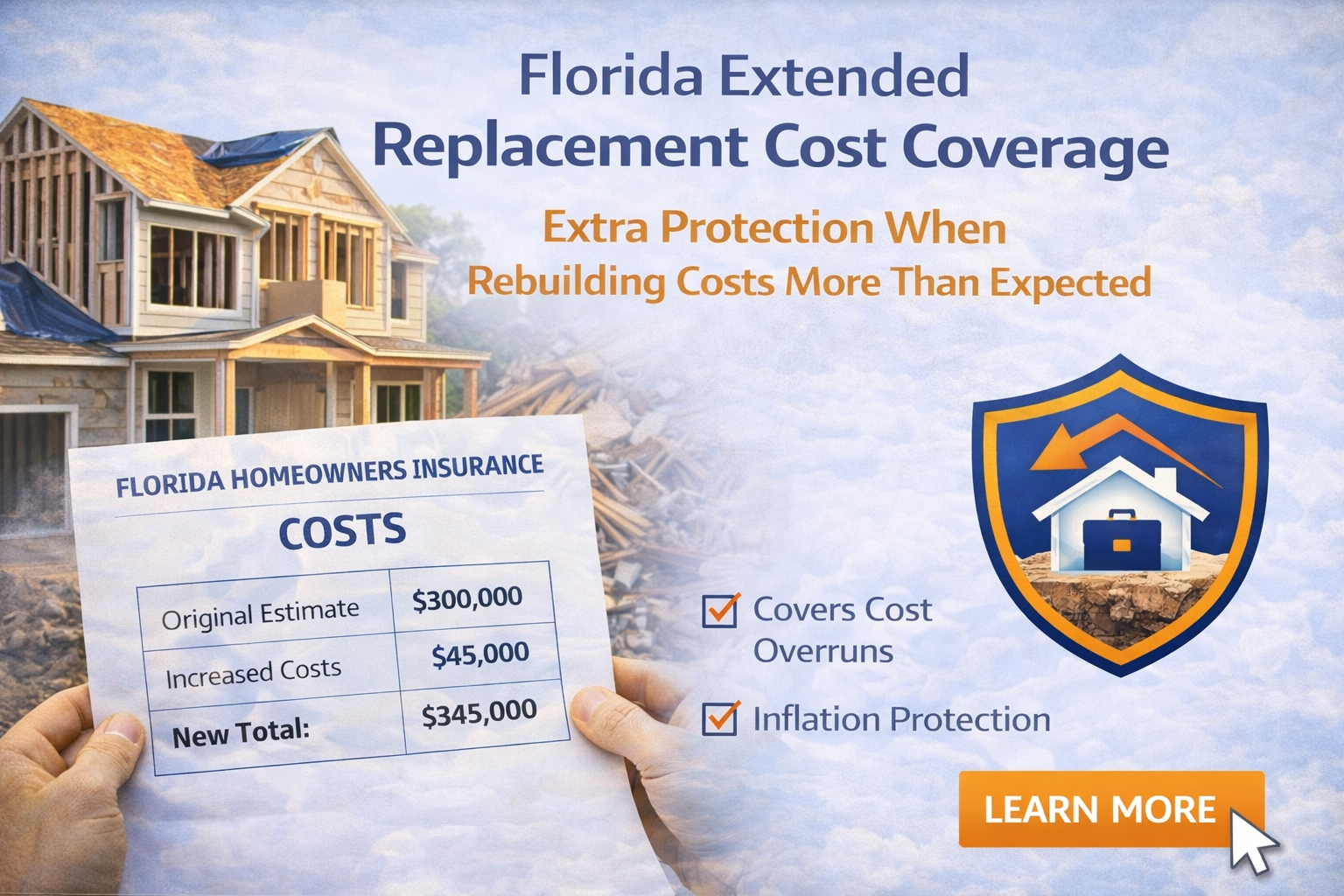
Extended replacement cost pays a percentage beyond your dwelling limit, typically 25% to 50% extra. If your dwelling coverage is $400,000 with 25% extended replacement cost, you have access to up to $500,000 for rebuilding. This buffer protects against post-disaster cost spikes.
Guaranteed replacement cost promises to rebuild your home regardless of cost, even if it significantly exceeds your policy limits. This represents the strongest protection available but comes with conditions and isn't universally available.
Conditions for guaranteed replacement cost typically include maintaining coverage limits your insurer recommends, promptly reporting home improvements, and having accurate coverage amounts. Failing to meet conditions can convert guaranteed coverage to extended or standard replacement cost.
Availability has decreased in Florida as insurers manage hurricane exposure. Some carriers that formerly offered guaranteed replacement cost have eliminated or restricted it. Extended replacement cost remains more widely available than guaranteed.
Premium impact varies but extended replacement cost might add 5% to 15% to dwelling premium while guaranteed replacement cost, where available, costs more. Given the protection provided, these costs often represent good value.
Post-disaster importance becomes clear when major hurricanes create contractor shortages and material price spikes. Homes that cost $400,000 to rebuild before a major storm might cost $550,000 afterward due to demand surge. Extended or guaranteed replacement cost addresses this reality.
Ensuring Adequate Replacement Cost Protection
Having replacement cost coverage only helps if your coverage limits reflect actual replacement costs. Several practices ensure your protection matches your needs.
Accurate dwelling coverage limits require periodic review. Construction costs change, home improvements add value, and inflation erodes purchasing power. Coverage adequate five years ago may be insufficient today. Annual limit reviews maintain adequate protection.
Professional replacement cost estimates provide the most accurate dwelling coverage figures. Insurance company algorithms estimate replacement costs, but professional estimates from contractors or appraisers verify these calculations. Consider professional estimates for high-value homes or when insurer estimates seem inaccurate.
Home improvement notification keeps your insurer informed of changes increasing replacement cost. Kitchen renovations, room additions, upgraded systems, and other improvements increase what rebuilding would cost. Report significant improvements promptly for coverage adjustment.
Inflation guard provisions automatically increase coverage limits annually to keep pace with construction costs. Most policies include some form of inflation protection, but automatic increases may not fully track actual cost changes. Review whether inflation adjustments maintain adequate coverage.
Personal property coverage review ensures contents protection matches actual belongings. Home inventories help estimate total replacement cost. If your belongings exceed current coverage limits, increase coverage or accept the shortfall risk.
Coinsurance requirements in some policies penalize underinsurance. If you carry less than a required percentage of actual replacement cost, typically 80%, claim payments may be reduced proportionally. Maintaining coverage at or above coinsurance requirements avoids these penalties.
Frequently Asked Questions
What is replacement cost coverage on home insurance?
Replacement cost coverage pays to repair or replace damaged property with new items of similar kind and quality without deducting for depreciation. A 15-year-old roof destroyed by a hurricane receives payment for a brand new roof rather than a depreciated value reflecting its age.
What's the difference between replacement cost and actual cash value?
Replacement cost pays current replacement prices without depreciation deductions. Actual cash value deducts depreciation based on age and condition, paying only what used items were theoretically worth. A 10-year-old item might receive full replacement cost under RCV but only half that amount under ACV.
Is replacement cost coverage worth the extra premium?
Generally yes. Replacement cost coverage typically costs only 10% to 15% more than actual cash value but pays substantially more in claims. The modest annual premium difference pales compared to potential tens of thousands in additional claim payment when major losses occur.
Does replacement cost coverage have limits?
Yes. Replacement cost coverage pays up to your policy limits without depreciation deductions. If replacement actually costs more than your limits, you pay the difference. Extended or guaranteed replacement cost options provide additional protection beyond standard limits.
How does the replacement cost claim process work?
Most policies pay in two stages. Initially, the insurer pays actual cash value of the loss. After you complete replacement and submit receipts, the insurer pays the remaining replacement cost difference. Time limits for completing replacement typically range from 180 days to two years.
Do I have replacement cost coverage on my personal belongings?
It depends on your policy. Some Florida policies include replacement cost on personal property automatically while others provide actual cash value with replacement cost available as an optional endorsement. Review your policy or ask your agent to confirm your contents coverage type.
If you’re a homeowner in Florida, having the right insurance coverage is essential to protect your investment from hurricanes, floods, and other unexpected events. Learn more about the different coverage options, policy requirements, and ways to save by visiting our detailed guide to Florida homeowners insurance.

Get a
Florida Home Insurance
Quote





.avif)




















To see how Worth can reduce your risk.
Get a Free Quote


