Orlando Home Insurance: Costs, Rentals, and Rates
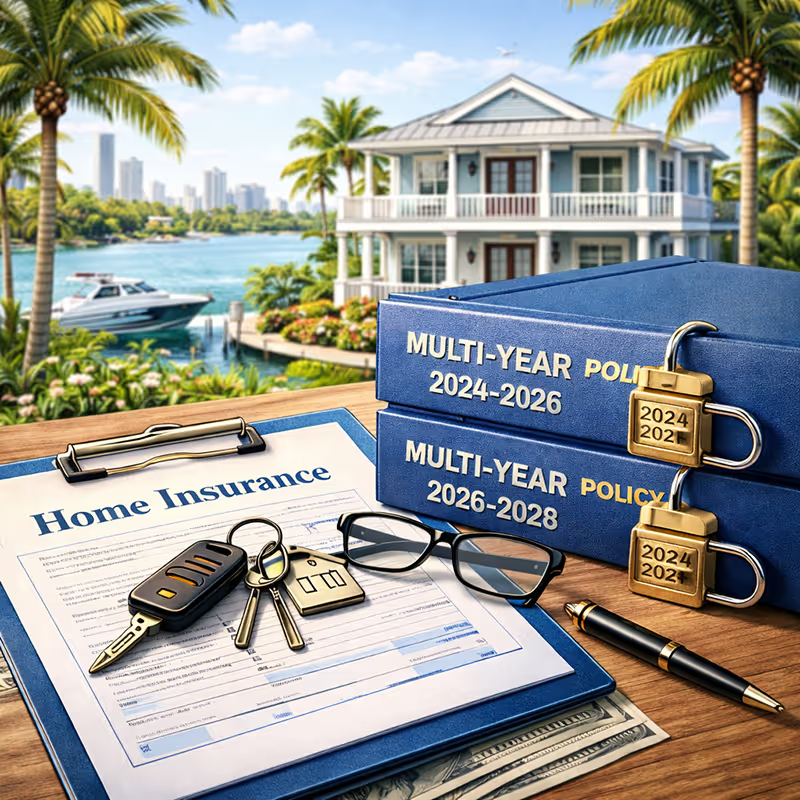
Orlando home insurance means something different depending on whether you're insuring the house you live in or the one you rent out on weekends. Inland Orange County sits below Florida's priciest coastal counties, but home insurance in Orlando still runs close to the state average. The city's massive vacation-rental economy also raises a coverage question most Florida metros don't face at this scale: a standard policy usually won't cover a home you rent out short-term.
That said, in this article, we break down what actually drives Orlando home insurance rates, what a standard policy covers, and how full-time residents, vacation-home owners, and mobile-home owners should shop for coverage.
Key Takeaways
- Orlando home insurance averages $3,585 a year in Orange County for a policy with wind coverage, below Florida's most expensive coastal counties.
- A standard HO-3 policy covers wind damage to your home, but not flood damage from rising water, even during the same hurricane.
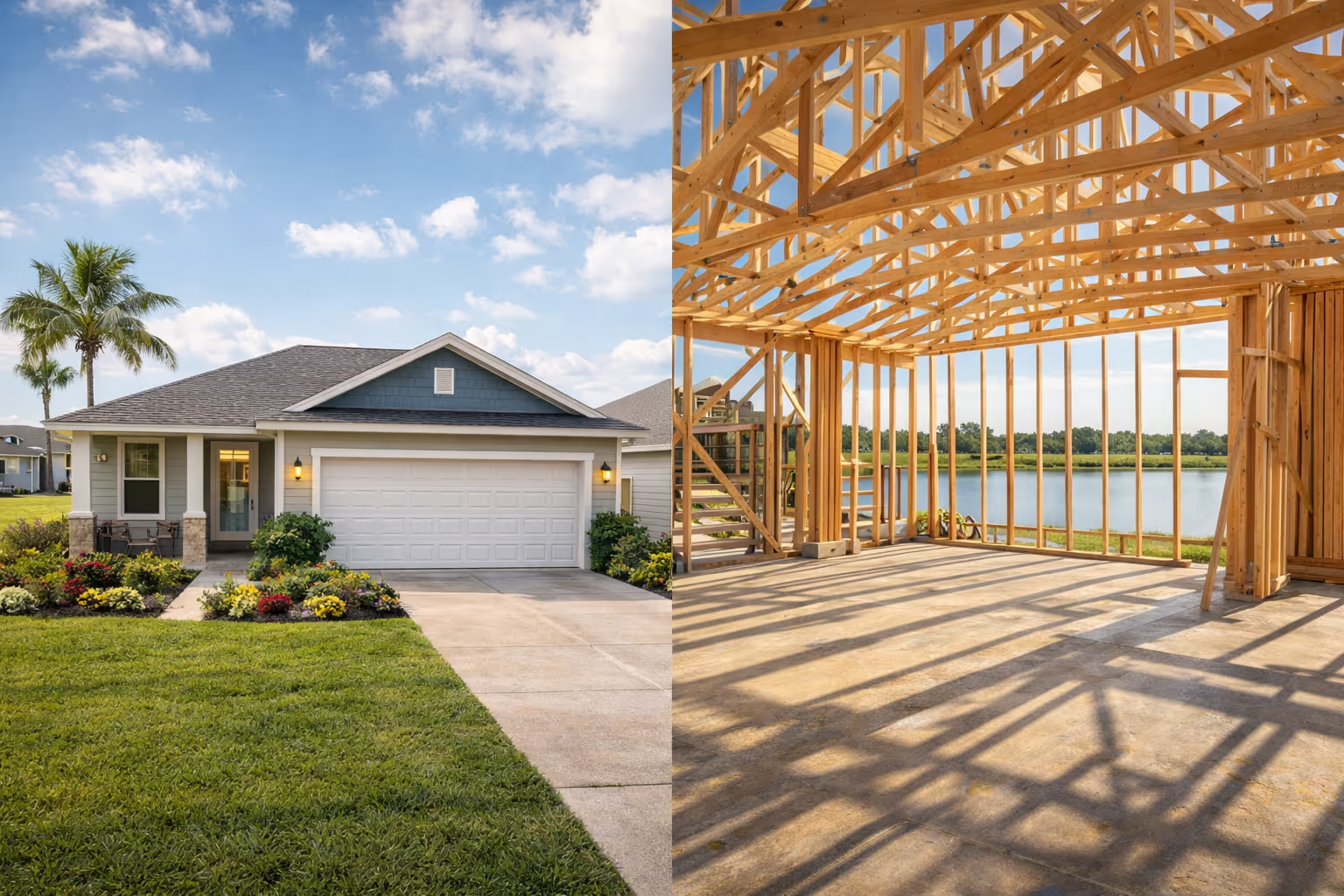
- Winter Park's older housing stock and Lake Nona's newer construction can price very differently within the same metro.
- A standard homeowners policy typically excludes short-term rental use; vacation-home owners generally need a landlord or dwelling-fire policy with a rental endorsement.
- Mobile and manufactured homes usually need a separate HO-7 policy, with fewer carriers competing for the business.
- Comparing quotes from multiple carriers remains the most reliable way to find affordable home insurance in Orlando.
How Much Does Orlando Home Insurance Cost?
Orlando home insurance costs about $3,585 a year on average for a policy that includes wind coverage, based on Florida Office of Insurance Regulation (OIR) data per county. That works out to roughly $299 a month, though your own quote depends on your dwelling coverage, roof age, and deductible choices, not the county figure alone.
That average puts the cost of home insurance in Orlando, FL a little below Florida's $3,757 statewide average, and meaningfully below South Florida's coastal counties. It runs higher than several other major Florida metros, such as Jacksonville home insurance (Duval County) average of $2,801 a year, and Ocala home insurance (Marion County) average of just $2,217.
However, keep in mind that the average home insurance cost in Orlando, Florida for 2026 blends every dwelling coverage amount and construction type reported across Orange County. A newer build near Lake Nona and an older home near Winter Park can both fall under that same county figure while landing on very different actual premiums, so treat it as a starting point rather than a personal quote.
Are Orlando home insurance rates easing down?
Florida's home insurance market has shown early signs of stabilizing in 2026 after years of increases. Citizens Property Insurance recommended a statewide average rate decrease of 2.6% for 2026, with three out of five policyholders seeing an average reduction near 11.5%, pending regulatory approval.
Legislative reforms that curbed litigation-driven claims costs are the main reason cited for the shift. Whether that relief reaches your specific Orlando homeowners insurance renewal depends on your carrier, your claims history, and your home's own risk profile, so treat any statewide figure as context rather than a promise.
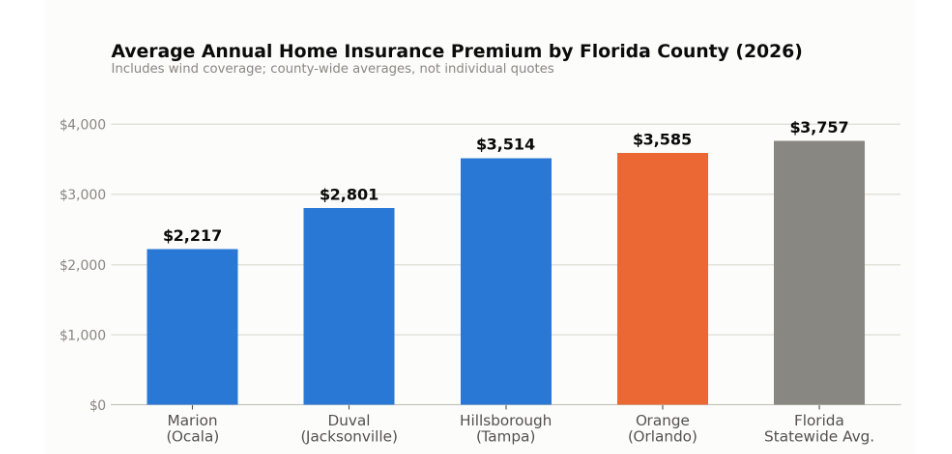
Source: Florida Office of Insurance Regulation, January 2026 Property Insurance Stability Report.
Does Orlando Home Insurance Cover Hurricane Damage?
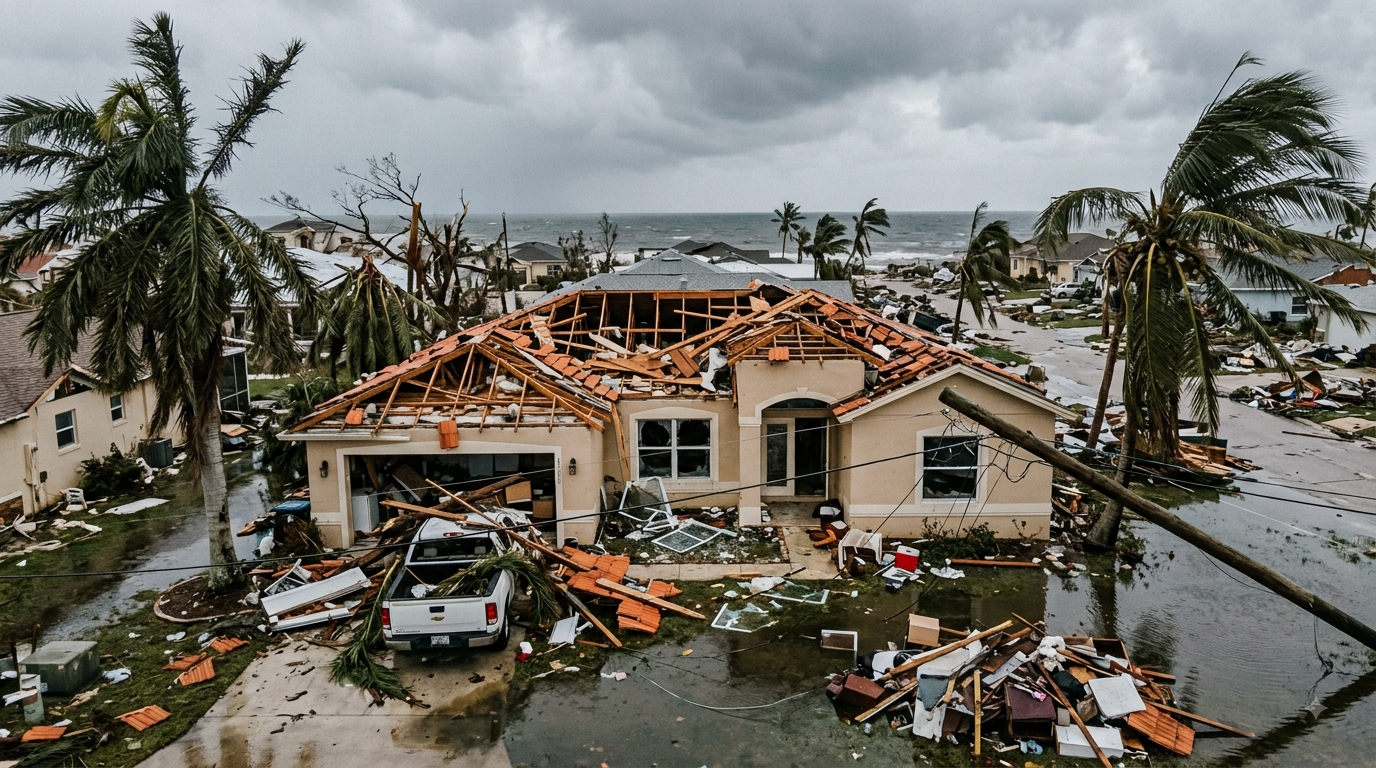
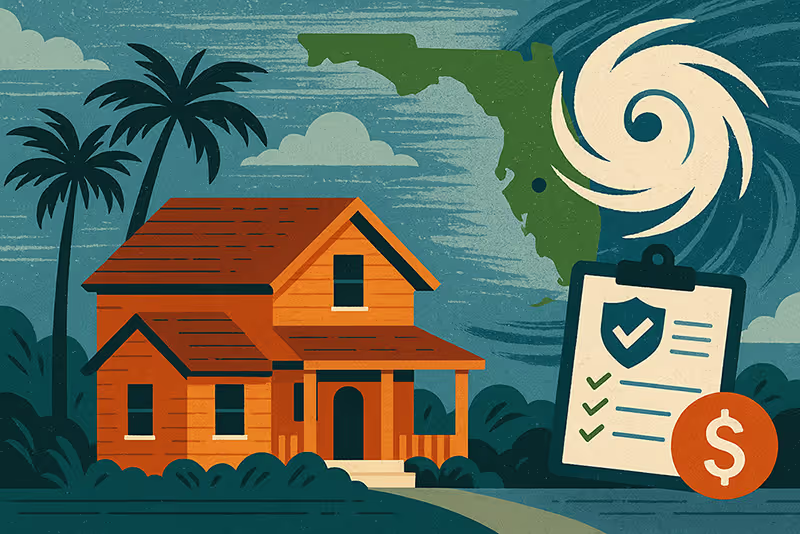
Orlando home insurance covers hurricane damage under a standard HO-3 policy for wind damage to your roof, siding, and windows, along with wind-driven rain that enters through an opening the storm itself created.
Also, most Orlando policies carry a separate hurricane deductible, a percentage of your dwelling coverage (commonly 2%, 5%, or 10%) that applies once a hurricane warning covers Florida, rather than a flat dollar amount. That deductible applies instead of your regular deductible, not on top of it, for a hurricane claim.
Wind vs. Flood Damage
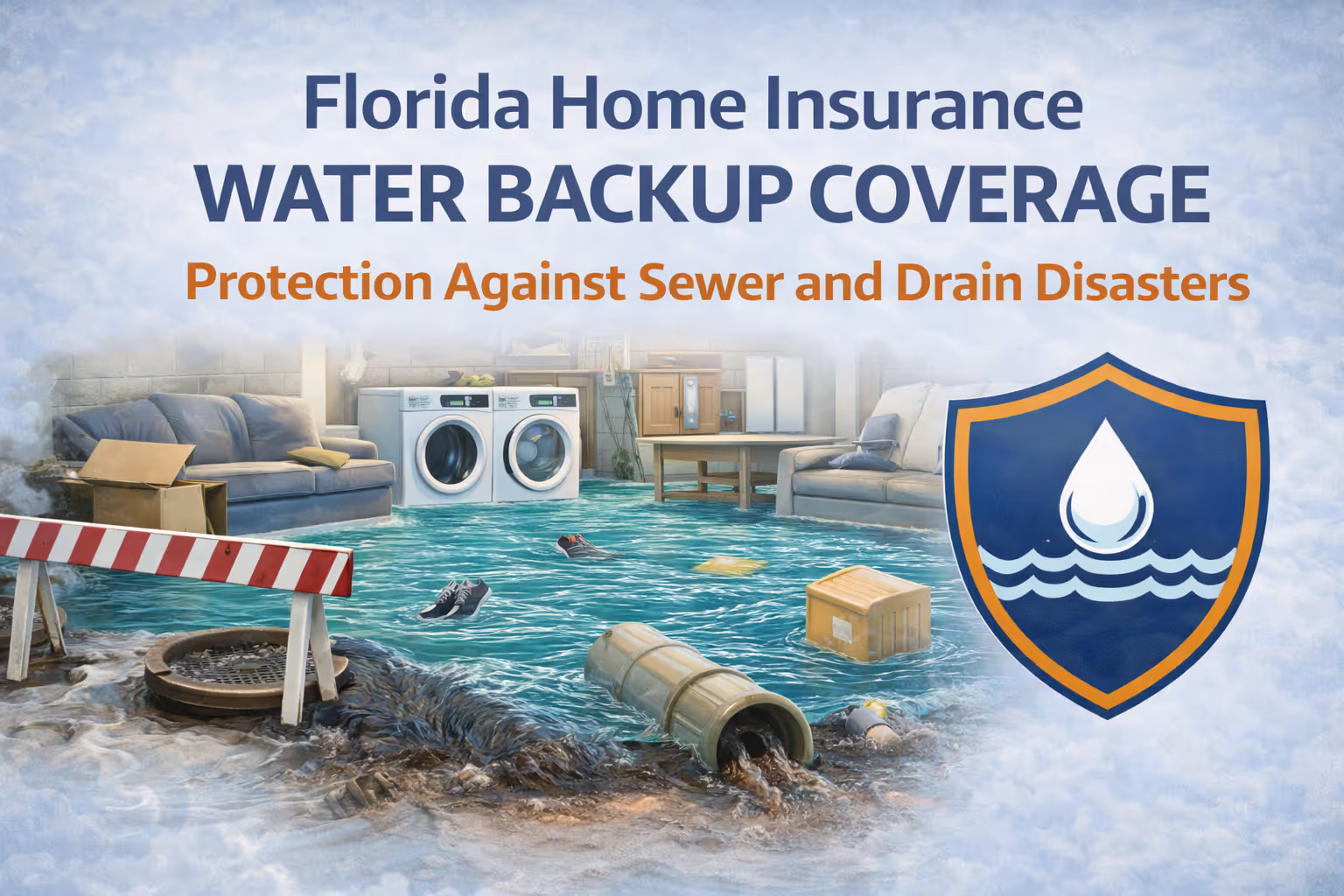
"Hurricane damage" isn't one category for coverage purposes. Wind-driven rain entering through a wind-damaged roof is typically covered under your homeowners policy, while rising floodwater from that same storm generally isn't, even though both losses trace back to one event.
Orlando home insurance and hurricanes are impossible to separate in Central Florida, but that gap between wind and flood coverage is why the question almost always leads to a second policy. Central Florida's inland location doesn't eliminate flood risk. Poor drainage, retention-pond overflow, and slow-moving tropical systems have flooded homes well away from the coast.
A separate flood insurance policy is the only way to cover that gap, and it's worth pricing out even outside a mapped high-risk zone.
What Does a Standard Orlando Homeowners Policy Cover?
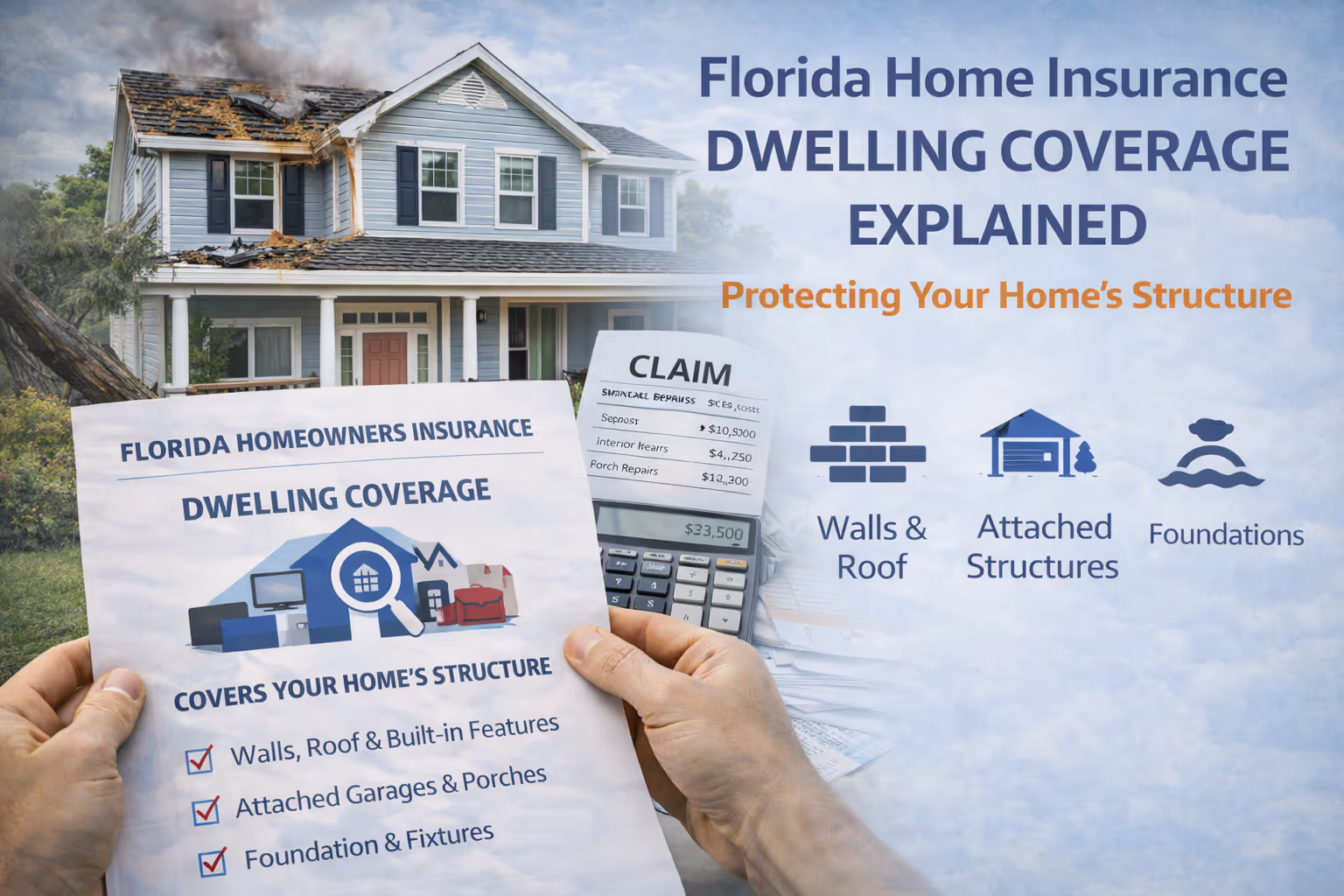
Most Orlando homeowners carry an HO-3 policy, the standard form that covers your home's structure on an open-perils basis and your belongings on a named-perils basis. Six coverage parts make up that policy, and each one applies to a different piece of a loss as outlined in the table below:
Dwelling coverage drives most of the premium, but whether you live in your Orlando home full time or rent it out to visitors changes which of the other five coverage parts matters most, and whether a standard HO-3 policy fits your situation at all.
Orlando Home Insurance Rates for Full-Time Residents
Orlando home insurance rates for full-time residents depend more on the individual home than on the county average. Dwelling coverage amount, roof age, wind mitigation features, and claims history all move your quote up or down independent of the neighbourhood you live in Orange County.
For example, Winter Park's tree-lined streets and early-to-mid-century homes often carry older roofs and original wiring, which can trigger inspection requirements or surcharges. On the other hand, Lake Nona's newer construction, built to current Florida Building Code, tends to qualify more easily for wind mitigation credits tied to impact windows and reinforced roof-to-wall connections. Neither pattern is universal. It's still worth confirming your specific home's features with an agent rather than assuming your neighborhood decides your premium.
The fastest way to cut your insurance premium is usually a documented wind mitigation inspection, followed by comparing quotes across multiple carriers instead of auto-renewing. Raising your hurricane deductible, if you can absorb the higher out-of-pocket cost after a storm, is another lever worth discussing with your home insurance agent in Orlando.
Orlando Vacation Home and Short-Term Rental Insurance
Orlando vacation home insurance works differently than a standard homeowners policy because renting out your property, even occasionally, changes how insurers classify the risk. A standard HO-3 policy is written for owner-occupied use, and most insurers treat short-term rental activity as a business use they don't cover.
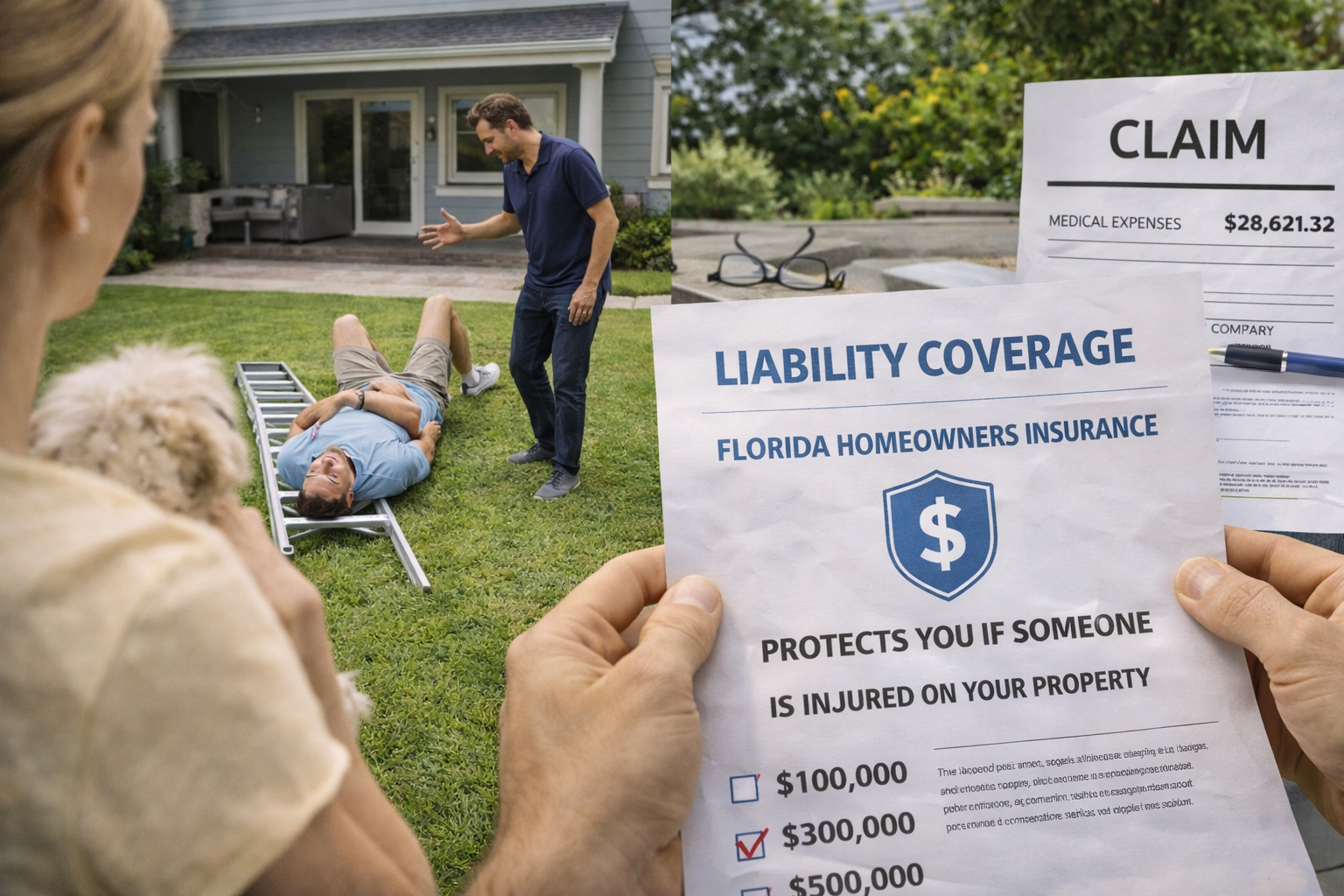
Standard homeowners policies typically exclude commercial activity, according to the National Association of Insurance Commissioners, and paying guests often fall outside the liability protection that covers a regular houseguest.
Hosts who don't notify their insurer risk more than a denied claim. Reduced liability coverage, added exclusions, or even non-renewal can follow once a claim reveals undisclosed rental use.
What you actually need instead is a landlord or dwelling-fire policy with a short-term rental endorsement, or a specialty vacation-rental policy built for the exposure. These typically price higher than a comparable owner-occupied homeowners policy, partly because long-term landlord coverage alone already runs roughly 25% above standard homeowners pricing, before layering on short-term-specific liability exposure.
Orange and Osceola counties, home to much of Orlando's Disney-area rental market, also see legality and licensing rules that vary by municipality and HOA, on top of any state requirements. A rental that's permitted in one part of the metro isn't automatically permitted a few miles away, and an insurer can deny a claim outright if it turns out the rental itself wasn't operating legally when the loss occurred. Confirming both your coverage and your local rules before you list the property protects you on two fronts at once.
Orlando Mobile Home Insurance: What's Different
Orlando mobile home insurance typically requires an HO-7 policy instead of the standard HO-3 used for site-built houses. Fewer carriers write HO-7 policies at all, which narrows your options and can push pricing higher than a comparable single-family home nearby.
Tie-down and anchoring standards matter as much as, or more than, wind mitigation credits for a typical site-built home, given Central Florida's severe-storm exposure. The Florida Division of Emergency Management recommends manufactured homeowners confirm their anchoring system meets current standards well before hurricane season.
A home's tie-down date and wind zone rating both affect how it performs in a storm, according to the Florida Highway Safety and Motor Vehicles agency, which oversees manufactured housing standards statewide.
If you're shopping for Orlando mobile home insurance, ask prospective carriers directly which wind mitigation features apply to manufactured housing, since the credits that work for a concrete-block home don't always transfer. Because so few insurers write HO-7 policies statewide, starting that conversation early in your search matters more than it does for a standard homeowners policy.
How to Find the Best Home Insurance in Orlando

There's no single best home insurance company in Orlando; the right fit depends on your home's age, location, and coverage needs. Homeowners have a wider pool of carriers to compare than residents of Florida's highest-risk coastal counties, which gives you real room to shop for home insurance quotes in Orlando.
Home insurance companies in Orlando, Florida worth comparing include national names like State Farm and Progressive alongside Florida-focused carriers such as Tower Hill, Florida Peninsula, Heritage, and Universal Property & Casualty, plus Citizens Property Insurance as the state's insurer of last resort for homes that don't qualify elsewhere. Each prices roof age, construction, and claims history a little differently, which is exactly why a single "top" pick rarely holds up across an entire metro.
Cheapest isn't always the best home insurance in Orlando. A rock-bottom quote can carry a high deductible, thin liability limits, or a carrier with a weak claims-service reputation, all worth weighing against the premium itself. Compare each home insurance company in Orlando, FL on dwelling limits, deductible structure, and financial strength, not price alone.
How to Get the Best Quotes in Orlando, FL
To get the best home insurance quotes in Orlando, FL, gather them using identical coverage amounts and deductibles across at least three carriers, and revisit that comparison at each renewal instead of letting your policy auto-renew. An independent agency like WorthInsurance can compare quotes across multiple companies at once, which saves you from contacting each home insurance provider individually while you shop.
Final Thoughts
Homeowners insurance in Orlando sits in a strange middle ground: cheaper than Florida's coastal counties, more expensive than much of the rest of the country, and split into two very different markets depending on whether you live in your home or rent it out. Your dwelling coverage, roof, deductible, and rental status will always matter more than any single county average.
Whether you're insuring a full-time residence, a Lake Nona new-build, or a Kissimmee-area vacation home, comparing quotes from multiple carriers remains the most reliable way to find coverage that fits. When you're ready to see how your own home compares, Worth Insurance can help you shop several Florida carriers side by side.
Orlando Home Insurance FAQs
#1. Which home insurance company is best in Orlando, Florida?
There's no single best home insurance company in Orlando, Florida; the right one depends on your home's age, roof, and location within Orange County. Comparing quotes from several financially stable carriers, rather than defaulting to one name, is the more reliable way to find your best fit.
#2. How much is home insurance in Orlando, Florida?
Home insurance in Orlando, Florida averages about $3,585 a year for a policy with wind coverage, per Florida OIR data for Orange County. Your actual premium depends on your dwelling coverage, roof age, and deductible choice, so treat that figure as a starting point, not a quote.
#3. Does Orlando home insurance cover hurricane damage from flooding?
Orlando home insurance doesn't cover flood damage from a hurricane, even though it does cover wind damage from the same storm. Flooding, including storm surge and rising water from heavy rain, requires a separate flood insurance policy regardless of how far inland your home sits.
#4. Do I need special insurance for an Orlando vacation home or short-term rental?
Yes, an Orlando vacation home or short-term rental typically needs a landlord or dwelling-fire policy with a rental endorsement instead of a standard homeowners policy. Standard policies generally exclude commercial rental activity, and an undisclosed short-term rental can lead an insurer to deny a claim entirely.
If you’re a homeowner in Florida, having the right insurance coverage is essential to protect your investment from hurricanes, floods, and other unexpected events. Learn more about the different coverage options, policy requirements, and ways to save by visiting our detailed guide to Florida homeowners insurance.

Get a
Florida Home Insurance
Quote




.avif)



















To see how Worth can reduce your risk.
Get a Free Quote


