
Florida Hurricane Deductible: 2026 Guide to Costs and Rules
A Florida hurricane deductible is a separate percentage-based cost owed before storm coverage applies. Learn about rates, rules, and deductible options.
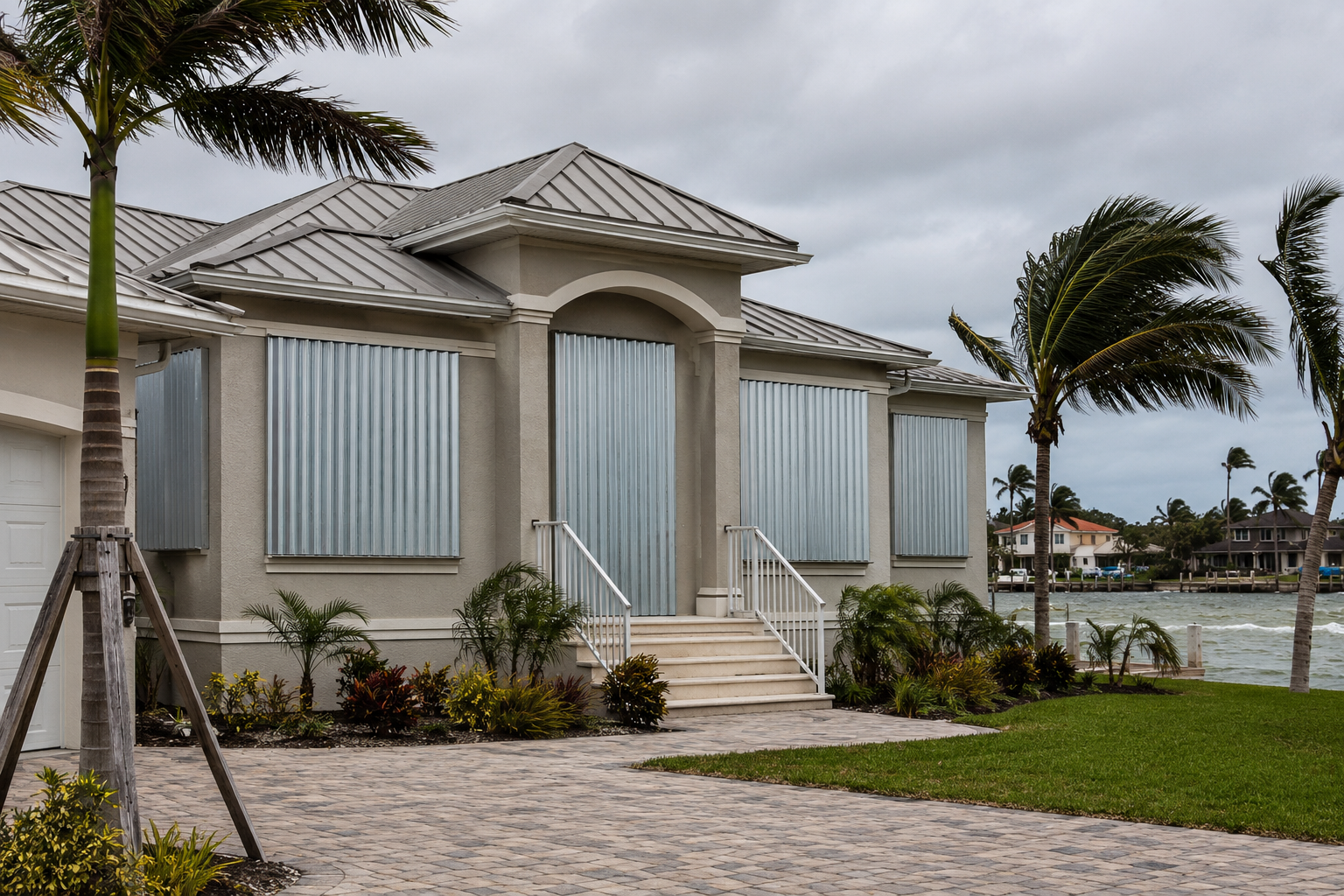

A Florida hurricane deductible is a separate, percentage-based amount you pay out of pocket before your homeowners policy covers hurricane damage. This is typically 2%, 5%, or 10% of your dwelling coverage, rather than a flat dollar figure.
Unlike your standard deductible, this one isn't fixed; it moves with your home's insured value. Florida requires it because hurricane losses can be catastrophic and widespread, and insurers manage that risk differently than everyday claims.
In this guide, we cover how the Florida hurricane deductible works, your options, how to calculate it, and ways to manage its cost before storm season.
Key Takeaways
- A Florida hurricane deductible applies separately from your standard deductible and is based on a percentage of your dwelling coverage (Coverage A), not your home's market value or the total damage amount.
- Florida Statute 627.701 requires insurers to offer $500, 2%, 5%, and 10% deductible options, disclosed as a dollar figure on your declarations page.
- A lower percentage deductible usually raises your premium; a higher percentage deductible usually lowers it but increases what you'd owe after a storm.
- Personal property coverage sometimes still uses your standard deductible even when the dwelling portion of a claim triggers the hurricane deductible.
- Wind mitigation upgrades, shopping multiple carriers, and reviewing your coverage annually can help manage the cost impact.
What Is a Florida Hurricane Deductible?
A Florida hurricane deductible is the amount you pay out of pocket before your insurer covers damage from a hurricane or named windstorm. It’s calculated off your dwelling limit, or Coverage A rebuild cost, not your home's market value, purchase price, or the total dollar amount of storm damage.
For example, a $400,000 dwelling limit with a 5% hurricane deductible means you owe $20,000 before coverage kicks in, regardless of whether the storm caused $25,000 or $250,000 in damage.
Florida created this separate deductible because hurricane damage can generate widespread, simultaneous claims across an entire region. Shifting more of that upfront cost onto policyholders, instead of folding it into one flat per-claim deductible, helps keep the broader insurance market more stable and premiums more predictable.
How the Florida Hurricane Deductible Works
The Florida hurricane deductible statute (Florida Statute 627.701) governs how insurers must structure and disclose hurricane deductibles on residential property policies. The law requires every insurer writing personal lines home insurance in Florida to offer set deductible options and to show the actual dollar amount of that deductible on your policy's declarations page, not just the percentage.
Also, insurers must include a bolded warning statement on qualifying policies noting that a separate hurricane deductible applies and could mean high out-of-pocket costs after a storm. This is a disclosure requirement meant to keep homeowners from being caught off guard mid-claim.
Beyond disclosure, the statute sets ground rules for how the deductible functions. It applies once per calendar year, so if your insurer already paid a hurricane claim earlier in the year, later named-storm damage from that same insurer group counts toward the same annual deductible instead of resetting every storm. It blocks stacking as well; once your hurricane deductible applies to a loss, your standard, all-other-perils deductible doesn't apply on top of it for that claim.
This structure means your dollar deductible can change year to year even if you don't touch your policy, since insurers often adjust dwelling limits for rebuilding costs at renewal.
What Triggers Florida Hurricane Deductible
The Florida hurricane deductible triggers when the National Hurricane Center issues a hurricane watch or warning covering any part of Florida, and it stays in effect until 72 hours after that watch or warning is lifted. This trigger window matters because it determines which deductible applies to your claim.
Damage that occurs while a hurricane watch or warning is active, even from wind alone with no direct landfall nearby, typically falls under the hurricane deductible. Damage from an ordinary thunderstorm or an unnamed tropical disturbance outside that window usually falls under your standard, all-other-perils deductible instead.
How to Pay Florida Hurricane Deductible
You pay your Florida hurricane deductible out of pocket, typically by absorbing that amount as your insurer pays out the remainder of an approved claim in installments tied to repair progress.
Most insurers subtract the deductible from the total claim payout rather than billing you separately, so if a claim is approved for $50,000 with a $10,000 hurricane deductible, you'd receive checks totaling $40,000 as repairs move forward.
Because that deductible can reach tens of thousands of dollars on a higher-value home, many Florida homeowners set aside a dedicated storm season savings fund, or line up a backup credit source, before hurricane season begins.
Also, once you've paid your hurricane deductible for a storm, you don't pay it again for a second hurricane in the same calendar year. Additional named-storm losses from the same insurer or insurer group draw instead on your policy's lower, all-other-perils deductible for the remainder of that year. So, a hurricane deductible is effectively a once-a-year cost, not a per-storm one.
Florida Hurricane Deductible Options
.jpg)
Florida law requires insurers to offer four standard hurricane deductible options on personal residential policies: a flat $500, or 2%, 5%, and 10% of your dwelling coverage.
That said, your Florida hurricane deductible percentage is the single biggest lever you control on this part of your policy. Choosing among these options comes down to a straightforward trade-off.
A lower percentage deductible, like 2%, usually means a higher annual premium, since your insurer absorbs more risk after a storm. A higher percentage deductible, like 10%, usually lowers your insurance premium but raises what you'd owe out of pocket if a hurricane hits.
Pro tip: Homes with higher dwelling limits sometimes see the $500 option dropped, or a 3% tier added in its place. If your dwelling coverage climbs into seven figures, ask your agent about private client coverage built around higher-value homes and different deductible structures.
Talking about cost-efficiency, neither Florida hurricane deductible option is universally better. It depends on how much premium you can absorb monthly versus how much cash you could realistically access after a major storm.
The table below shows how the same percentage options translate into different dollar amounts, depending on your dwelling coverage:
*Insurers may omit the $500 flat option on dwelling limits above $250,000; confirm which options your carrier offers.
How to Calculate Your Florida Hurricane Deductible
Calculating your Florida hurricane deductible comes down to one formula: multiply your Coverage A dwelling limit by your deductible percentage. The result is the dollar amount you owe before your insurer starts paying on a hurricane claim.
However, it’s worth mentioning that percentage-based deductibles rise automatically whenever your Coverage A increases, which happens most years through inflation guard adjustments built into your policy. This means a $6,000 hurricane deductible at last year's dwelling limit could be $6,500 or more at renewal, even if you didn't change anything about your coverage.
Now that you know the formula, let’s see how it works in an example.
Florida Hurricane Deductible Example Calculation
Say your home carries a $400,000 dwelling limit (Coverage A) with a 5% hurricane deductible, plus a $2,500 standard deductible for non-hurricane claims.
A named storm causes $60,000 in damage to your roof and interior. Here's how the math plays out:
- Multiply your dwelling limit by the deductible percentage: $400,000 × 0.05 = $20,000.
- Subtract that amount from your approved claim: $60,000 − $20,000 = $40,000.
The end result is your insurer paying the remaining $40,000, subject to your policy's other terms and any applicable coverage limits, while you're responsible for the $20,000 hurricane deductible out of pocket.
Because the hurricane deductible replaces your standard deductible for that claim, you wouldn't owe the separate $2,500 all-other-perils amount on top of it.
Florida Homeowners Insurance Hurricane Deductible vs. Standard Deductible
A Florida homeowners insurance hurricane deductible and your standard deductible reduce what your insurer pays on a claim, but work differently.
The hurricane deductible is percentage-based, tied to your dwelling limit, and only triggers during a declared hurricane watch or warning window. On the other hand, your standard deductible is usually a flat dollar amount and applies to everything else, such as fire, theft, water damage, liability, and windstorm losses outside a named hurricane event.
Here’s a quick homeowners insurance hurricane deductible vs. standard deductible comparison in the table below:
Nevertheless, keep in mind that your personal property, or Coverage C, doesn't always follow the same deductible as your dwelling claim. Depending on your carrier and policy, contents damaged in the same storm can sometimes still be subject to your standard deductible even while the dwelling portion of the claim uses the hurricane deductible.
Compare insurance quotes and confirm which applies with your agent before assuming one figure covers everything.
How to Lower Your Florida Hurricane Deductible or Its Cost Impact

You can't eliminate the hurricane deductible outright, since Florida law requires it on every personal residential policy, but a few strategies can lower the cost impact on your budget:
- Get a wind mitigation inspection. Documenting features like a hip roof, impact-rated windows, or reinforced roof-to-wall connections can unlock wind mitigation credits that offset a higher percentage deductible with a lower overall premium.
- Watch for Citizens' eligibility changes. Citizens' depopulation efforts and eligibility rules shift as private carriers re-enter the market, which can open up new deductible and premium combinations worth comparing at renewal.
- Choose a lower percentage deductible if your premium allows it. A 2% option costs more upfront but caps your worst-case out-of-pocket exposure well below a 10% deductible on a high-value home.
- Bundle policies. Pairing home and auto coverage with the same carrier sometimes unlocks discounts that offset the cost of a lower hurricane deductible.
Understanding Your Florida Hurricane Deductible: 7 Tips Before Storm Season
Understanding your Florida hurricane deductible before a storm is on the radar beats scrambling to figure it out mid-claim. A few habits make the difference between a manageable claim and a financial scramble:
- Check your declarations page every renewal. Your dollar deductible can change even if your percentage and carrier stay the same, since it's tied to your dwelling limit.
- Budget or save the deductible amount in cash. Setting aside funds equal to your worst-case deductible before hurricane season starts means you're not relying on credit after a storm.
- Review your coverage annually. Home values and roof age change over time, so revisit whether your current deductible percentage still makes sense.
- Photograph your home before storm season. Dated photos of your roof, exterior, and belongings make it easier to document a claim and confirm what damage is new.
- Ask your agent about your exact trigger window. Confirm when your policy's hurricane deductible period begins and ends, since this can vary slightly by carrier.
- Keep your insurer's claims contact information handy. Losing power or internet access after a storm shouldn't mean losing access to your policy details.
- Compare quotes before you're forced to. Shopping around before a renewal deadline gives you more time to evaluate hurricane deductible options without pressure.
Final Thoughts
A Florida hurricane deductible works differently than any other deductible on your policy, and that difference can mean tens of thousands of dollars depending on your dwelling coverage and chosen percentage. Knowing how it's calculated, when it triggers, and how it interacts with your standard deductible puts you in a stronger position heading into hurricane season.
Coverage and pricing vary by carrier, property, and eligibility, so the right hurricane deductible for your neighbor's home isn't necessarily right for yours. When you're ready to compare hurricane deductible and premium combinations across Florida carriers, Worth Insurance can help you shop multiple quotes side by side.
Florida Hurricane Deductible FAQs
#1. What's the key difference between a hurricane deductible and a named storm deductible?
A hurricane deductible triggers only for a hurricane watch or warning; a named storm deductible can trigger for any system the National Hurricane Center names, including weaker tropical storms. Florida's statutory deductible is hurricane-specific, but some private policies use broader named-storm wording, so check your declarations page to confirm which applies.
#2. What's the average hurricane deductible in Florida?
Most Florida homeowners carry a hurricane deductible between 2% and 5% of their dwelling coverage, though options range from a flat $500 up to 10%. The average dollar amount depends heavily on your home's Coverage A limit, so a $300,000 home and a $700,000 home at the same percentage owe far different amounts.
#3. Are hurricane shutters tax deductible in Florida?
Hurricane shutters generally aren't deductible on your federal income taxes for a personal residence. Florida has periodically offered sales tax exemptions on select storm protection and disaster preparedness items, including a permanent exemption that took effect in August 2025 for certain supplies.
#4. Does the hurricane deductible apply to flood damage?
No, the hurricane deductible doesn't apply to flood damage, since flooding is excluded from standard homeowners policies regardless of the cause. Flood insurance is a separate policy, typically through the National Flood Insurance Program or a private flood carrier, with its own deductible structure entirely apart from your hurricane deductible.
#5. Can I change my hurricane deductible mid-policy?
Changing your hurricane deductible mid-policy typically isn't allowed once a hurricane watch or warning is in effect for Florida. Outside that window, most insurance carriers let you adjust your deductible percentage at renewal or through a policy endorsement.


