Florida Homeowners Insurance Rates by County in 2026

Florida homeowners insurance rates by county range from about $2,111 a year in Sumter County to more than $7,800 in Monroe County, with a statewide average near $3,757 for a standard policy that includes wind coverage, according to the Florida Office of Insurance Regulation (OIR). This puts homeowners insurance in Florida above the national norm.
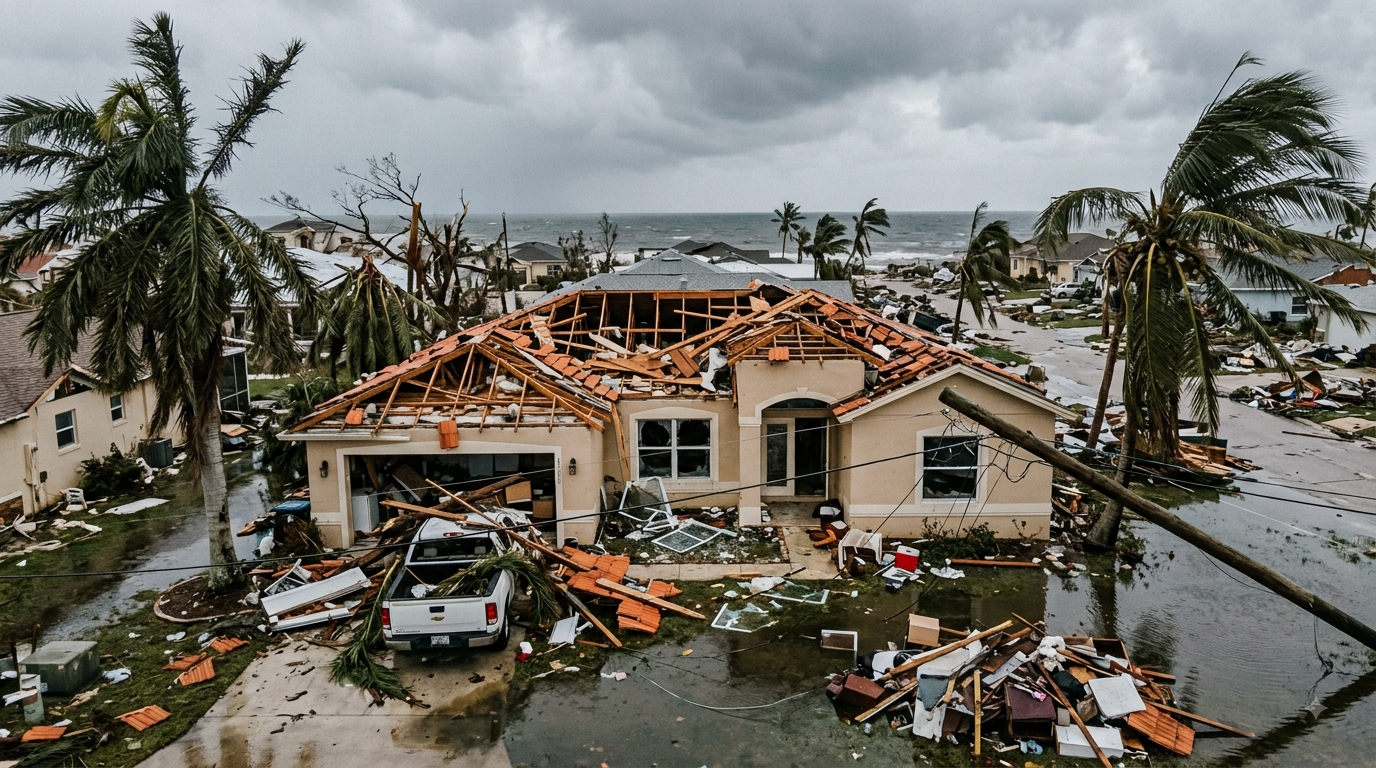
The gap comes down to hurricane exposure, rebuilding costs, and each county's litigation history. Also, Citizens Property Insurance approved its first rate cut since 2015, and dozens of private carriers have entered the market since.
Below, we break down average premiums for all 67 counties, the state's priciest and cheapest markets, and what actually moves your bill.
Key Takeaways
- The statewide average is about $3,757 a year for a home with wind coverage, with county averages spanning roughly $2,100 to $7,800.
- Highest-cost counties are Monroe, Palm Beach, Broward, Miami-Dade, and Martin.
- Lowest-cost counties are Sumter, Marion, Baker, Wakulla, and Hernando.
- Always compare quotes at the county and property level rather than relying on a single number; the statewide average tells you very little about what your specific home will cost to insure.
What Determines Homeowners Insurance Rates in Florida
Florida homeowners insurance rates are determined mainly by hurricane and wind exposure, rebuilding cost, litigation history in your county, and the amount of coverage you carry, layered on top of each carrier's own underwriting rules and reinsurance costs.
Most Florida homeowners carry an HO-3 policy, the most common policy form in the state, which covers the dwelling on an open-perils basis and contents on a named-perils basis.
Because dwelling coverage drives most of the premium, it's worth seeing how cost scales with coverage amount. The table below is an illustrative statewide estimate scaled from the OIR-derived average:
As we said, these are illustrative estimates only. Actual premiums vary by carrier, county, roof age, construction type, and wind mitigation features. Also, coverage and pricing vary by carrier, property, and eligibility.
Florida Homeowners Insurance Rates by County
The table below reflects OIR's January 2026 Property Insurance Stability Report, i.e., total premium collected divided by policies in force with wind coverage, by county. However, keep in mind that these are county-wide averages, not personal quotes. Your actual premium depends on your specific home, carrier, and coverage choices.
Coastal vs. Inland: Why the Gap Exists
Coastal exposure explains most, but not all, of the spread in Florida house insurance rates. "Coastal equals expensive, inland equals cheap" isn't a universal rule.
DeSoto ($3,449), Okeechobee ($3,754), Glades ($3,475), and Hardee ($3,396) counties sit well inland, yet all post above-average premiums. That's typically a mix of older or manufactured housing stock, agricultural exposure, and, for the counties ringing Lake Okeechobee, freshwater flood and wind risk that behaves differently from ocean-driven storm surge but still adds up on a carrier's loss models.
Also, insurers price in distance-to-coast in bands rather than a simple binary, so a home ten miles inland in a high-litigation county can sometimes cost more to insure than a coastal home in a county with a cleaner claims history and newer construction.
This is where policy type matters as well. The OIR data above covers single-family homeowners policies. Condo unit owners' insurance and separate flood insurance policies follow different pricing patterns by county, so don't assume your condo association's master policy or a standalone flood policy will track the numbers above.
5 Florida Counties With the Highest Homeowners Insurance Rates
The five most expensive counties in 2026 are Monroe ($7,829), Palm Beach ($6,412), Broward ($6,220), Miami-Dade ($6,023), and Martin ($5,993).
#1. Monroe County
Monroe County posts the state's highest average premium at $7,829. Its barrier-island geography leaves nearly every home directly exposed to hurricane winds and storm surge, with little inland buffer and costly wind-rated rebuilding requirements.
Despite that exposure, Monroe is among the counties seeing the deepest 2026 relief. The Governor proposed an average 11.3% rate cut for Citizens Property Insurance policyholders. This is evidence that even Florida's highest-risk market is stabilizing as litigation reform takes hold.
#2. Palm Beach County
Palm Beach County averages $6,412 a year, the second-highest in the state. Dense, high-value coastal development along the Atlantic drives up both storm exposure and rebuilding costs. As part of South Florida's tricounty region, Palm Beach also carried a disproportionate share of pre-reform litigated claims, inflating rates even on undamaged homes.
That pressure is easing since Citizens has proposed an 11.9% average cut for Palm Beach policyholders in 2026, one of the larger reductions statewide.
#3. Broward County
Broward County averages $6,220 annually. Like its tricounty neighbors, Broward combines direct hurricane and storm-surge exposure with a history of litigation-heavy claims that kept premiums elevated for years, independent of actual storm damage.
Broward is now seeing some of the state's largest 2026 corrections. Citizens has proposed an average 14.1% rate cut here, the deepest of any major county, reflecting how much of the county's prior premium was tied to litigation costs rather than pure catastrophe risk.
#4. Miami-Dade County
Miami-Dade County averages $6,023 a year. Dense coastal population, aging housing stock in some neighborhoods, and high labor and material costs for rebuilding all push rates up, on top of direct hurricane exposure.
Miami-Dade was another epicenter of pre-reform litigated claims. As with its tricounty neighbors, that's reversing in 2026. Citizens has proposed a 14.0% average rate cut for Miami-Dade policyholders, nearly matching Broward for the steepest reduction in the state.
#5. Martin County
Martin County rounds out the top five at $5,993 a year. Its Treasure Coast location brings meaningful Atlantic hurricane and storm-surge exposure, though Martin is less densely developed than the tricounty counties to its south, keeping it just below their premium levels.
Martin homeowners are also part of the 2026 relief wave, with Citizens proposing rate cuts as litigation-driven costs continue to unwind across coastal Florida.
5 Florida Counties With the Lowest Homeowners Insurance Rates
The five least expensive are Sumter ($2,111), Marion ($2,217), Baker ($2,317), Wakulla ($2,335), and Hernando ($2,342).
#1. Sumter County
Sumter County has Florida's lowest average premium at $2,111. Sitting well inland with no direct coastal or storm-surge exposure, Sumter also benefits from an unusually large share of newer construction, driven largely by The Villages, built to modern Florida Building Code wind standards.
Homes meeting current code typically qualify for wind mitigation credits, compounding the county's inland location advantage into some of the cheapest homeowners insurance rates in the state.
#2. Marion County
Marion County averages $2,217 a year, the second-lowest in Florida. Like Sumter, it sits inland in North Central Florida, far from direct hurricane wind and storm-surge zones. Marion's housing stock is a mix of older and newer homes, and while it lacks Sumter's concentration of new construction, its distance from the coast alone keeps rebuilding-cost and catastrophe-risk pricing well below the state average.
#3. Baker County
Baker County averages $2,317 annually. Located in Florida's inland northeast, near the Georgia border, Baker has essentially no coastal wind or storm-surge exposure and a comparatively low population density. Older, established housing stock is common, but the absence of direct hurricane risk outweighs that factor, keeping Baker among the state's most affordable counties for homeowners coverage.
#4. Wakulla County
Wakulla County averages $2,335 a year. Though it borders the Gulf, Wakulla's population and development are concentrated well back from the immediate coastline, limiting direct storm-surge exposure compared to more built-up coastal counties.
Combined with lower rebuilding costs and a less litigation-heavy claims history, Wakulla lands solidly among Florida's lowest-cost counties for homeowners insurance despite its Gulf-adjacent location.
#5. Hernando County
Hernando County rounds out the bottom five at $2,342 a year. It sits on Florida's Gulf side but north of the Tampa Bay area's denser, higher-value coastal development, keeping storm-surge exposure and rebuilding costs comparatively low. An older, established housing stock and lower population density than nearby metro counties further support Hernando's below-average premiums.
7 Factors That Affect Your Home Insurance Rate Beyond County
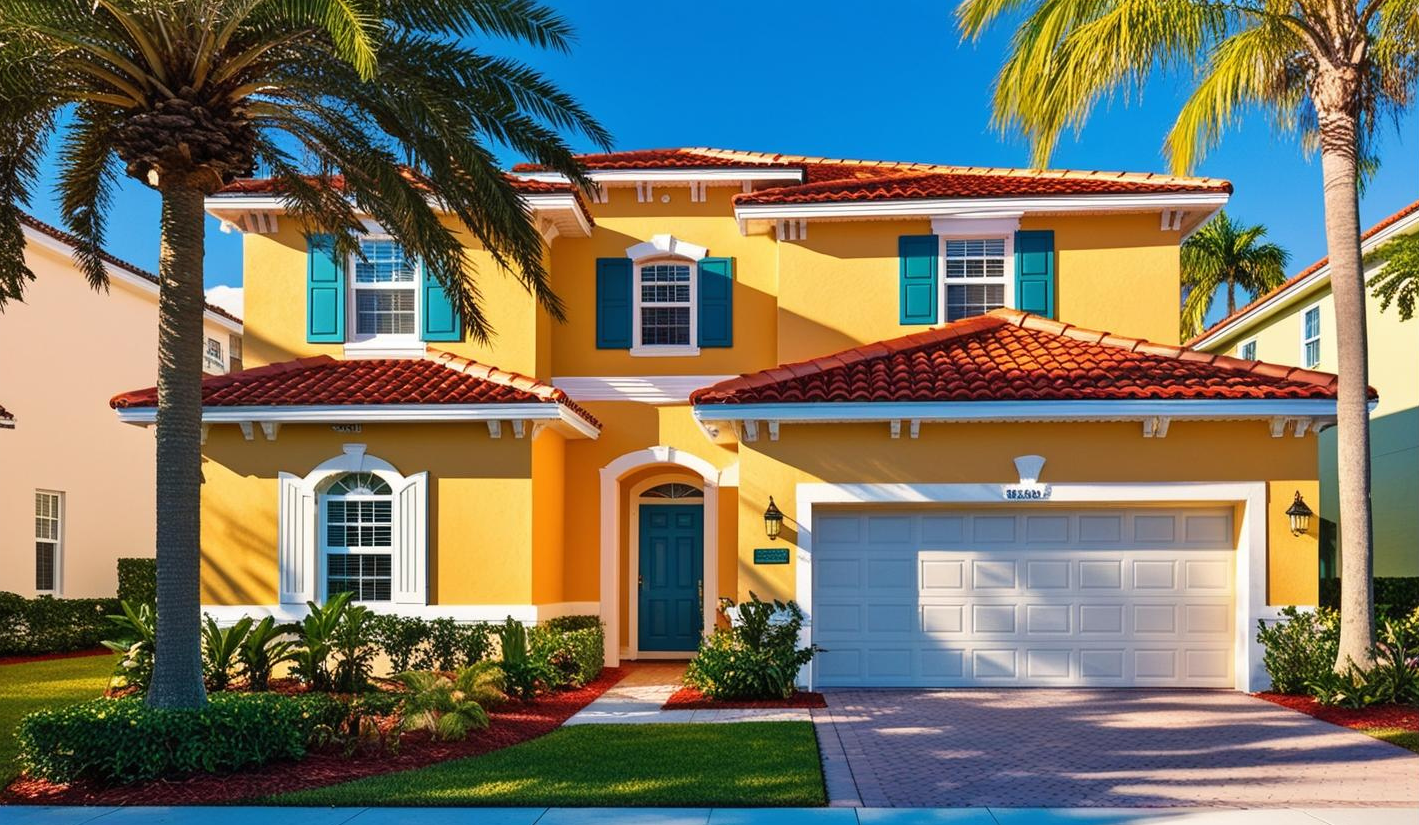
Your county sets the baseline, but these seven factors move your individual premium up or down:
- Replacement cost and dwelling coverage amount. Your premium is based on what it costs to rebuild the structure at today's labor and material prices, not your home's market value or purchase price. Two similarly priced homes can carry very different premiums if one has a pricier roofline or custom finishes to replace.
- Roof age and home age. Roofs older than 15–20 years often trigger surcharges, inspection requirements, or actual-cash-value roof settlement instead of full replacement cost; some carriers cap roof age outright and won't write a new policy on an older roof at all.
- Wind mitigation features. A hip roof, impact-rated windows, reinforced roof-to-wall connections, and secondary water resistance can each unlock separate discounts on the wind portion of your premium — often the single largest line item on a Florida policy.
- Construction type. Concrete block and masonry construction generally price lower than wood-frame construction in wind-prone areas, since block structures tend to hold up better in high-wind events and cost less to repair after moderate storm damage.
- Credit-based insurance score. Most Florida carriers factor in a credit-based insurance score alongside claims history and property details, since insurers' data shows a statistical link between credit behavior and the likelihood of filing a claim.
- Claims history. Prior water, wind, or liability claims — tied to you or to the home's own claims record (which follows the property, not just the owner) — typically raise the quoted premium, sometimes even years later.
- Hurricane deductible vs. standard deductible. A higher percentage hurricane deductible (2%, 5%, or 10% of dwelling coverage, applied separately from your regular deductible) usually lowers your annual premium, but it also raises what you'd owe out of pocket after a named storm.
Why Is Florida's Insurance Market Different?
Florida's homeowners insurance market looks the way it does because of a crisis-reform-stabilization cycle that played out over roughly five years. Between 2021 and 2023, a wave of carrier insolvencies and exits, including several well-known regional insurers, pushed Citizens Property Insurance's policy count above 1.4 million as private insurers pulled back from the state entirely or sharply limited new business.
The Florida Legislature responded with a series of reforms that curbed assignment-of-benefits abuse and eliminated one-way attorney fees in most property claims. These changes OIR has tied to a sharp, sustained drop in property litigation and defense costs industry-wide.
The 2026 stabilization phase reflects the shift. Citizens Property Insurance has shrunk to roughly 278,000 policies as of June 2026 (its lowest level in over a decade), 17-plus new carriers have entered the market since the reforms, and rate filings have turned downward for the first time in years.
How Are Rates Determined, and Where Can You Verify Them?
Rates are determined by the same core inputs discussed above, i.e., dwelling coverage, roof and home age, wind mitigation, construction type, credit-based score, and claims and deductible history. Each of these is weighted differently by carrier and filed with OIR for approval before it can be used.
For instance, two carriers looking at the identical property can land on noticeably different premiums simply because they weigh those six inputs differently in their own rating models, which is exactly why shopping matters more in Florida than in most other states.
For county-level context beyond this article, Worth Insurance's Neighborhood Watch covers local market conditions for specific Florida communities.
5 Proven Ways to Find Affordable Home Insurance in Florida
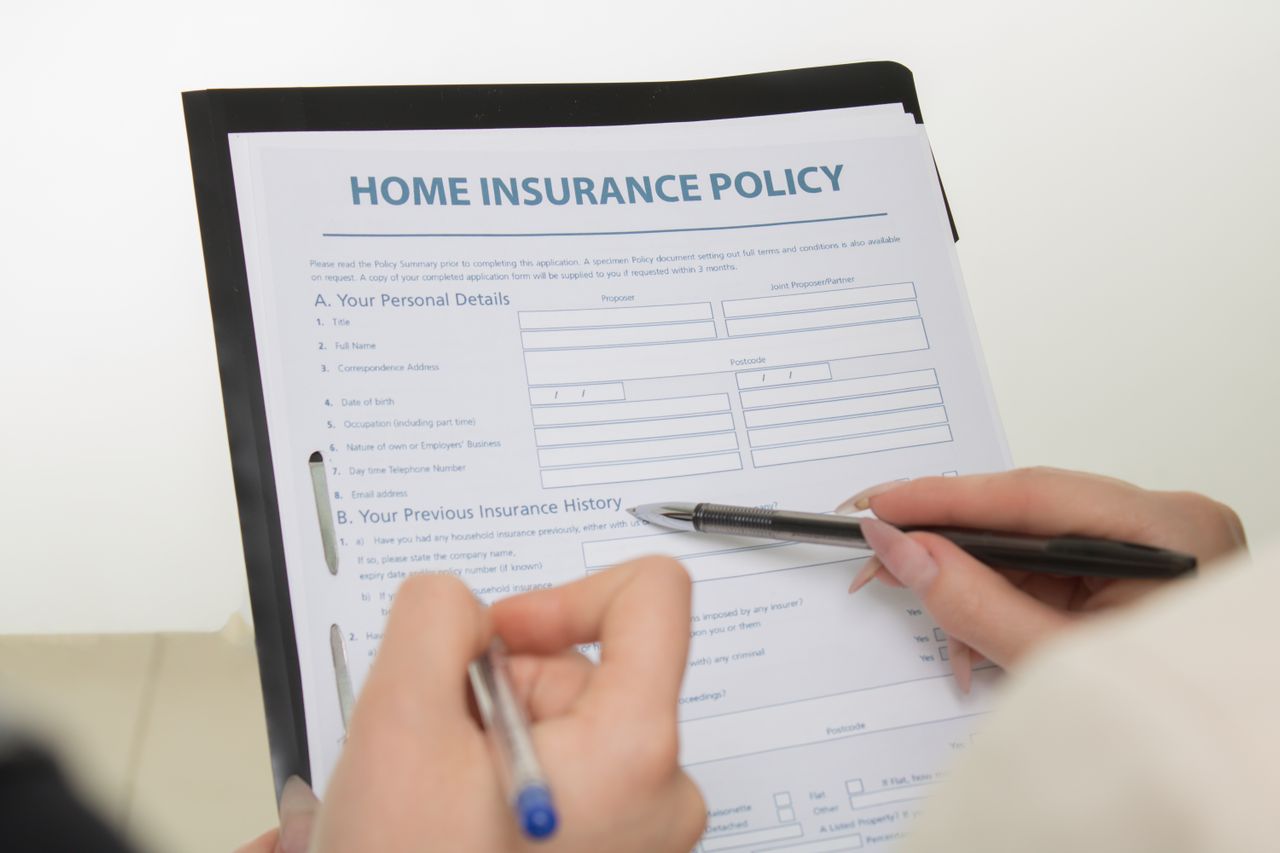
Finding the best Florida homeowners insurance rates by county starts with your own property, not the county average. A few moves tend to have the biggest impact:
- Get a wind mitigation inspection. A $75–$150 inspection documents features like roof shape, roof-to-wall connections, and window protection, and can qualify your home for credits worth far more than the inspection costs over just a few years of coverage.
- Compare multiple carriers. Rates for the same home can vary by thousands of dollars between insurers, since each carrier weighs county, construction, and claims history differently; an independent agency can pull carrier reviews and compare quotes instead of you contacting each company individually.
- Raise your hurricane deductible. If you can comfortably absorb a higher out-of-pocket cost after a named storm, moving from a 2% to a 5% or 10% hurricane deductible is one of the more direct ways to bring down your quoted annual premium.
- Bundle where it makes sense. Pairing home and auto, or adding an umbrella policy for extra liability protection, sometimes reduces the combined cost versus buying each policy separately — though it's worth confirming the bundled price actually beats separate best-in-class quotes.
- Review coverage annually instead of auto-renewing. Rates and carrier appetite shift every year in Florida, so run a side-by-side carrier comparison at each renewal, especially if you're a landlord or rental property owner who may need a separate landlord insurance policy instead of a standard homeowners form.
Final Thoughts
Florida homeowners insurance rates by county vary enormously (from roughly $2,100 to nearly $7,900 a year) because hurricane exposure, litigation history, and rebuilding costs differ so much block by block, let alone county by county.
The 2026 rate cuts are a genuine bright spot after years of increases, but they apply unevenly. For example, a homeowner in Broward may see a double-digit reduction while a neighbor two counties inland sees a flat renewal. A county average is still just a starting point for your own number.
Coverage and pricing vary by carrier, property, and eligibility. If you want to see how your specific home compares to your county's average, you can always request a free quote.
Florida Homeowners Insurance Rates by County FAQs
#1. What is the average cost of homeowners insurance in Florida in 2026?
The average cost of homeowners insurance in Florida in 2026 is about $3,757 a year for a policy with wind coverage, based on Florida Office of Insurance Regulation data. However, your actual premium depends heavily on your county, home age, and wind mitigation features.
#2. Which Florida county has the highest homeowners insurance rates?
Monroe County has the highest homeowners insurance rates in Florida, averaging about $7,829 a year, per OIR data. Palm Beach, Broward, Miami-Dade, and Martin counties round out the state's five priciest markets, driven mainly by hurricane and storm-surge exposure.
#3. Which Florida county has the lowest homeowners insurance rates?
Sumter County has the lowest homeowners insurance rates in Florida, averaging roughly $2,111 a year. Marion, Baker, Wakulla, and Hernando counties also rank among the cheapest, largely because they sit inland with less hurricane and storm-surge exposure.
#4. How can I lower my homeowners insurance premium in Florida?
You can lower your homeowners insurance premium in Florida by getting a wind mitigation inspection, raising your hurricane deductible, bundling policies, maintaining a newer roof, and comparing quotes from multiple carriers instead of automatically renewing with the same insurer.
#5. Does my credit score affect my Florida home insurance rate?
Yes, your credit score can affect your Florida home insurance rate. Most carriers use a credit-based insurance score, along with your claims history and property details, to help set your premium, though the exact weighting varies by company.
#6. What are the best home insurance companies in Florida in 2026?
The "best" home insurance company in Florida in 2026 depends on your county, home, and budget, as no single carrier wins everywhere. Comparing quotes from several financially stable insurers, rather than chasing one "top" company, is the more reliable approach.
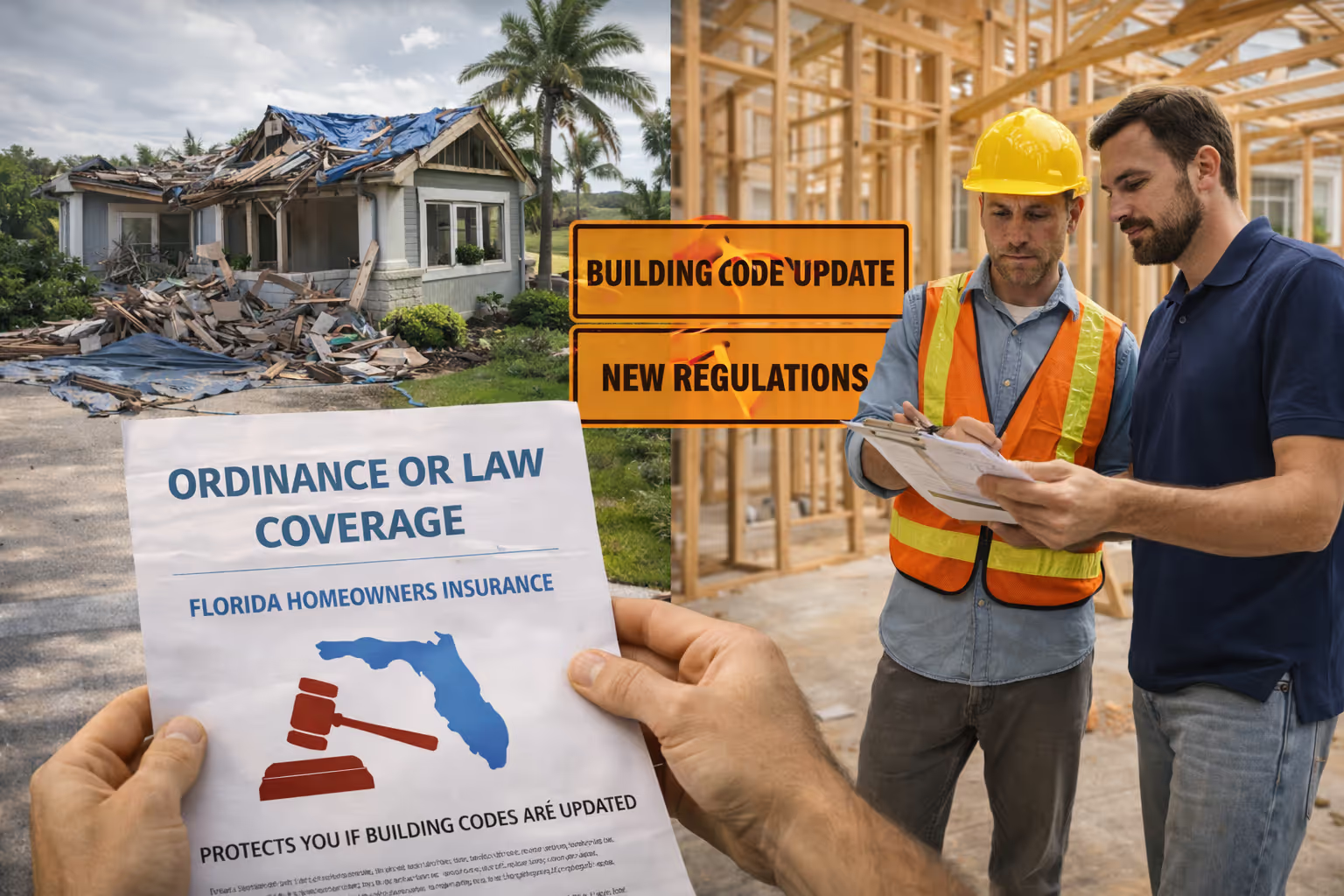
If you’re a homeowner in Florida, having the right insurance coverage is essential to protect your investment from hurricanes, floods, and other unexpected events. Learn more about the different coverage options, policy requirements, and ways to save by visiting our detailed guide to Florida homeowners insurance.

Get a
Florida Home Insurance
Quote




.avif)
















To see how Worth can reduce your risk.
Get a Free Quote


