
Florida Hurricane Insurance Checklist 2026: What to Review Before Peak Season
Florida is entering the most active stretch of Atlantic hurricane season. Use this 2026 checklist to review home, flood, wind, deductibles, replacement cost, temporary living expenses and liability coverage before a storm threatens your area.
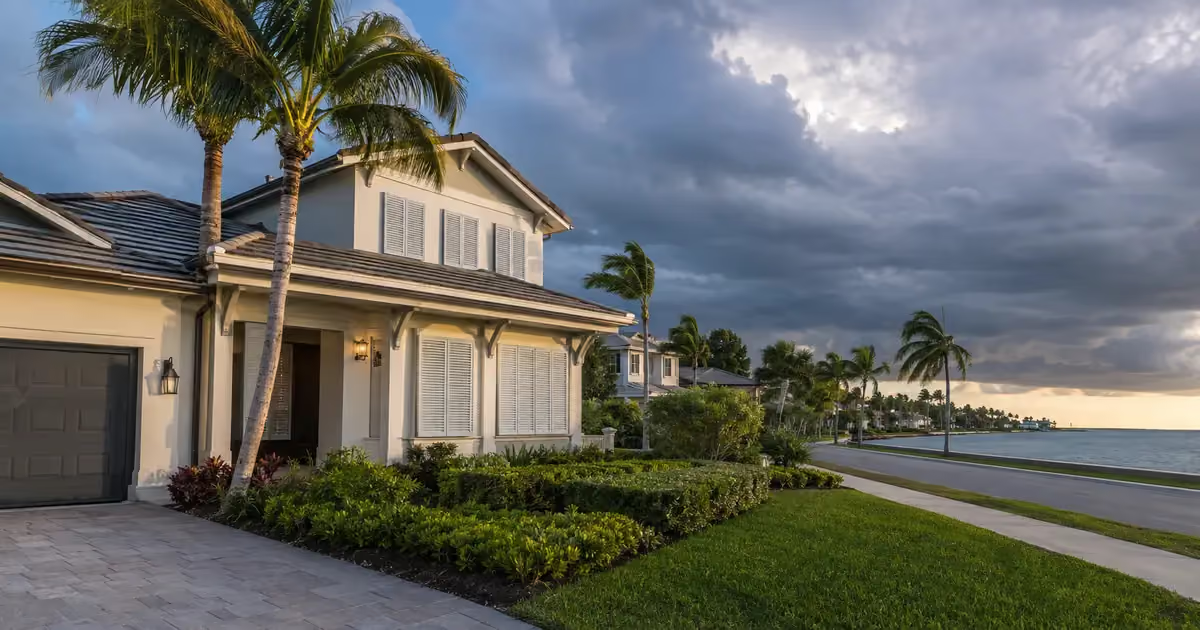

Florida is entering the part of hurricane season when homeowners should pay the closest attention. Even though the first 2026 Atlantic outlook points to a quieter season overall, a lower storm count does not tell us whether Florida will be hit. One hurricane in the wrong place can still cause severe wind, water, and property damage.
This is a good time to look beyond the forecast and review the insurance details that would matter after a storm. That includes your hurricane deductible, dwelling limit, roof coverage, flood policy, and temporary living expense coverage. Waiting until a storm is approaching can leave you with fewer options and very little time to fix a gap.
What Is the 2026 Atlantic Hurricane Season Forecast?
NOAA's initial 2026 Atlantic hurricane outlook calls for 8 to 14 named storms. Of those, 3 to 6 are expected to become hurricanes, and 1 to 3 could become major hurricanes with Category 3 strength or higher. NOAA assigned a 55% chance of a below-normal season, a 35% chance of a near-normal season, and a 10% chance of an above-normal season.
The forecast is influenced in part by the expected development of El Niño. El Niño often increases upper-level wind shear across the Atlantic, making it harder for tropical systems to organize and strengthen. At the same time, warm Atlantic water and other local conditions can still support storms.
NOAA also makes an important distinction: a seasonal outlook is not a Florida landfall forecast. It describes expected activity across the entire Atlantic basin. It cannot tell us weeks or months in advance where a storm will travel or whether a particular Florida community will be affected. You can review the latest figures in NOAA's official Atlantic hurricane outlook.
Does a Below-Normal Season Mean Florida Is Safe?
No. A below-normal season can still produce a destructive Florida hurricane. Seasonal totals are useful for understanding the overall environment, but homeowners experience hurricanes one landfall at a time.
A year with fewer storms can still include one hurricane that rapidly strengthens or follows an unusually damaging path. That is why NOAA and Florida emergency officials continue to recommend preparation regardless of whether the seasonal forecast is above or below average.
For homeowners, the practical question is not simply how many storms may form. It is whether your home and insurance program are ready if one of those storms affects your county.
When Does Hurricane Risk Peak in Florida?
The Atlantic hurricane season runs from June 1 through November 30, but much of the activity typically occurs during August, September, and October. By early August, ocean temperatures are warmer and the tropical Atlantic is entering its most important period for storm development.
This makes August a valuable window for reviewing coverage. Homeowners should not wait until a tropical storm appears on a five-day forecast. Insurance companies may temporarily restrict new policies, coverage increases, or certain policy changes when a named storm threatens Florida. The exact timing and restrictions vary by carrier and storm.
Seven Insurance Checks to Complete Before the Next Storm
You do not need to become an insurance expert to find the most important information. Start with your declarations page, then work through these seven checks.
1. Calculate Your Hurricane Deductible in Dollars
Florida hurricane deductibles are commonly shown as a percentage of the home's insured dwelling value, not as a small flat amount. That percentage can hide how much you would actually pay after a covered hurricane loss.
For example, a home with $500,000 in Coverage A and a 2% hurricane deductible would have a $10,000 deductible. A 5% deductible on the same home would equal $25,000. Knowing that number now gives you time to plan for the potential out-of-pocket expense.
Review the deductible language in the full policy as well. Florida's hurricane deductible rules can be different from the deductible that applies to an ordinary fire, theft, or plumbing claim.
2. Confirm That Your Dwelling Limit Reflects Rebuilding Costs
Coverage A is intended to help rebuild the insured structure after a covered loss. It should be based on the estimated cost to rebuild the home, not its purchase price, tax value, or current real estate listing price.
Construction costs can change as labor and materials become more expensive. Ask your agent whether the replacement-cost estimate has been reviewed recently. Also check whether the policy includes extended replacement cost or ordinance or law coverage, which may help with increased rebuilding costs and mandatory code upgrades after a covered loss.
3. Verify How the Policy Handles Wind and Roof Damage
Do not assume every Florida homeowners policy treats wind and roof losses the same way. Depending on the policy and property location, wind coverage may be included, limited, or handled separately. Roof settlement terms may also depend on the roof's age, material, condition, and the cause of damage.
Look for windstorm or hail exclusions, roof payment schedules, cosmetic damage limitations, and actual cash value provisions. If the language is unclear, ask a licensed agent to explain how a covered roof claim would be calculated.
Worth's Florida hurricane insurance guide provides a broader explanation of hurricane coverage and the policy features homeowners should review.
4. Check Your Flood and Storm-Surge Protection
Standard homeowners insurance generally does not cover flooding. That matters during hurricanes because storm surge, overflowing waterways, and rising surface water are usually flood losses rather than wind losses.
Flood insurance may be available through the National Flood Insurance Program or a private flood insurer. Coverage options, limits, exclusions, and waiting periods can differ, so compare the policy terms rather than looking only at price.
Most NFIP policies have a 30-day waiting period before coverage takes effect, although limited exceptions apply. According to FEMA, almost one-third of NFIP claims during a recent ten-year period came from areas outside mapped high-risk flood zones. You can read more in FEMA's NFIP flood insurance media toolkit.
If you do not currently have a flood policy, review Florida flood insurance options before a storm appears in the forecast.
5. Review Additional Living Expense Coverage
If a covered hurricane loss makes your home uninhabitable, additional living expense coverage may help pay for reasonable increases in living costs. Depending on the policy, that can include temporary housing, additional meal expenses, laundry, pet boarding, and other necessary costs.
Check both the dollar limit and the time limit. A major regional disaster can reduce the supply of available rentals while repairs take months. Keep in mind that additional living expense coverage generally requires a covered loss. If the underlying damage is excluded, such as an uninsured flood, the homeowners policy may not provide temporary living expenses.
6. Create a Home Inventory
Walk through every room and record a clear video. Open cabinets and closets, and photograph major appliances, electronics, furniture, artwork, jewelry, tools, and outdoor equipment. Save receipts, serial numbers, appraisals, and model information when available.
Store the inventory somewhere you can access if your phone or home computer is damaged. Cloud storage and a secure off-site backup are usually more useful than keeping the only copy inside the house.
The Florida Department of Financial Services recommends documenting the inside and outside of the home, protecting important records, and keeping a log of communications with the insurer after a loss. Its 2026 hurricane preparation guidance also reminds homeowners to verify contractors and adjusters before signing agreements.
7. Save Your Policy and Claims Information
Keep digital copies of your declarations page, policy forms, endorsements, insurer contact information, mortgage information, and flood policy. Save the insurer's claims phone number and mobile app before you need them.
After a storm, document damage as soon as it is safe. Take reasonable steps to prevent additional damage, keep receipts for emergency repairs, and contact the insurer promptly. Avoid permanent repairs until the damage has been documented and the insurer has provided instructions.
What Should Citizens Policyholders Know in 2026?
Citizens Property Insurance has been phasing in flood insurance requirements for many personal residential policies that include wind coverage. For 2026, the requirement generally applies to covered homes outside designated high-risk flood areas when Coverage A is $400,000 or more. Homes within a special flood hazard area are already subject to flood requirements in many situations.
Citizens says the phased requirement is scheduled to expand on January 1, 2027, to most affected policies regardless of dwelling value. Condominium unit-owner policies, tenant contents policies, and policies that exclude windstorm or hail coverage are among the listed exceptions. Policyholders should confirm the rules for their specific policy using Citizens' current flood insurance guidance.
Can You Change Insurance When a Hurricane Is Approaching?
Possibly not. When a tropical system threatens Florida, insurers may introduce temporary binding restrictions. During that period, a company may pause new policies, prevent increases to existing coverage, or restrict the addition of endorsements.
These restrictions are not identical across every insurer. They may depend on the storm's location, forecast, and affected counties. The safest approach is to review your policy before a storm is named or moving toward Florida.
What Should You Do If You Find a Coverage Gap?
Start by listing the specific issue. It might be a high hurricane deductible, outdated dwelling limit, missing flood coverage, limited roof settlement terms, or insufficient temporary living expense coverage.
Then ask an independent insurance agent to compare available options. An independent agency can review multiple carriers rather than relying on a single company's policy. Availability and pricing depend on the property, location, construction, roof, claims history, and the underwriting guidelines in effect at the time of application.
Worth Insurance helps Florida homeowners compare home insurance, private flood insurance, and related coverage before the next storm threatens.
Frequently Asked Questions
What is the 2026 hurricane forecast for Florida?
NOAA's initial Atlantic forecast calls for 8 to 14 named storms, 3 to 6 hurricanes, and 1 to 3 major hurricanes. The outlook applies to the entire Atlantic basin and does not predict whether a hurricane will make landfall in Florida.
When is the peak of hurricane season in Florida?
Hurricane season runs from June 1 through November 30, with much of the Atlantic's activity occurring during August, September, and October. Florida residents should remain prepared throughout the entire season.
Does Florida homeowners insurance cover hurricane damage?
Homeowners insurance may cover wind damage from a hurricane when wind is included in the policy, subject to exclusions, limits, and the applicable deductible. Flooding and storm surge usually require separate flood insurance.
How does a hurricane deductible work in Florida?
A hurricane deductible is often calculated as a percentage of Coverage A. For a home insured for $500,000, a 2% deductible equals $10,000. Review the policy for the events that trigger the deductible and how it applies during the calendar year.
Can I buy flood insurance when a hurricane is approaching?
You may be able to purchase a policy, but coverage might not begin in time for that storm. Most NFIP policies have a 30-day waiting period, with limited exceptions. Private flood policies may have different waiting periods and restrictions.
Does homeowners insurance cover hurricane storm surge?
Storm surge is generally treated as flooding and is usually excluded from standard homeowners insurance. A separate NFIP or private flood policy may provide coverage, subject to its limits and exclusions.
Review Your Coverage Before the Next Storm
A quieter seasonal forecast should not create a false sense of security. Florida homeowners still face the possibility of one damaging landfall, and the most important insurance decisions are easier to make before a storm threatens.
Worth Insurance can compare coverage from multiple Florida insurers and help you review home, wind, and private flood options. Request a free Florida insurance quote and address potential gaps while coverage options are still available.
Coverage, eligibility, deductibles, limits, waiting periods, and policy availability vary by insurer and property. This article is for general educational purposes and does not change or replace the terms of any insurance policy. Review your policy and speak with a licensed insurance professional about your specific situation.


