Should I File a Claim With My Auto Insurance or Theirs?
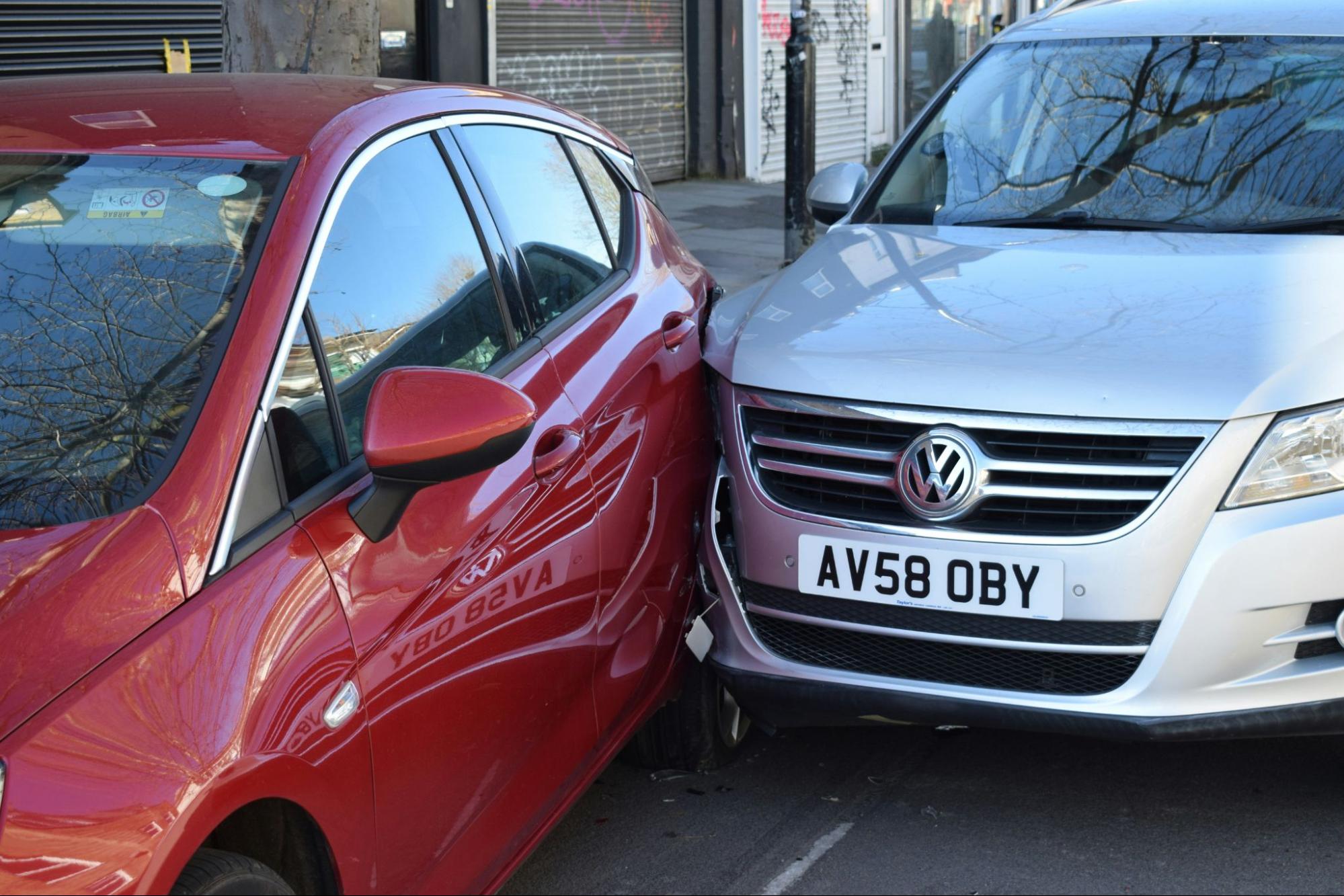

The answer to the question “Should I file a claim with my auto insurance or theirs?” depends on whether you're claiming injuries or car damage in Florida. Your own insurer pays injuries first through personal injury protection (PIP), while the at-fault driver's insurer is generally responsible for your car damage. The wrong choice can mean paying a deductible you didn't need to, or missing a deadline.
In this guide, we explain who pays first, when to use your own coverage, how claims can affect your rates, and which deadlines apply. Florida's no-fault rules make the answer different from most states.
Key Takeaways
- Your own PIP pays injuries first, and the at-fault driver's insurer pays car damage.
- Florida's no-fault system requires treatment within 14 days to keep PIP benefits.
- When the other driver is at fault, their insurer pays up to their limits.
- Use your own insurer if the other driver is uninsured, slow, or you caused the crash.
- Not-at-fault claims often don't raise rates, but at-fault claims commonly do.
- Most injury lawsuits must be filed within two years of the crash.
- Stay factual with adjusters, and never admit fault.
Deciding on Filing a Claim With Your Auto Insurance or Theirs
You should file with your own auto insurance for injuries and with the other driver's insurer for car damage when they caused the crash. Also, your own insurer is the route when you caused the crash or the other driver has no insurance.
The split exists because Florida separates injury claims from property claims. Injuries run through your own PIP no matter who is at fault. Car damage follows fault, so the driver who caused the crash is generally responsible through their property damage liability coverage.
In many crashes, you will use both routes at once: PIP for your injuries and a claim against the other driver's insurer for your car. The table below shows who pays first in common situations:
However, before choosing a route, it helps to know how the two main claim types differ.
First-Party vs. Third-Party Claims
The difference between a first-party claim and a third-party claim is which insurer you file with. A first-party claim goes to your own insurer for your own losses, such as PIP medical bills or collision repairs. A third-party claim goes to the at-fault driver's insurer for damage they caused.
First-party claims usually move faster because you have a contract with that insurer, though a deductible may apply. Third-party claims often carry no deductible, but the other insurer is evaluating its own customer's exposure, so expect an investigation and negotiation over fault and value. In many Florida crashes, you will file both types.

Florida Is a No-Fault State: 4 Key Rules That Shape Your Claim
Florida is a no-fault state, so your own insurer pays your initial medical bills and lost wages regardless of who caused the crash. Four rules shape most claims:
- PIP comes first. Florida requires $10,000 of PIP, which pays 80% of medical bills and 60% of lost wages, plus a $5,000 death benefit. Medical benefits cap at $2,500 unless a provider finds an emergency medical condition. Insurers generally must pay valid PIP benefits within 30 days of written notice.
- The 14-day rule is strict. Get initial treatment within 14 days of the crash or risk losing PIP medical benefits, even if you feel fine at first.
- Property damage is still fault-based. Florida requires $10,000 of property damage liability, according to Florida Statute 324.022. The at-fault driver's coverage pays for the other driver's car.
- Bodily injury liability is optional for most drivers. Florida does not require it for most drivers, so an at-fault driver may carry little or none.
Here is how no-fault state vs. at-fault state claims compare in practice:
Note: PIP can apply if a car hits you as a pedestrian, and it generally covers relatives who live in your household, though terms vary by policy.
Who Pays Auto Insurance If the Other Driver Is at Fault?
When the other driver is at fault, their property damage liability coverage pays for your car damage up to their policy limit. Your collision coverage covers any amount above that limit, minus your deductible, so a low limit can leave you using your own policy.
Limits matter most in a total loss. If your car's value exceeds the other driver's property damage limit, an insurance gap can remain. Depending on the policy, loss of use, such as a rental, may also fall under their coverage.
Injuries follow a different path. So who pays if the other driver is at fault and you are hurt? Your PIP pays first. To recover more, you generally must meet Florida's serious-injury threshold, such as a permanent injury, significant scarring, or loss of an important bodily function, subject to applicable law and causation. You can then pursue the at-fault driver's bodily injury coverage, if they carry it. If they carry none and you have UM/UIM, that coverage may apply instead. Without it, recovery may depend on the at-fault driver's personal assets.
Also, fault affects your own recovery. Since HB 837 took effect on March 24, 2023, Florida uses a modified comparative negligence rule with a 50% or 51% bar, depending on the state. A driver found 51% or more at fault generally cannot recover damages in a lawsuit. Insurers weigh police reports, photos, and statements to decide an at-fault vs. not-at-fault accident outcome, so evidence matters.
Be careful with statements. You generally have no obligation to give the other driver's insurer a recorded statement. If you do speak with them, stick to verified facts and avoid guessing about speed, injuries, or fault. Your own policy does require cooperation with your insurer.
When Filing With Your Own Insurance Makes Sense
Filing with your own insurance makes sense in these four situations:
- The other driver is uninsured or underinsured. An estimated 20.6% of Florida drivers were uninsured in 2023, so this happens often. Uninsured/underinsured motorist coverage can fill the gap if you carry it, but Florida does not require it. Without it, collision coverage can still repair your car.
- You want faster repairs. Collision coverage pays for your car regardless of fault, minus your deductible. Your insurer may recover that deductible through subrogation.
- Their insurer is slow or disputes fault. Your insurer can pay your claim first and then pursue the other driver's insurer for reimbursement.
- You caused the crash. Your own coverage is the route. Collision coverage repairs your car, and liability coverage pays for the other driver's damage. If damages exceed your limits, umbrella insurance may add extra liability protection, depending on the policy.
When you file with your own insurer, you generally owe your deductible up front, and towing or rental benefits depend on the coverages you bought. Subrogation is the process where your insurer, after paying your claim, seeks reimbursement from the at-fault driver's insurer. If it recovers your costs, you may get your deductible back, though recovery is not guaranteed and can take time.
Will Filing a Claim Raise My Rates?
Filing a claim can raise your rates, but it depends on fault and your insurer's practices and also on your location. Not-at-fault claims often do not trigger an insurance premium increase after a claim, while at-fault claims commonly do.
Some carriers offer accident forgiveness on certain policies, but eligibility varies, and shopping at renewal can reveal how each one treats claims history.
Several factors shape what happens at renewal:
- Whether you were at fault
- Amount the insurer paid
- Your claim history over recent years
- Carrier's own underwriting rules
A single not-at-fault claim often has less effect than a pattern of claims. Insurers commonly check claims history reports, so a claim can follow you to a new carrier. If the damage is close to your deductible, compare the repair estimate, your deductible, and the possible rate impact, and ask your agent how your carrier handles that situation. If you're concerned about premiums after a claim, see our guide on how to lower your car insurance premium without cutting coverage.
Reporting an accident is different from filing a claim. Most policies require prompt notice of any accident, even when you do not plan to claim. Skipping notice to keep your record clean can jeopardize coverage if the other driver files later, so report every accident to your insurer.
How Long Do I Have to File a Car Insurance Claim in Florida?
How long you have to file a car insurance claim in Florida depends on the type of claim. Your policy sets notice rules, PIP requires treatment within 14 days, and lawsuits have separate time limits. Four deadlines matter most:
- Policy notice. Report the accident promptly, and check your policy for the exact window. Under Florida Statute 627.736, insurers may require written notice as soon as practicable after a crash.
- PIP treatment. Get initial treatment within 14 days of the crash to preserve PIP medical benefits.
- Injury lawsuits. Most car accident injury lawsuits must be filed within two years for crashes on or after March 24, 2023. Earlier crashes generally had four years. Wrongful death claims also carry a two-year limit.
- Property damage lawsuits. Sources disagree on whether the limit is two or four years, because HB 837 shortened negligence deadlines while another statute covers personal property. Confirm the deadline with a Florida attorney before relying on either.
Missing a deadline can end a claim, so note each date as soon as the crash happens. In practice, a simple order helps: report the crash to your insurer the same day, see a doctor within 14 days, and keep every bill and estimate. If injuries are serious or fault is disputed, consider speaking with a Florida attorney well before the two-year mark.
What to Expect From a Claims Adjuster
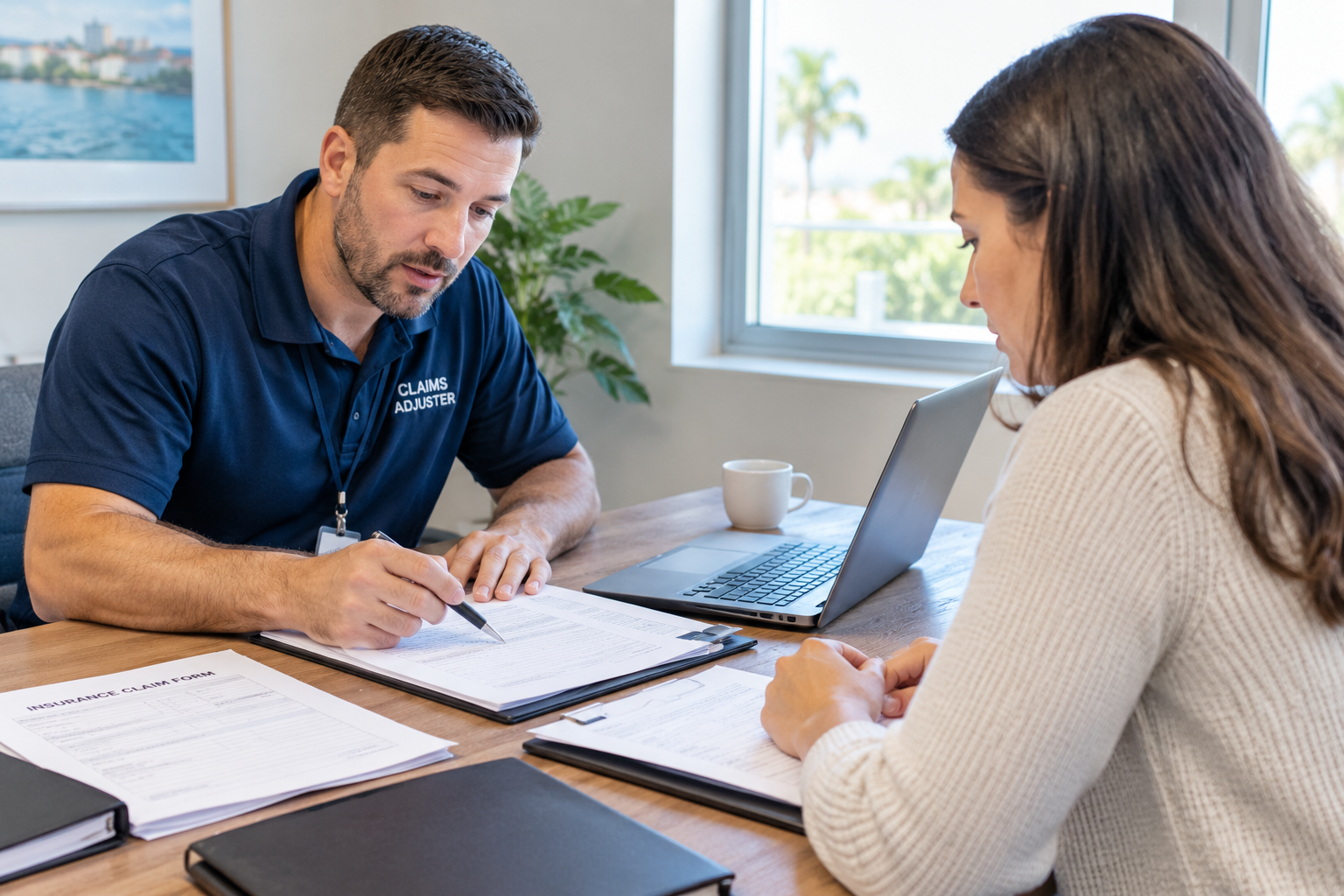
A claims adjuster is the insurer's representative who investigates your claim, applies your coverage, and values the damage. Your adjuster works under your policy, while the other driver's adjuster evaluates the claim for their own company, so treat the two conversations differently.
Ask for decisions and estimates in writing, keep your claim number, and note the adjuster's name for each call. If you disagree with a repair or total-loss valuation, you can submit your own estimates or comparable vehicle listings.
What documentation to provide:
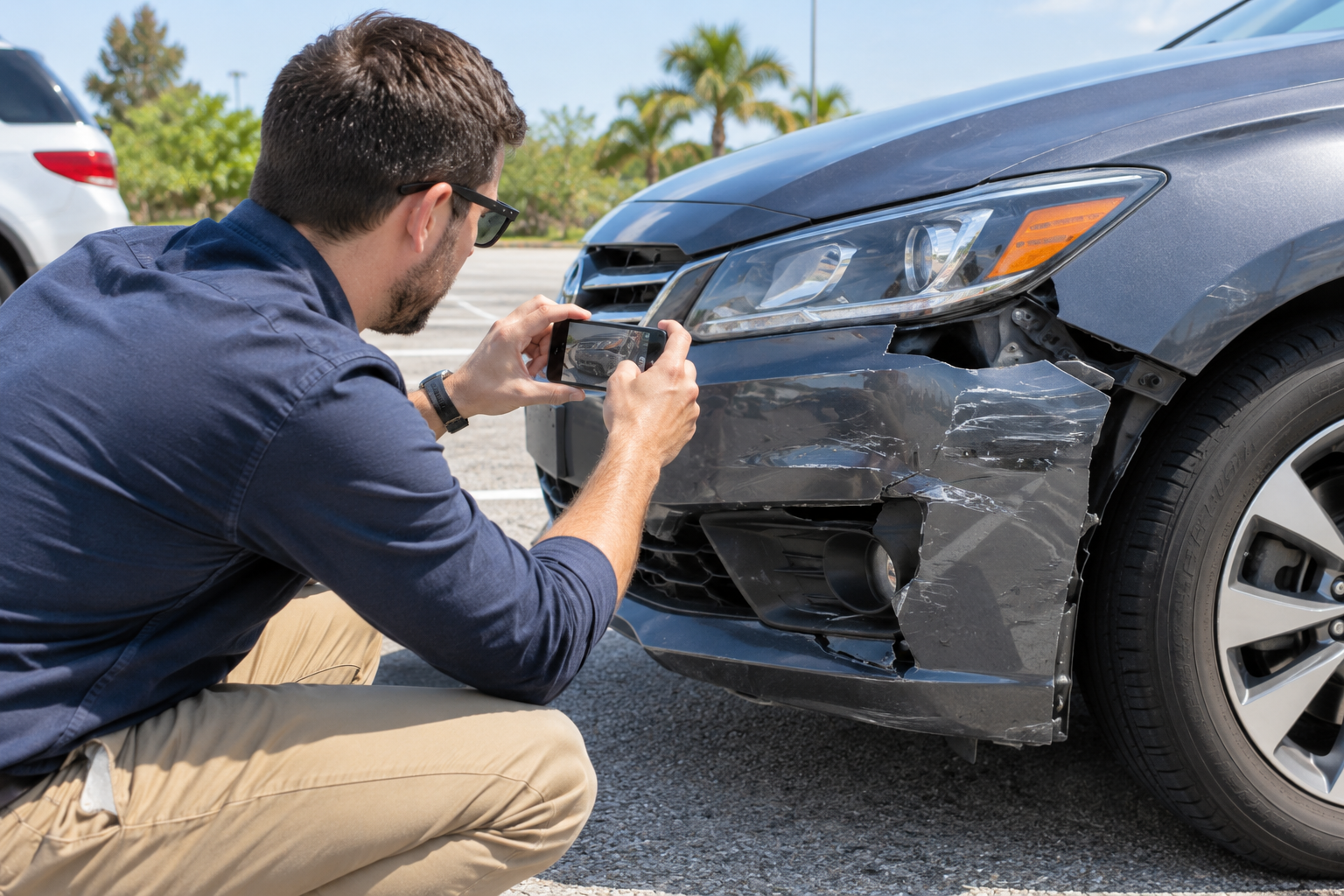
- Photos of the damage and the scene
- The police report number
- Repair estimates
- Medical records and bills
What to avoid with either insurer:
- Admitting fault
- Speculating about speed, injuries, or what happened
- Signing broad releases before you understand what they waive
What to exchange at the scene:
- Name and contact information
- Insurance company and policy number
- License plate number
- Crash location
If an adjuster uses unfamiliar terms, our insurance glossary explains them in plain language. If you disagree with how a claim was handled, the Florida Department of Financial Services accepts insurance concerns after you give the company a chance to resolve them.
Final Thoughts
In Florida, deciding whether to file a claim with your auto insurance or theirs comes down to what you are claiming. Use your own PIP for injuries, look to the at-fault driver's insurer for car damage, and turn to your own coverage when they are uninsured, slow, or you caused the crash. Report every accident promptly and watch the deadlines.
Should I File a Claim with My Auto Insurance or Theirs? FAQs
#1. Is it worth claiming on your car insurance?
It is worth claiming on your car insurance when repair or medical costs clearly exceed your deductible, or when the other driver is uninsured. For minor damage near your deductible, compare the repair quote with the possible rate impact first, but still report the accident to your insurer.
#2. What not to say when filing an insurance claim?
What not to say when filing an insurance claim includes admitting fault, guessing about speed or injuries, and saying you are fine before a medical evaluation. Stick to facts you can verify, and let the police report and the adjuster's investigation address the fault.
#3. Is it better not to file an insurance claim?
It is generally not better to skip filing an insurance claim after a crash, because your policy may require prompt notice. You can report an accident without pursuing a payout, but an unreported incident can jeopardize coverage if the other driver files later.
#4. Do I pay my deductible if I use their insurance?
You generally do not pay your deductible when you file a third-party claim against the at-fault driver's insurance, because their liability coverage pays instead. You do pay it if you use your own collision coverage, though subrogation may recover it later.
#5. What if their insurer offers too little?
If their insurer offers too little, ask for the valuation in writing and submit your own repair estimates. You can also use your own collision coverage and let your insurer pursue the difference, or consult a Florida attorney for larger injury disputes.
Driving in Florida comes with a specific set of legal requirements and coverage options, from personal injury protection to uninsured motorist coverage. Whether you're new to the state or just reviewing your current policy, our guide to Florida car insurance will help you make an informed decision.

Get a
Florida Home Insurance
Quote









To see how Worth can reduce your risk.
Get a Free Quote


