Types of Insurance You Don't Need: 17+ Policies to Skip

Paying for unnecessary insurance quietly drains a household budget. These are usually policies that duplicate protection you already have, cover losses you could absorb yourself, or insure unlikely events at a high price. Some policies are redundant for almost everyone, while others become unnecessary only in certain circumstances, such as owning no car or supporting no dependents.
Below, you'll find a four-question test, 17+ types of insurance you don't need, and the coverage most Florida households keep.
Key Takeaways
- The types of insurance you don't need are often policies where you could pay the loss yourself, already have the coverage, or face a high premium for a small payout.
- Extended warranties, device plans, and rental counter coverage often duplicate protection from other sources.
- Life, health-related, and pet policies depend on your dependents, existing benefits, and savings.
- Home, renters, flood, auto, and umbrella coverage protect against losses that can be financially severe.
- Comparing quotes shows what each layer of coverage costs before you commit.
How to Tell If an Insurance Policy Is Unnecessary
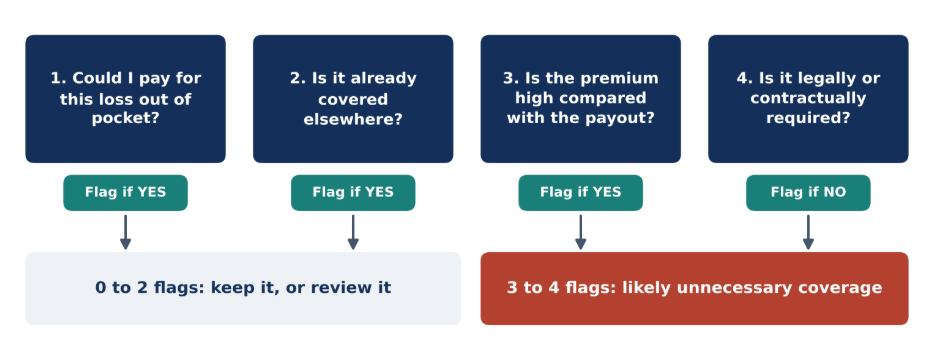
You can tell an insurance policy is unnecessary by asking four questions about the loss, your existing coverage, the price, and any requirement to carry it:
- Could I pay for this loss out of pocket? If a repair or replacement would not strain your savings, the premiums may cost more than the risk.
- Is it already covered elsewhere? Credit cards, employer benefits, and existing policies often overlap.
- Is the premium high compared with the likely payout? Compare total premiums over the term with realistic claims.
- Is it legally or contractually required? Lenders, landlords, and state law require some coverage regardless of preference.
Applying them shows which types of insurance you don't need and flags unnecessary insurance coverage.
What Are Some Unnecessary Types of Insurance?
The most common types of insurance you don't need fall into five groups:
- Product protection
- Travel and accident cover
- Life and debt policies
- Health and pet add-ons
- Auto extras
Each can serve a purpose in the right situation, which is why this list says “probably” rather than “never.” Start with the four-question test above, then see how the five groups compare. Florida drivers should also remember that some auto coverage is mandatory, so this list focuses on optional add-ons.
The sections below explain why each policy often duplicates other coverage, costs more than it pays, or protects against losses you could handle yourself.
#1. Extended Warranties
Extended warranties are service contracts that often overlap with the manufacturer’s coverage and credit card benefits. Many cover failures that rarely happen or fall outside the original warranty anyway.
Before paying at checkout, compare the contract price with the likely repair cost and check whether your card extends warranties. Exclusions, deductibles, and claim limits vary by product, so read the terms.
However, an extended warranty may still make sense for costly items that are expensive to repair. Ask what the contract adds beyond the manufacturer’s coverage.
#2. Home Warranty and Appliance Repair Plans
Home warranty and appliance repair plans cover repairs to systems and appliances, while homeowners insurance covers sudden losses such as fire or storm damage. The two products are different, and neither replaces the other.
A plan can lose value if you keep a repair fund, own newer appliances, or face service fees and exclusions. Compare the annual cost, service call fees, and covered items before you buy, since coverage limits differ between plans. Ask which brands, ages, and failures a plan excludes before signing.
#3. Cell Phone and Device Insurance
Cell phone and device insurance pays toward repairing or replacing a damaged, lost, or stolen phone, usually after a deductible. Monthly fees plus deductibles can approach the price of an older device over time.
A credit card, renters policy, or manufacturer plan may already offer partial protection. Check what each covers and how claims work. Device plans can still be reasonable for expensive phones if a surprise replacement would strain your budget. Ask whether replacements may be refurbished, since policies differ.
#4. Rental Car Insurance at the Counter
Rental car insurance at the counter is often a collision damage waiver, and it may duplicate coverage from your own auto policy or credit card. Your personal policy is the first line of protection, provided it includes collision and comprehensive coverage.
Call your insurer and card issuer before you travel, because terms and exclusions differ. Also ask whether loss-of-use fees or administrative charges could apply after a claim.
#5. Travel Insurance on Cheap, Refundable Trips
Travel insurance on cheap, refundable trips protects money you can usually recover through airline, hotel, or booking refunds. If a cancellation costs little or nothing, the premium may add little value. It deserves a closer look for expensive, nonrefundable trips, cruises, or international travel where medical bills could be high.
Check cancellation terms, existing health coverage, and card trip protections first. Florida travelers booking during hurricane season should read weather-related terms carefully. Compare the premium with the amount you could lose if you cancel.
#6. Flight and Accidental Death (AD&D) Insurance
Flight and accidental death (AD&D) insurance pays a set benefit only if a covered accident causes death or serious injury, so the payout is narrow compared with the cost. It does not pay for death from illness. Standard life insurance, employer benefits, and card travel perks may already offer similar benefits.
Compare what you hold before adding a policy. A broader life or disability policy usually protects dependents against more events. Review the policy’s definition of a covered accident, since narrow wording limits payouts.
#7. Credit Life and Credit Disability Insurance
Credit life and credit disability insurance pay off or make payments on one specific loan if you die or become disabled. Premiums are often folded into the loan, so you pay interest on them, and the coverage is voluntary.
A term life or disability policy may protect more for a similar cost. Ask your lender about cancellation rights if you already bought a policy. Check whether the benefit pays the balance or only monthly payments.
#8. Mortgage Life Insurance
Mortgage life insurance pays your lender, not your family, if you die while the mortgage is outstanding, and the benefit usually shrinks as the balance falls while the premium often stays level.
Term life insurance paid to your beneficiaries can cover the same debt and lets them decide how to use the money. Compare both options and confirm what your existing life insurance already covers. Ask whether the policy ends if you refinance, and whether age or health limits apply before buying.
#9. Life Insurance With No Dependents or Debts
Life insurance is unnecessary when no one relies on your income, and you have no debts, such as a mortgage or co-signed loan, that someone else would inherit. In that case, savings may cover final expenses. So, when is life insurance necessary in practice?
Usually only until life changes. Marriage, children, a mortgage, or a business can create new needs, so reassess after each event. Employer-provided coverage can also reduce what you buy separately, which is why life insurance appears among the types of insurance you don't need only in limited cases.
#10. Life Insurance on Children
Life insurance on children pays a benefit if a child dies, but children typically earn no income that a family would need to replace. Many advisers suggest covering the adults who support the household first.
Policies marketed as college savings or lifetime insurability guarantees often cost more than other ways to save. A child rider on a parent’s term policy may cost less for families who still want modest coverage.
Compare terms and costs before deciding. Check whether the rider converts to an individual policy later, since terms vary.
#11. Vision Insurance If You Don’t Wear Glasses
You may not need vision insurance if you don’t wear glasses, since an annual eye exam may be the only benefit you would use. Compare the plan’s yearly premium with what an exam costs without it, and check whether your health plan already covers exams.
Vision plans can still help people who buy lenses, frames, or contacts every year, or who need regular exams for conditions such as diabetes. Look at any waiting periods and network limits before you enroll.
#12. Dental Discount Plans That Duplicate Coverage
Dental discount plans that duplicate coverage offer reduced fees at participating dentists, but they are not insurance and do not pay claims. If your employer or an existing dental plan already negotiates fees, a second discount membership may add little.
Review the plan’s network, annual fee, and the savings on procedures you expect to need. Discount plans can help people with no dental coverage, so value depends on your situation. Confirm your dentist participates before joining, since savings apply only in network.
#13. Cancer-Only and Critical-Illness Policies
Cancer-only and critical-illness policies pay a cash benefit if you are diagnosed with a named condition, and they usually exclude other illnesses and injuries. Because they cover narrow events, they rarely replace comprehensive health insurance and may duplicate benefits you already have.
For many people, these are types of insurance you don't need once comprehensive health coverage is in place. Review the covered conditions, waiting periods, and exclusions closely. A solid health plan with a manageable out-of-pocket maximum and an emergency fund typically addresses more risks.
#14. Pet Insurance
Pet insurance reimburses part of veterinary costs after you pay the bill, usually subject to deductibles, reimbursement percentages, and exclusions for pre-existing conditions. It joins the types of insurance you don't need only if a dedicated emergency fund could absorb a large vet bill. It can make sense when a surprise bill of several thousand dollars would force hard choices.
Compare annual limits, waiting periods, and renewal pricing, since premiums commonly rise as pets age. Ask how the insurer defines a pre-existing condition and whether routine care is included.
#15. Collision and Comprehensive on a Low-Value Car
Collision and comprehensive coverage on a low-value car pays to repair or replace your own vehicle, up to its actual cash value minus your deductible. When the car is worth little, the most you could collect may be close to what you pay in premiums and deductibles over a few years.
That optional coverage can become unnecessary car insurance coverage. If you finance or lease the car, the lender usually requires it, so review the car’s value at each renewal.
#16. Duplicate Roadside and Replacement-Cost Add-Ons
Duplicate roadside and replacement-cost add-ons charge you twice for protection you may already have through your auto insurer, credit card, vehicle manufacturer, or a motor club. Check for overlap before paying separately, including what each roadside benefit covers, such as towing distance limits.
Replacement-cost upgrades can also be unnecessary replacement insurance on older vehicles whose value would not justify the added premium. New-car replacement or gap coverage can still matter on a financed new vehicle, so match each add-on to the car’s age and loan balance.
#17. Car Insurance If You Don’t Own a Car
Car insurance if you don’t own a car is generally unnecessary for the coverages Florida requires, because those requirements attach to registered vehicles. The Florida Highway Safety and Motor Vehicles explains that required coverage must stay in place during registration, or a license plate can be suspended.
If you sell your last car, handle the registration before you cancel the policy. Confirm the registration status and current requirements with FLHSMV first, because a lapse can lead to a suspension and reinstatement fees.
#18. Identity Theft Insurance
Identity theft insurance typically reimburses certain recovery costs, such as lost wages or legal fees, and it does not prevent fraud or repair your credit by itself. Meanwhile, the FTC’s IdentityTheft.gov offers a free recovery plan with pre-filled letters and forms.
Some homeowners, renters, or card benefits include limited coverage, so check before paying separately, since this is one of the types of insurance you don't need when benefits already overlap. Monitoring services may still appeal to people who value the convenience.
5 Types of Insurance You Shouldn’t Skip

The insurance you shouldn’t skip covers losses that could be financially severe or that the law or a lender requires, unlike the types of insurance you don't need. The five policies below address some of the largest risks Florida households face:
- Home or condo coverage. Homeowners insurance and condo insurance help protect the structure, belongings, and liability, and mortgage lenders typically require them.
- Renters coverage. Renters insurance helps cover your belongings and personal liability, since a landlord’s policy generally protects only the building.
- Flood coverage. Flood insurance fills a gap because standard home policies typically exclude flood, and even one inch of water can cause $25,000 of damage.
- Auto coverage. Florida car insurance is required to register a vehicle, and higher liability limits can better protect your assets after a serious crash.
- Umbrella coverage. Umbrella insurance adds liability protection above home and auto limits, which matters when a lawsuit could exceed them.
How to Decide Whether an Insurance Policy Is Worth It
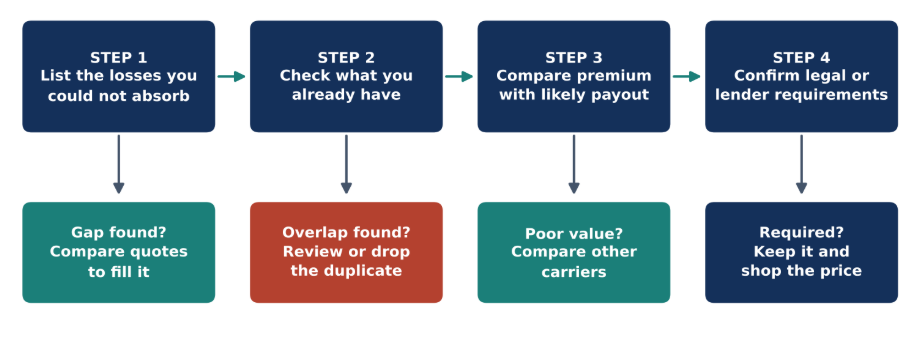
You can decide whether an insurance policy is worth it by weighing the size of the possible loss against the premium, your savings, and your existing coverage. Use this framework:
- List the losses that would seriously hurt your finances.
- Inventory what you already have through policies, cards, and employers.
- Compare each premium with the realistic payout.
- Confirm any legal, lender, or lease requirements.
- Review yearly, since needs change.
A common rule of thumb is to insure losses you could not afford and self-insure small ones you could.
Final Thoughts
Fewer, better-matched policies can protect you more effectively than a long list of overlapping add-ons. Question the types of insurance you don't need, meaning coverage that duplicates what you have, costs more than it could pay, or insures a loss you could absorb, and keep the policies that guard against severe losses.
If you want to see where your coverage overlaps or falls short, you can get a free quote from Worth Insurance and compare carriers at your own pace.
Types of Insurance You Don’t Need FAQs
#1. Is it really necessary to have insurance?
Having insurance is necessary when a loss could exceed what you can pay yourself or when the law or a lender requires it. Florida, for example, requires certain auto coverage to register a vehicle. Optional policies deserve a case-by-case review.
#2. What are some examples of unusual types of insurance?
Unusual types of insurance include event cancellation, wedding, key person, kidnap and ransom, and hole-in-one coverage. These policies protect against narrow or high-cost risks, and most people never need them. Availability and terms vary by insurer, so check with a licensed agent.
#3. Can I cancel a policy mid-term?
You can usually cancel a policy mid-term, but refund rules, fees, and notice requirements vary by insurer and policy type. Lenders may require continuous coverage, so canceling without a replacement can leave gaps. Review the cancellation terms before you end a policy.
#4. Do you need vision insurance if you don’t wear glasses?
Vision coverage may be optional when you don’t wear glasses, because it works more like a benefits plan than protection against a large loss. Compare its yearly cost with an exam’s out-of-pocket price, and check whether your health plan covers exams.
#5. Do you need car insurance if you don’t own a car?
No, you generally don’t need car insurance if you don’t own a car, because Florida’s required coverages attach to registered vehicles. If you regularly drive borrowed or rented cars, you may still want a non-owner policy, depending on how often you drive and what other policies cover.

Get a
Florida Home Insurance
Quote






To see how Worth can reduce your risk.
Get a Free Quote


