How to Get a Flood Insurance Quote in Florida: Costs, Coverage & Fast Options
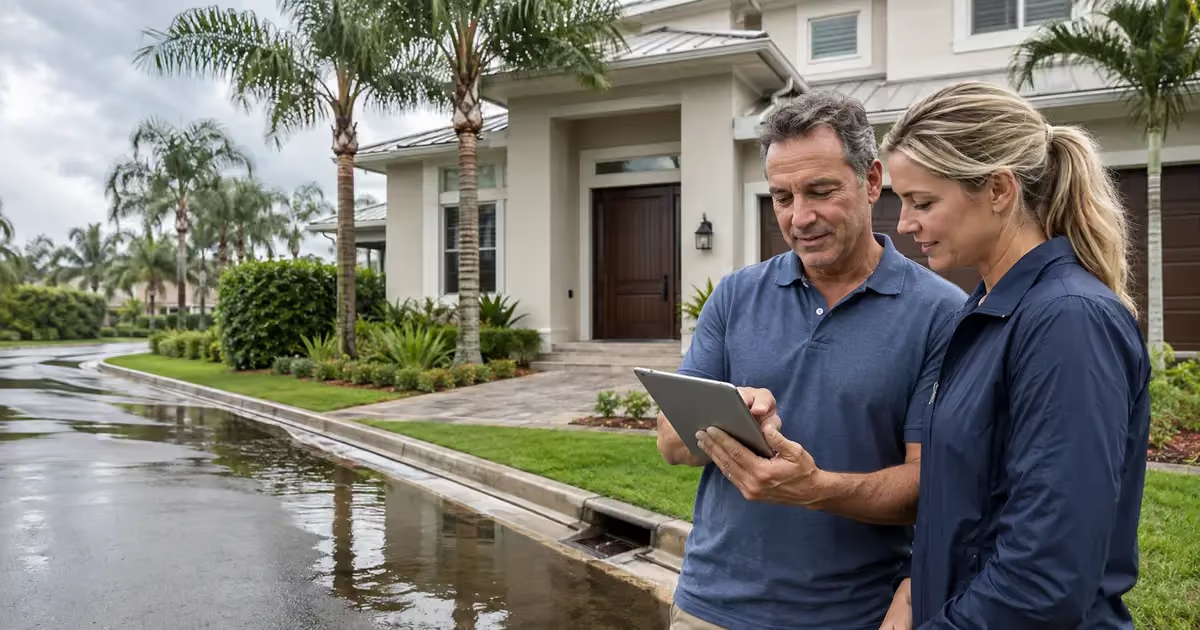

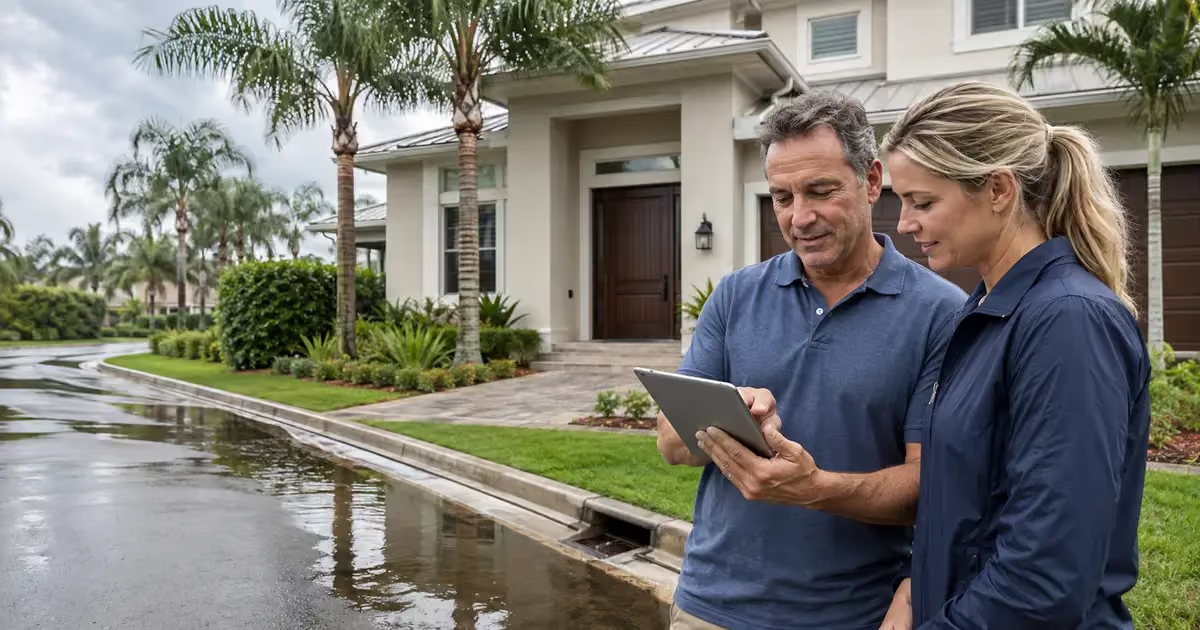
Looking for a Florida flood insurance quote? Learn what information you need, what affects the price, and how to compare NFIP and private flood coverage for your home.
Learn how to get a Florida flood insurance quote, compare NFIP and private policies, understand pricing factors, and choose appropriate coverage.
Getting a flood insurance quote in Florida should be straightforward, but the choices can feel confusing once terms like NFIP, private flood, elevation certificates, waiting periods, and flood zones enter the conversation. The good news is that you do not need to figure it all out alone.
A useful quote should do more than show you a price. It should explain how much coverage you are buying, which property is protected, what deductible applies, when the policy starts, and what would still come out of your pocket after a flood.
Worth Insurance helps Florida homeowners compare private flood options and understand how those policies differ from the National Flood Insurance Program. If you are ready to compare coverage, you can start with a Florida flood insurance quote.
How Do You Get a Flood Insurance Quote in Florida?
The fastest way to get an accurate quote is to provide your property address and a few basic details about the home. An insurance agent or quoting system can then review the property's flood exposure and available coverage options.
You may be asked for:
- The complete property address
- Whether the home is a primary residence, secondary residence, rental, or vacant property
- The year the home was built
- The number of floors and the home's foundation type
- The approximate replacement cost of the building
- The amount of building and contents coverage you want
- Your preferred deductible
- Information about prior flood losses
- Your mortgage lender's flood insurance requirements, if applicable
- An elevation certificate, when available or requested
Not every insurer needs every document before providing an initial estimate. However, complete and accurate information makes it easier to compare policies fairly and reduces the chance of a premium or coverage change later in the process.
How Much Does Flood Insurance Cost in Florida?
There is no single price that represents every Florida home. Two properties on the same street can receive different quotes because flood insurance pricing looks at the characteristics of the individual building and its exposure.
According to the National Flood Insurance Program, three broad questions influence an NFIP rate: where the property is built, how it is built, and what it would cost to replace. Private insurers may consider similar factors along with their own underwriting models.
The main pricing factors can include:
- Distance from the coast, rivers, lakes, canals, and other water sources
- Flood frequency and the property's expected depth of flooding
- FEMA flood zone and other catastrophe models
- Elevation of the building and its lowest floor
- Foundation type, including slab, crawlspace, pilings, or enclosure
- Building replacement cost
- Selected building and contents limits
- Deductible choices
- Prior flood claims or loss history
- Whether important equipment is elevated above likely flood levels
A property in Flood Zone X is not automatically inexpensive, and a property in Zone AE or VE is not automatically uninsurable. A personalized quote is the only reliable way to see the actual price and available terms for a specific address.
Do You Need Flood Insurance Outside a High-Risk Flood Zone?
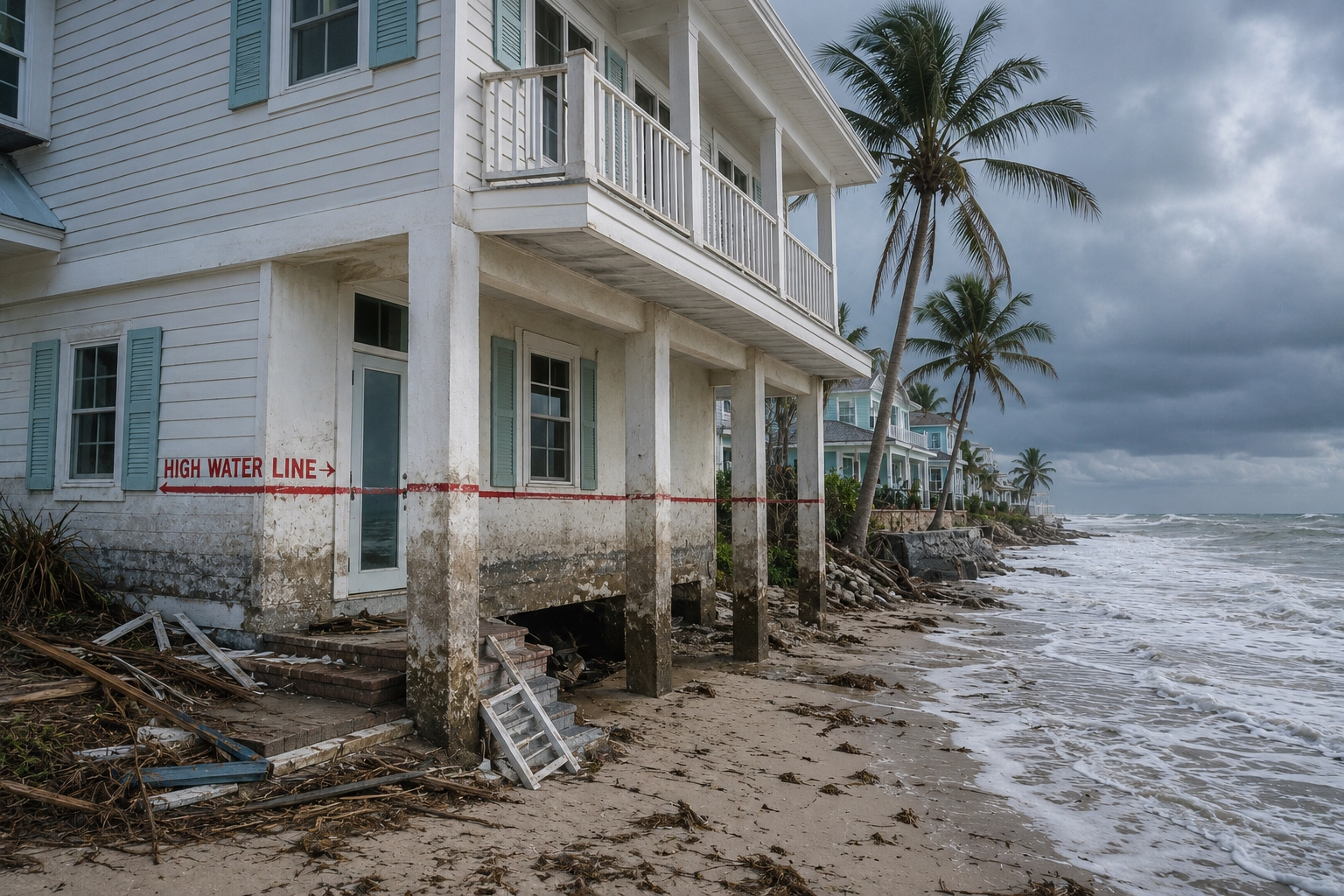
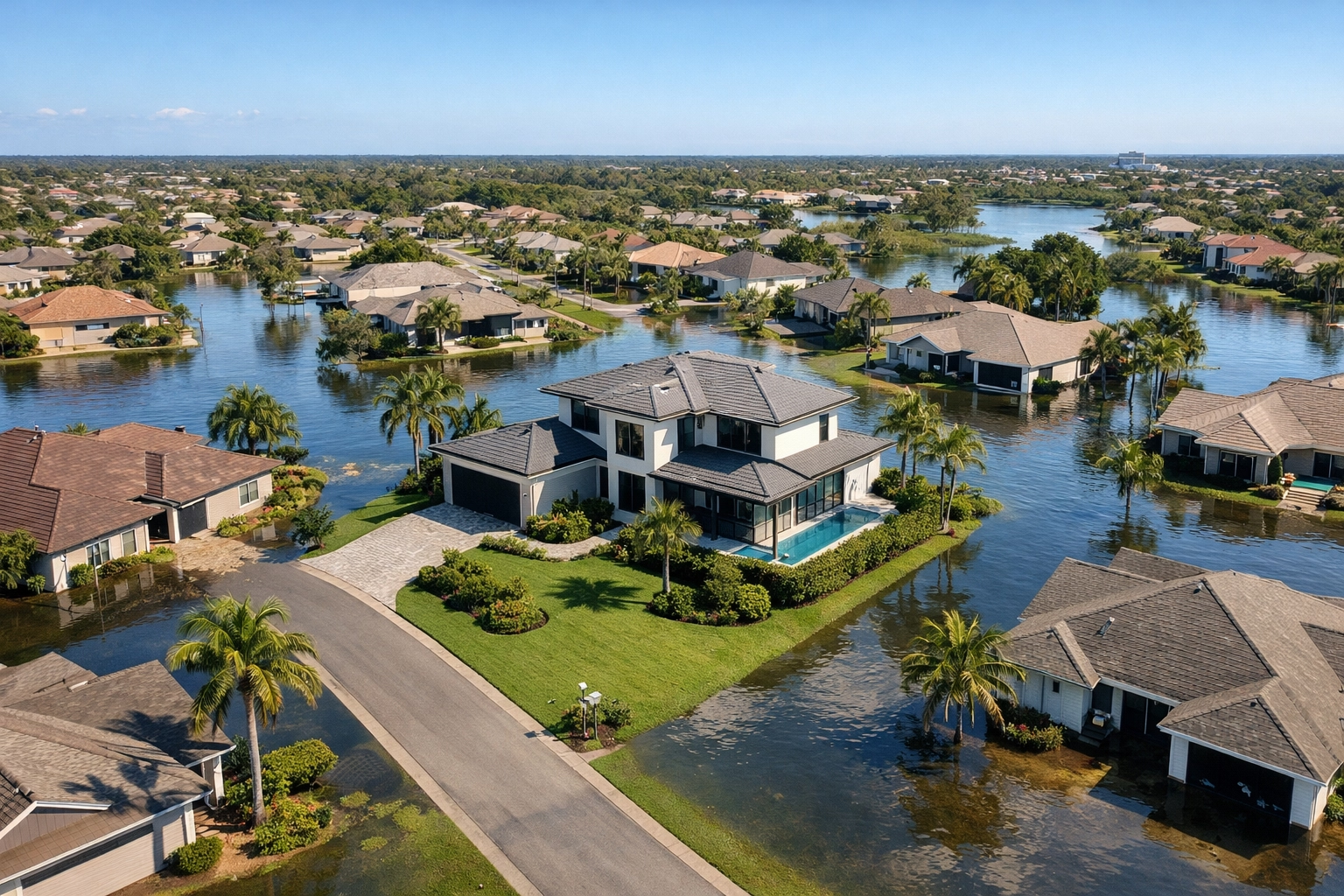
Flood insurance can still be valuable outside a FEMA-designated high-risk zone. Flood maps are important, but they do not account for every way water can reach a property. Heavy rainfall, overwhelmed drainage systems, new development, storm surge, and changes in surrounding land can all contribute to flooding.
FEMA reports that almost one-third of NFIP flood claims during a recent ten-year period came from areas outside mapped high-risk flood zones. Standard homeowners insurance generally does not cover rising water or storm surge, so being outside Zone AE or VE does not eliminate the coverage gap.
If you are unsure about your designation, Worth's guide to FEMA flood zones in Florida explains common zones and what they can mean for homeowners.
What Does a Florida Flood Insurance Policy Cover?
Flood policies commonly separate protection into building coverage and contents coverage. You can choose one or both, depending on the policy, property, and lender requirements.
Building Coverage
Building coverage is designed to protect the insured structure and certain permanently installed systems. Under an NFIP policy, covered property can include:
- Foundation walls and anchorage systems
- Electrical and plumbing systems
- Furnaces and water heaters
- Central air-conditioning equipment
- Refrigerators, stoves, and built-in appliances
- Permanently installed cabinets, paneling, and carpeting
- A detached garage, subject to policy terms and limits
Contents Coverage
Contents coverage protects eligible belongings inside the insured building. This can include furniture, clothing, electronics, curtains, portable air conditioners, washers, dryers, and certain other personal property.
Building and contents coverage under the NFIP are generally purchased separately and have separate deductibles. Private flood policies may package or structure the coverage differently, so review both the limits and deductibles when comparing quotes.
What Does Flood Insurance Usually Not Cover?
Flood insurance is important, but it does not pay for every expense connected to water damage. The cause of the loss, the location of the property, and the wording of the policy all matter.
NFIP policies generally do not cover:
- Cars and most self-propelled vehicles
- Landscaping, decks, patios, fences, and swimming pools
- Currency, precious metals, and valuable papers
- Most personal property stored in a basement
- Temporary housing and additional living expenses
- Financial losses caused by business interruption
Some private flood policies may offer broader protection, higher limits, or additional living expense coverage. That does not mean every private policy includes those features. Compare the actual forms and endorsements instead of relying only on a marketing summary.
NFIP or Private Flood Insurance: Which Quote Should You Choose?
Neither option is automatically best for every Florida homeowner. The stronger choice depends on the property, the coverage needed, the lender's requirements, and the quotes available.
When an NFIP Policy May Be a Good Fit
The NFIP provides standardized federal flood coverage through participating insurance companies and agents. For a residential property, the NFIP offers up to $250,000 in building coverage and up to $100,000 in contents coverage.
NFIP pricing is standardized. The program states that participating companies and agents use the same pricing approach, so shopping among NFIP providers does not produce competing NFIP rates for the same property and information.
When Private Flood Insurance May Be a Good Fit
A private flood policy may be worth considering when a homeowner needs limits above the NFIP maximums, wants different deductibles, or is looking for coverage features not included in the federal policy. Private carriers may also have different waiting periods and pricing models.
Private insurers can be more flexible for some properties and more restrictive for others. Availability may depend on the property's location, elevation, value, prior losses, and current underwriting conditions.
The best approach is to compare the full policy, not just the premium. Worth's detailed guide to NFIP versus private flood insurance explains the differences in greater detail.
How Long Does It Take for Flood Insurance to Start?
An NFIP policy normally becomes effective 30 days after it is purchased. FEMA lists limited exceptions, including certain policies purchased in connection with making, increasing, extending, or renewing a mortgage.
Private flood waiting periods vary by insurer and policy. A shorter waiting period may be available, but you should never assume coverage starts immediately. Confirm the exact effective date in writing before relying on the policy.
This matters during hurricane season. Waiting until a storm appears in the forecast may leave you without active coverage for that event. Review the official NFIP guidance for buying flood insurance and start the quoting process before you urgently need protection.
How Much Flood Coverage Should You Request?
Start with the amount it could take to repair or rebuild the insured structure after a serious flood, then consider the value of the belongings you want protected. Your mortgage lender may also specify a minimum amount.
Do not confuse the home's market value with its building coverage need. Market value includes the land and local real estate conditions, while flood building coverage focuses on the insured structure and eligible property.
For homes worth more than the NFIP's residential building limit, a private policy or excess flood policy may provide additional capacity. Review whether the quote includes replacement-cost or actual-cash-value settlement and how those terms apply to the building and contents.
What Do Citizens Policyholders Need to Know in 2026?
Citizens Property Insurance is phasing in flood insurance requirements for many personal residential policies that include wind coverage. In 2026, the requirement generally applies to affected homes outside the special flood hazard area when Coverage A is $400,000 or more. Homes within a special flood hazard area are already subject to requirements in many situations.
Citizens states that the requirement is scheduled to expand on January 1, 2027, to most affected personal residential policies regardless of dwelling value. Listed exceptions include condominium unit-owner policies, tenant contents policies, and policies that exclude windstorm or hail coverage.
Citizens policyholders should review the insurer's current flood insurance requirements and confirm the necessary coverage and documentation before renewal. Worth also has a dedicated explanation of the 2026 Citizens flood insurance requirement.
How Can You Lower the Cost of Flood Insurance?
The right strategy depends on the property and program, but several steps may help reduce risk or premium:
- Compare an NFIP quote with available private flood options
- Review different deductible levels
- Provide an elevation certificate when it improves the risk information
- Elevate utilities, water heaters, and electrical equipment
- Install appropriate flood openings where permitted and applicable
- Keep drains and water-flow paths clear
- Choose coverage limits carefully without leaving a major protection gap
A lower premium is helpful only if the policy still provides the protection you need. Compare deductibles, exclusions, limits, and settlement provisions alongside the price.
Why Get a Florida Flood Insurance Quote Through Worth Insurance?
Worth Insurance is an independent insurance agency serving Florida property owners. Instead of presenting a single option, the team can help you review private flood availability and understand how it compares with NFIP coverage.
A useful comparison should answer:
- How much building and contents coverage does each policy provide?
- What deductible applies to each part of the policy?
- When will coverage become effective?
- Does the policy include temporary living expenses?
- Are there special limits for basements, enclosures, or detached property?
- Will the policy satisfy the lender's requirements?
- What documentation is needed to bind coverage?
If hurricane storm surge is one of your concerns, read how flood insurance and storm surge coverage work together with a Florida homeowners policy.
Frequently Asked Questions
Can I get a flood insurance quote if I am not in a high-risk flood zone?
Yes. Flood insurance is available in many lower-risk areas, and a high-risk FEMA designation is not required to request a quote. Properties outside mapped high-risk zones can still flood because of heavy rain, drainage problems, storm surge, and nearby development.
Is flood insurance included in Florida homeowners insurance?
Generally, no. Standard homeowners insurance usually excludes rising water and storm surge. Flood protection normally requires a separate NFIP or private flood policy.
What information do I need for a Florida flood insurance quote?
Start with the property address, occupancy, year built, foundation type, desired limits, mortgage requirements, and prior flood history. An elevation certificate may be helpful or requested for certain properties.
How fast can I get a flood insurance quote?
Many properties can receive an initial estimate quickly once the address and basic building details are available. More complex properties may require an elevation certificate, additional underwriting information, or a manual review.
Does an NFIP policy start immediately?
Usually not. NFIP coverage generally begins 30 days after purchase, although FEMA provides limited exceptions. Private flood policies have their own waiting periods, so confirm the effective date before buying.
Can private flood insurance satisfy a mortgage lender?
A qualifying private flood policy may satisfy a lender's flood insurance requirement, but the policy must meet applicable standards. Submit the proposed policy to the lender and obtain confirmation before replacing required coverage.
Does flood insurance cover temporary housing?
NFIP policies do not cover temporary housing or additional living expenses. Some private flood policies may offer this protection, subject to the policy's terms and limits.
Should I compare NFIP and private flood quotes?
Yes, when both options are available. Compare the price, building and contents limits, deductibles, waiting period, exclusions, settlement terms, and any additional living expense coverage.
Get a Florida Flood Insurance Quote
Flood risk is not limited to properties on the beach or inside the highest-risk FEMA zones. The right policy can help protect your home and belongings from a loss that standard homeowners insurance generally does not cover.
Worth Insurance can help you compare private flood options, understand NFIP coverage, and select limits that fit your property. Request your Florida flood insurance quote and review your options before the next storm or heavy-rain event.
Coverage, eligibility, deductibles, limits, waiting periods, lender acceptance, and policy availability vary by insurer and property. This article is for general educational purposes and does not change or replace the terms of any insurance policy. Review the policy and speak with a licensed insurance professional about your specific situation.
Flooding is one of the most common and costly natural disasters in Florida—and standard homeowners insurance doesn’t cover it. If you live in a flood-prone area, it's essential to consider supplemental protection. Learn everything you need to know in our full guide to Florida flood insurance.

Get a
Florida Home Insurance
Quote



To see how Worth can reduce your risk.
Get a Free Quote


